Who Turned Off the Light at the End of the Tunnel?

The grapes, before pruning, in February. At least I can still prune when the soil is wet.
I saw a light a few days ago. The 15 day extended weather forecast at Accuweather, said there were a few dry days coming up at the end of this week and over the weekend. Then, there were several dry days (with little sunshine icons) starting around April 8. Perfect. The cover crop could be tilled in this weekend and a couple weeks later, the beds could be prepared for planting.
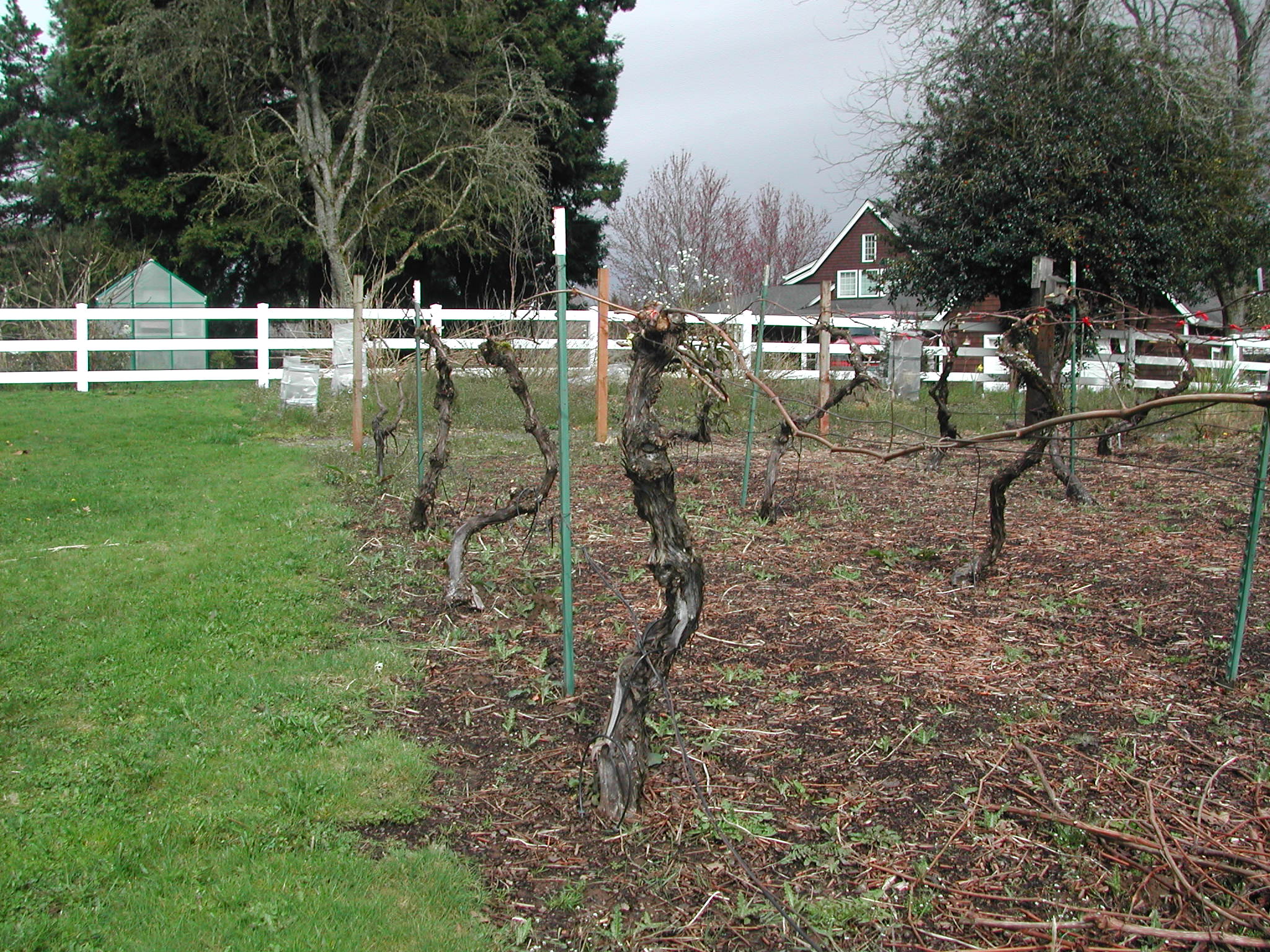
The grapes, after pruning.
Today, when I checked the forecast again, the light was out. It may be that we have enough dry weather to get that cover crop worked in this weekend, but the dry days in mid-April are gone. Sigh.
Yes, I know, I am obsessed with the weather. I have three main websites I check: The National Weather Service for daily and weekly weather, Accuweather for their 15 day forecast, and The City of Portland HYDRA Network for the rainfall data. If you haven’t heard about The City of Portland HYDRA Network website, it is pretty cool. Portland’s Bureau of Environmental Services maintains the network; a series of rain gages around the city, recording and reporting the data they collect. There is a station at the Sauvie Island School, a mere quarter mile from our house, providing a pretty accurate picture of our rainfall…which can be quite different from the Portland airport.
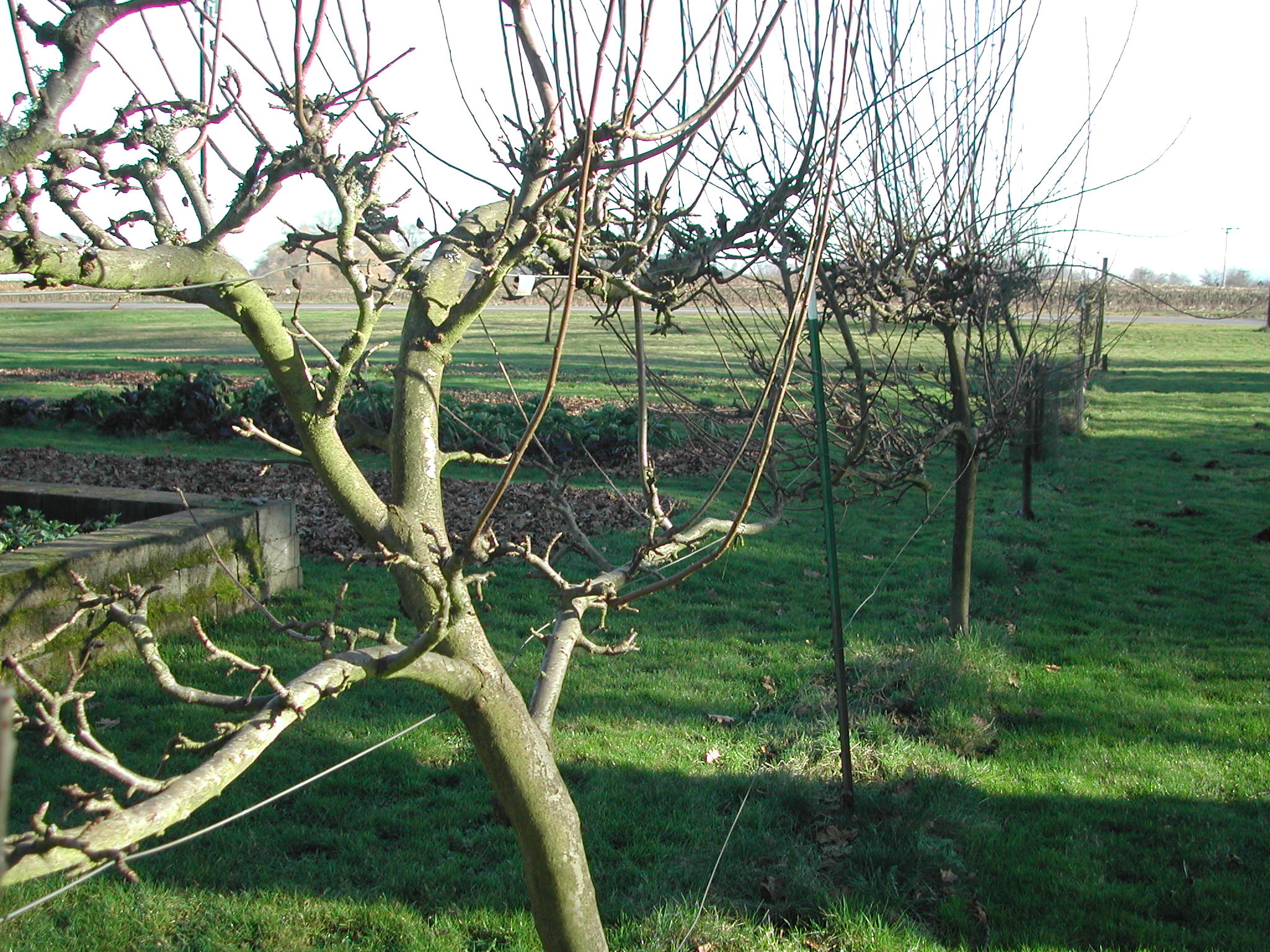
The few apple trees we have left, before pruning, in February. See the sunlight?
I like checking the data table for the detailed information: hourly rainfall. Here are a few statistics I compiled from the data table: January: 11 days with no rain, 13 days with less than 1/10 inch; February: 13 days with no rain, 2 days with less than 1/10 inch; March: 2 days with no rain (not counting today, since I am guessing it will rain today), 6 days with less than 1/10 inch. Yes, 2 days in March without rain. I am not crazy, it really has rained nearly every day this month. Even though it has sometimes just been a little bit, the soil just never gets to quite dry out enough to work up. Tilling soil is bad enough for the soil structure. Tilling too wet soil can destroy it. We did till a few areas back in the dry days of February, but that was for planting cover crop in what will be the orchard and blueberry field. I did not imagine that it would be so long before we would be able to work in the vegetable beds.
In the mean time, I have been pruning grapes and fruit trees, starting in February and continuing on the drier days of March.

Apple trees, after pruning last week. No more sunlight.
Oh, and if you have a favorite weather website, would you mind sharing it with me? Especially if it has longer range forecasts? Maybe there is someone out there who can turn that light back on.
Peas

Cascadia snap pea seeds
Outside, the garden is getting off to a slow start this year. The ground is saturated. The rainfall for January and February was pretty close to average this year. March has been another story. As of today, the rainfall for Portland is twice the average it would be at this point in March (average for the month, as of the 18th, is 2.17 inches, the actual rain we have so far is 4.72 inches, per The Oregonian’s weather section). If we didn’t get too much more rain, we might come out about average by the end of the month. However, the forecast for the rest of the month is not looking good. There might be a few dry days this week, but the rest of the outlook says rain. Luckily, I was only planning for a few things to go out in the garden in March. I don’t expect they will get out on time. How late they are will depend on those April showers.

Cascadia snap pea seeds, soaked a day, and ready to plant

Cascadia snap peas, starting a 24 hour soak, for faster germination
Inside, there is another story. Flats are filling up the basement. A few weeks ago, Steven made a table for flats to put out in the hoop house. Over last weekend, we got the hoop house beds ready to plant and the first batch of peas went in. In my mind, this is another plus for hoop houses: not only a temperature buffer, but a rain buffer. Sure, the edges are wet, but overall the ground is dry enough to work up and plant. I’ll keep starting the seeds and potting up, if needed, until it is dry enough to get the beds outside ready to plant.
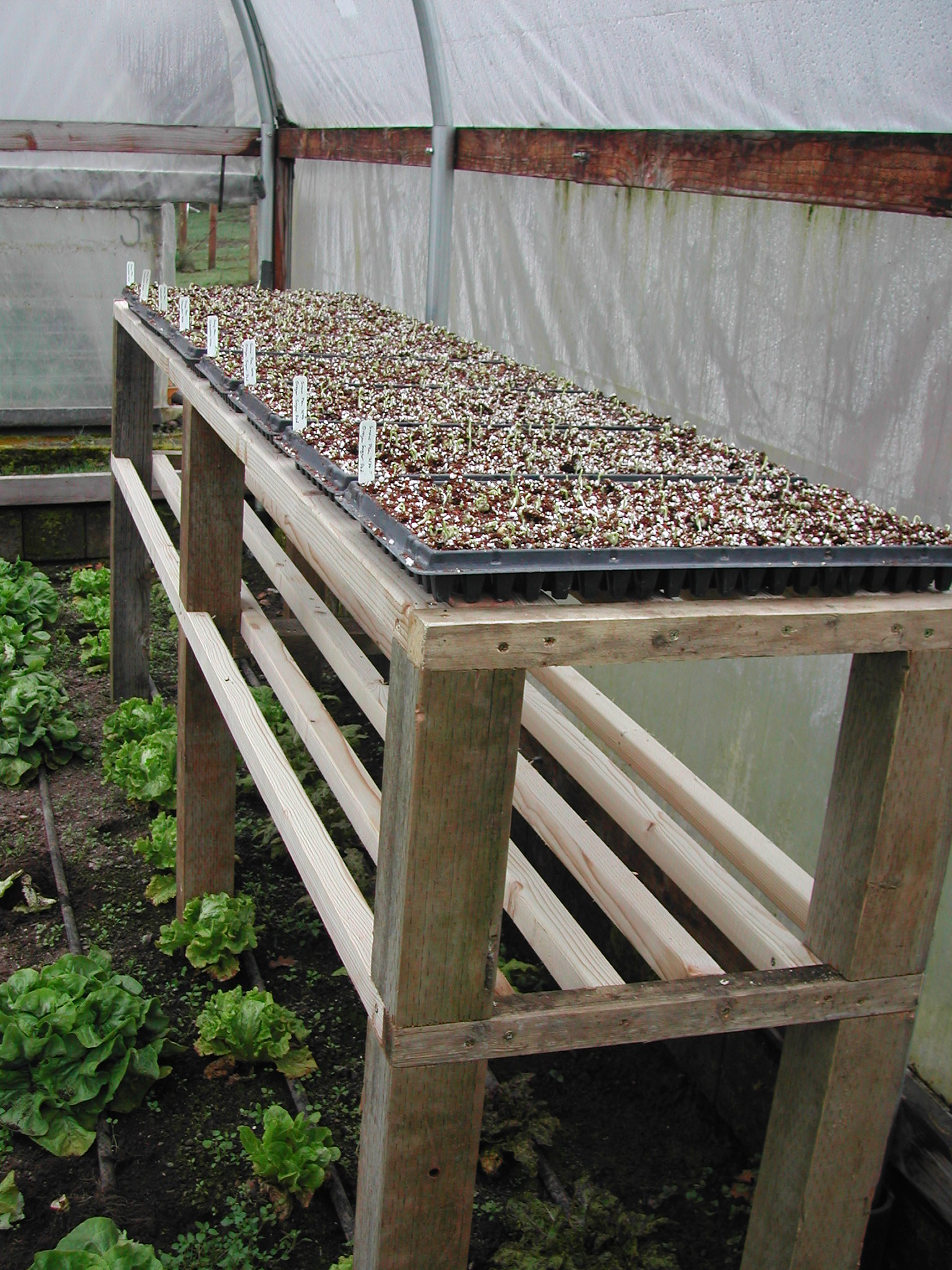
The table for starts in the hoop house

Peas germinating
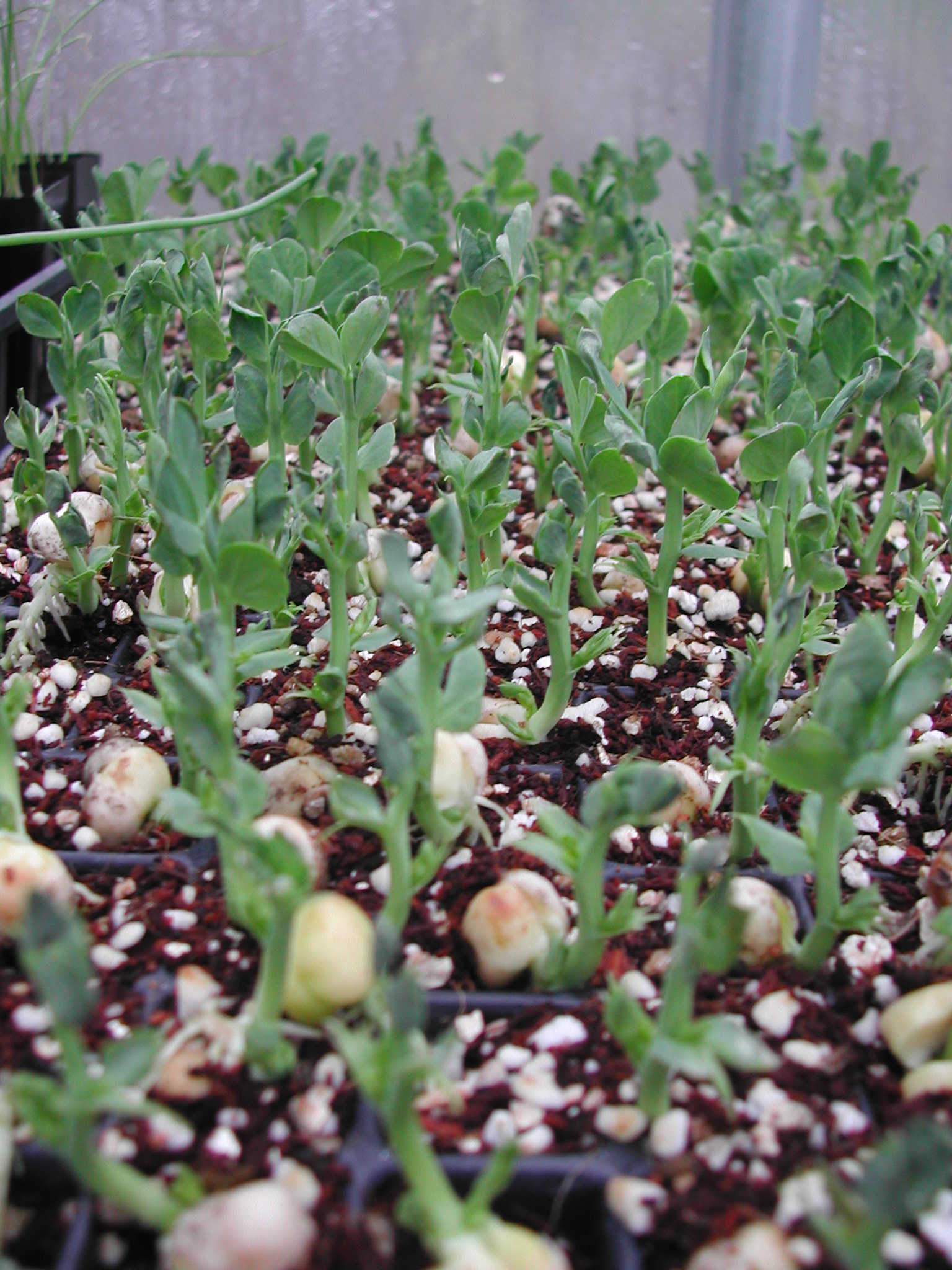
The starts are ready to plant
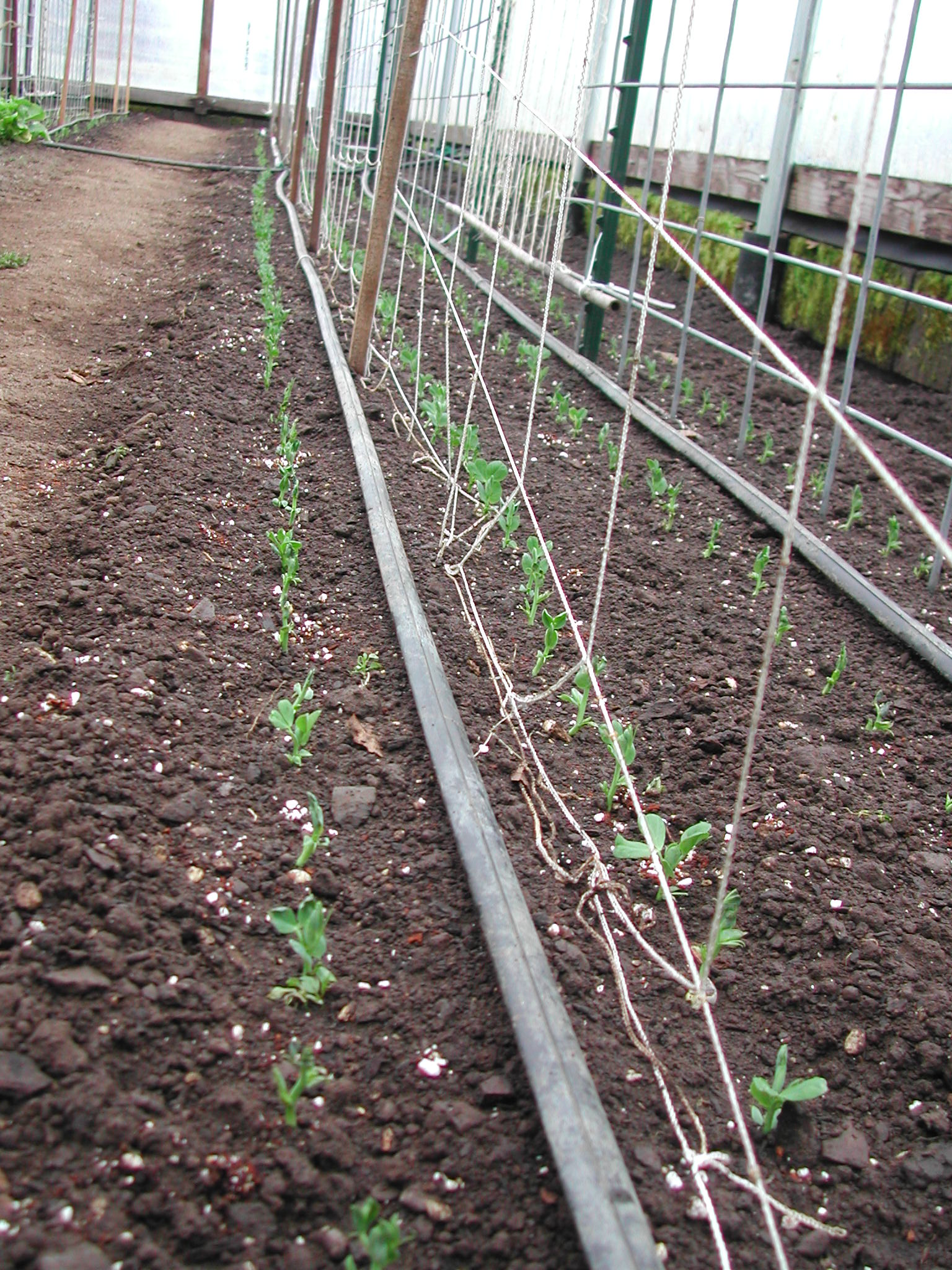
The pea starts are in the ground

Cascadia snap peas
More and More Snow

Today's snow on the grapes. Pruning the vines will wait until the snow is gone.
The rain that I watched turn slushy last Wednesday did eventually turn into snow. It just took a bit longer than the meteorologists thought. The snow was falling by Wednesday night and Thursday morning, we woke up to a couple inches. I ran out quickly to shake the snow off the chicken fence netting, so the poles wouldn’t bend or break under the weight. Next I swept the snow off the hoop houses. There wasn’t really enough to be a problem, but why take the risk? I have heard the stories of collapsed hoop houses. By the time I got back from taking Steven to catch a bus into work, it was starting to melt. I was kind of late on the pictures again, but not as late as last week.

Last Thursday's snow on the fava beans, already melting
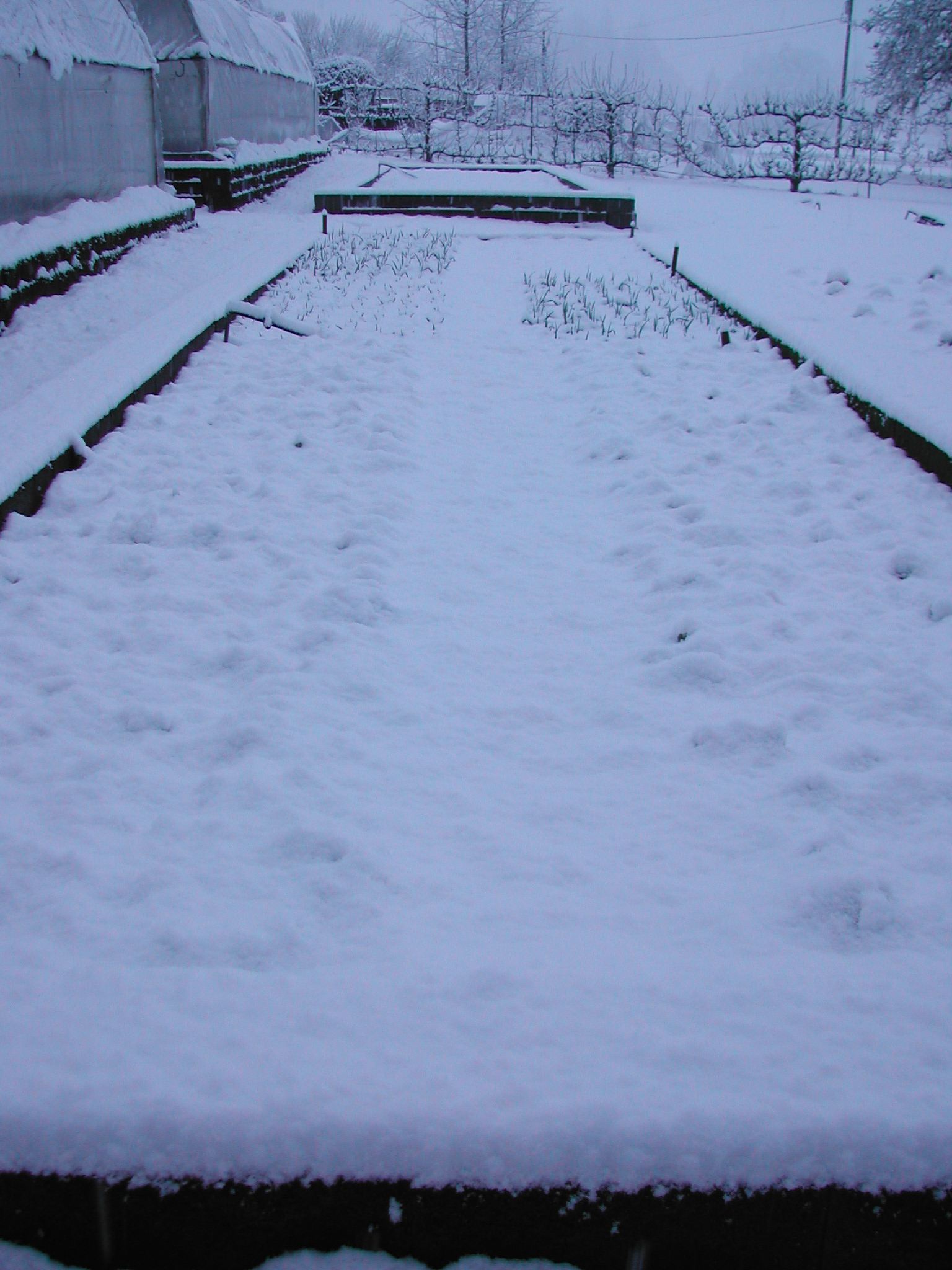
Today's snow on the fava beans
Amazingly, we woke up to snow again today (about three inches). I was not expecting it at all. This time, it was too late for the chicken fencing. A good portion of it was lying on the ground, several poles bent and broken. I shook some off, but decided to wait for the rest to melt. The fence will need some repairs. The snow was wet enough that it was already sliding off the hoop houses on its own. No need for help from me, though Steven decided to take a turn at it before work. I did run out to take pictures before it all melted this morning. Yet, here it is, afternoon, and it is still around, though not as pretty.
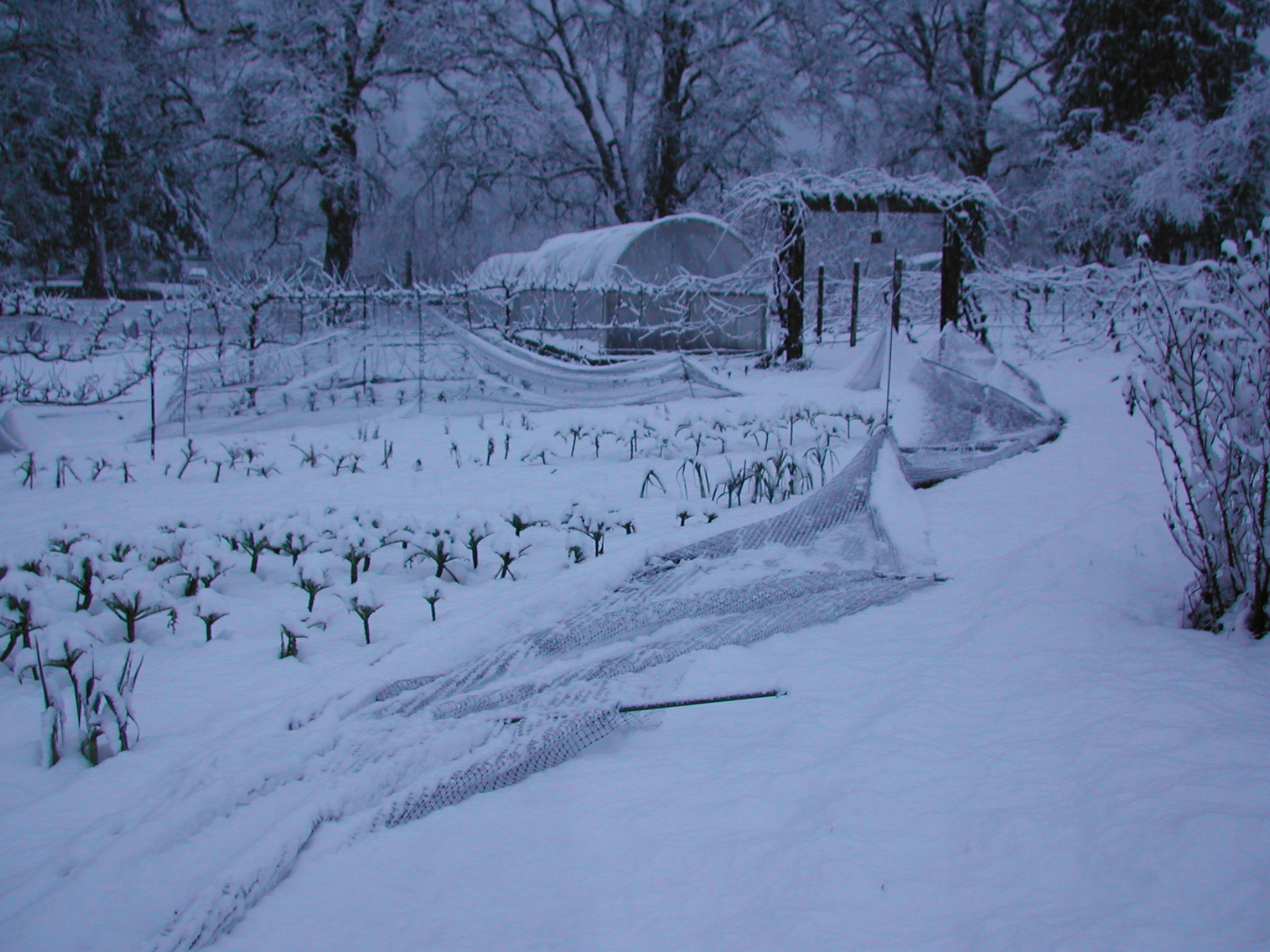
The chicken fence went down today and will need repairs
For those of you reading this who are used to snow in winter, you just have to remember that snow in Portland is unusual. To have snow three times within two weeks in late February/March is particularly unusual. And, what feels even stranger to me is that we had snow on Sauvie Island, at such a low elevation, and not much in Portland proper at all. I guess this time, it wasn’t the elevation that mattered so much as the latitude.
I hope this is the end of snow, because I am ready for spring.

Snow in March?
Soil, Seeds and Snow?
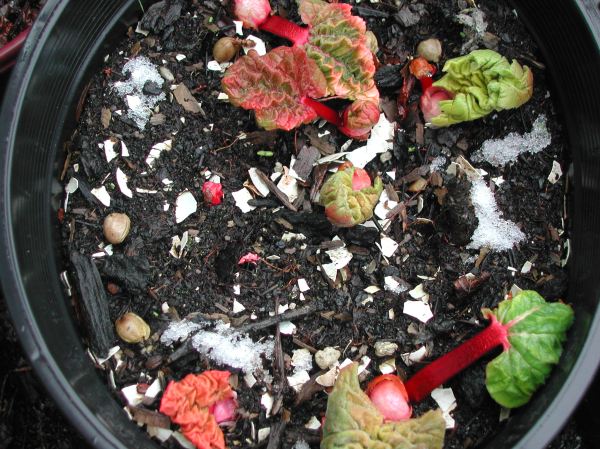
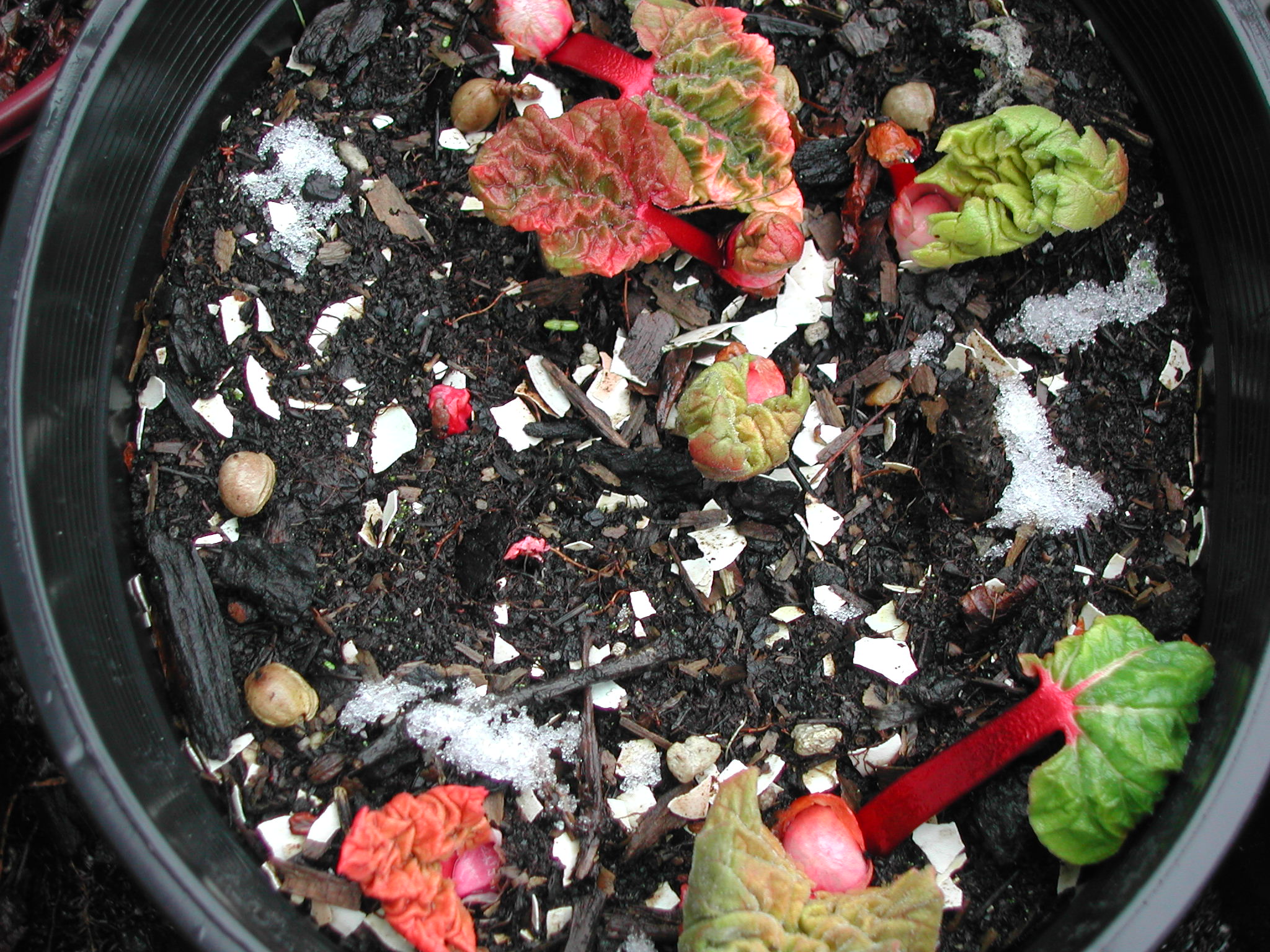
- A little, tiny bit of snow left in the rhubarb after last Wednesday’s snow
Snow
I am looking out the window as I type and the rain is falling. Every once in a while, it looks kind of thick and slushy, even at 50 ft elevation, just after noon, with the thermometer reading 38 degrees outside. Will it snow? It did snow down here in the lowlands last Wednesday, big beautiful flakes, that left a dusting on the ground. It disappeared quickly; too quickly for me to get much of a photo. Maybe this time there will be more and I’ll get out there in time.
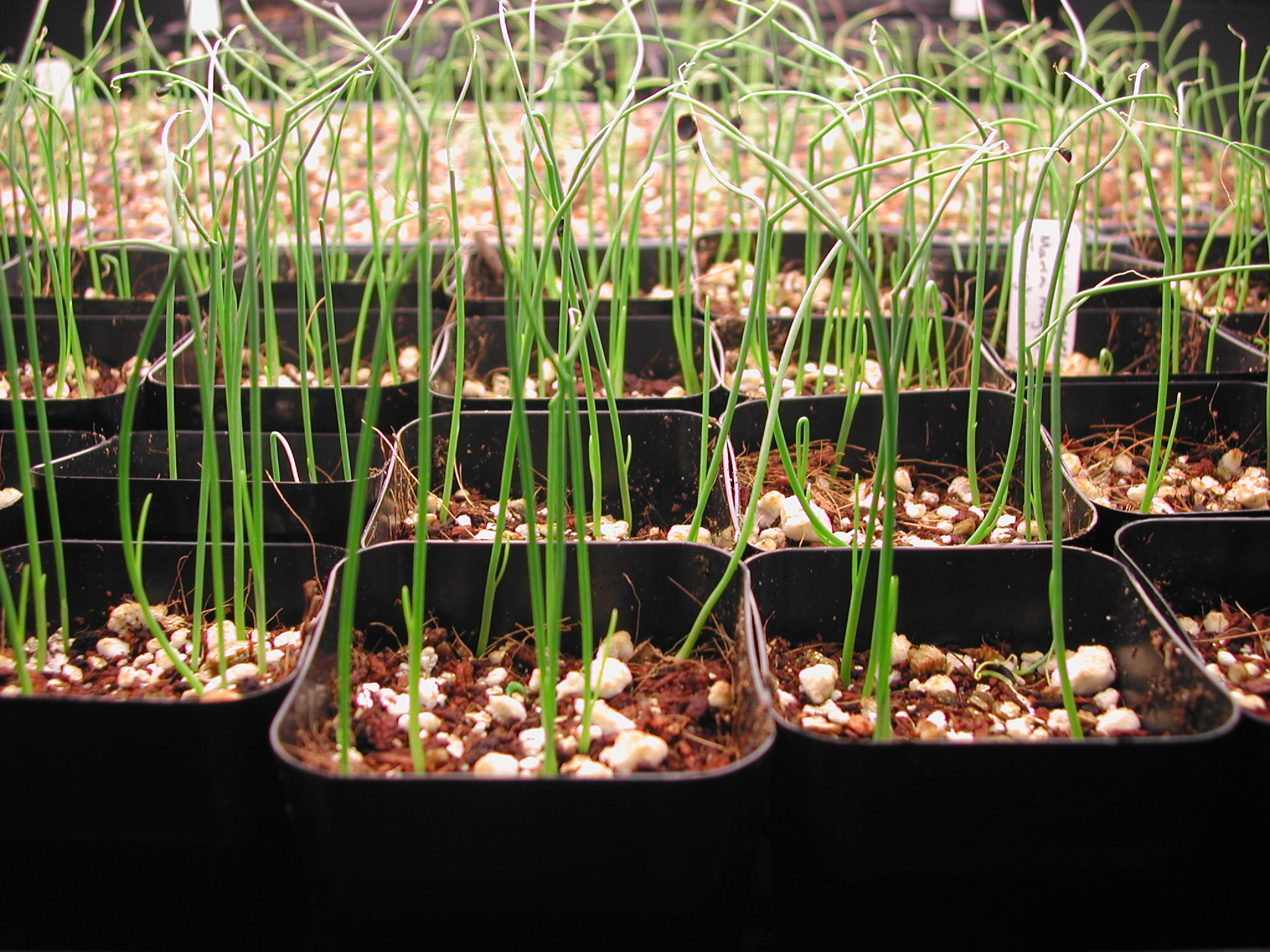
The first onion starts
Seeds
Even if it does snow and the nighttime temperatures drop below 20 degrees (predicted for Friday and Saturday night), there is a warm place in the basement for all the new seeds to start sprouting. In the last three weeks, I have started all the onions, leeks, kale, cabbage, broccoli, kohlrabi (a new attempt, after a failed one four or so years back), endive, escarole, garden sorrel (new this year), and some perenial herbs (thyme, sage, and oregano). A few more things will get started this week. I added a four flat heat mat to my collection of seed starting equipment, along with some heat mat thermometers, to keep the soil temperature close to ideal for germination. I now have room for twelve flats to germinate on heat mats and twenty flats to be under lights (possibly soon to be twentyfour). I am still dreaming of that greenhouse for all my seed starting.
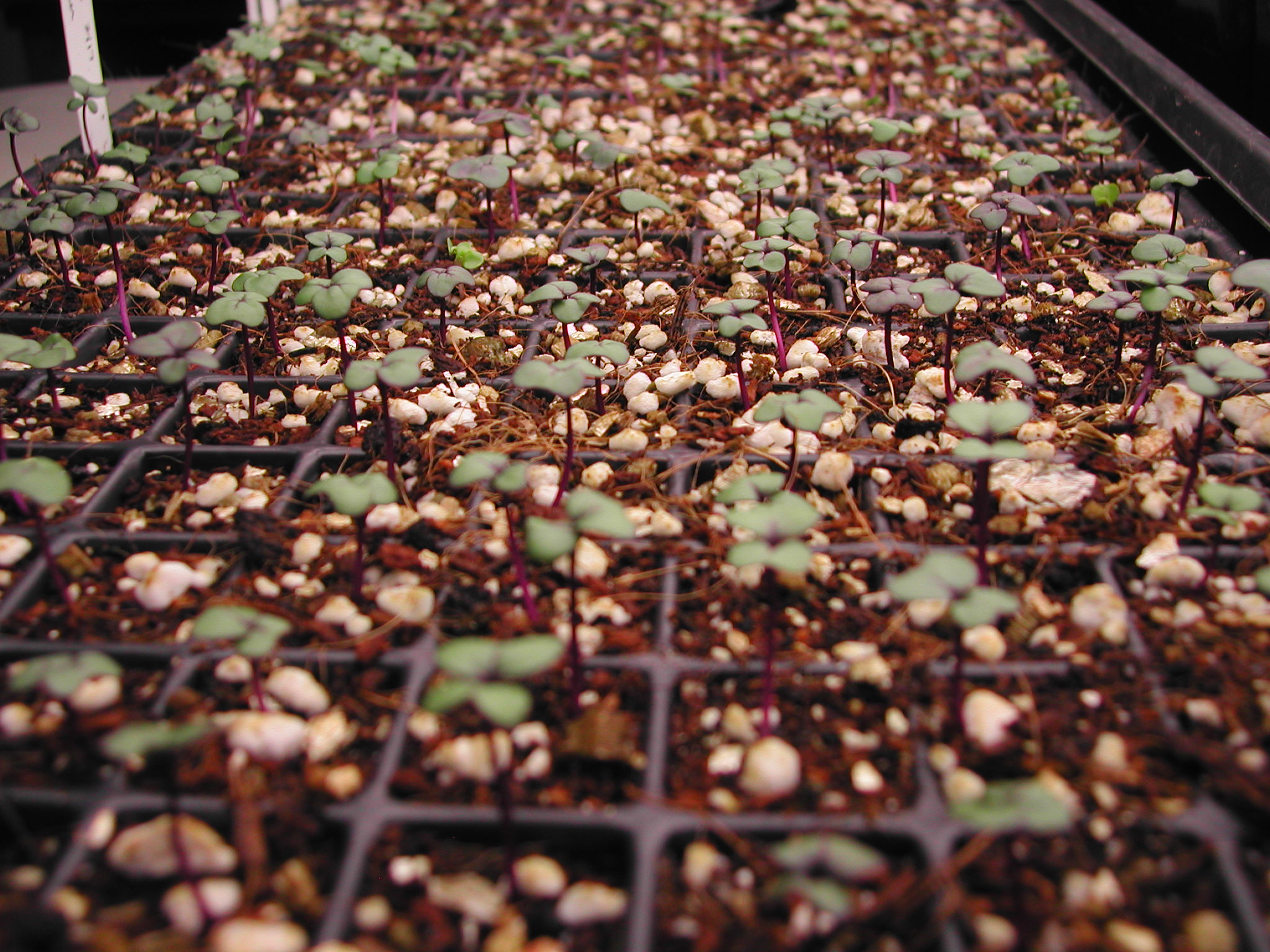
Sorry, no pictures of soil, but the kohlrabi is up!
Soil
As for soil, I got the test results back from the soil samples I sent in to A & L Western Agriculteral Laboratories. I decided to send in a separate sample for the hoop houses this year, to see if they were different from the rest of the beds. They were. I didn’t realize how much nitrogren is leached from the soil through rain. The nitrogen level in the main vegetable beds (next to the hoop houses) was low (12 ppm) while the hoop houses’ level was very high (129 ppm). Yikes! I won’t be adding any nitrogen to the hoop houses this year!
In other soil news, I finally read Teaming With Microbes: A Gardener’s Guide to the Soil Food Web, a book that had been sitting on my nightstand for four years. I read this book in preparation for the Organicology conference workshop I attended on Soils…which was a good thing. Teaming With Microbes advocates for no-till gardening whenever possible, as tilling is hard on soil, breaking up the soil structure and destroying organisms that are essential for good soil and plant health. One of the studies presented at the Soils workshop was on no-till organic farming while cover cropping. Unfortunately, the methods of strict no-till farming in the study were not successful. The best compromise they could find was strip tilling, working up just a twelve inch wide strip for planting within the cover crop. Hmmm…this is where farming (or market gardening) gets hard. You may learn the theoretically ideal way to farm, but it may not be possible in real world, less than ideal circumstances. You have to decide: what is the best compromise?
Winter Update
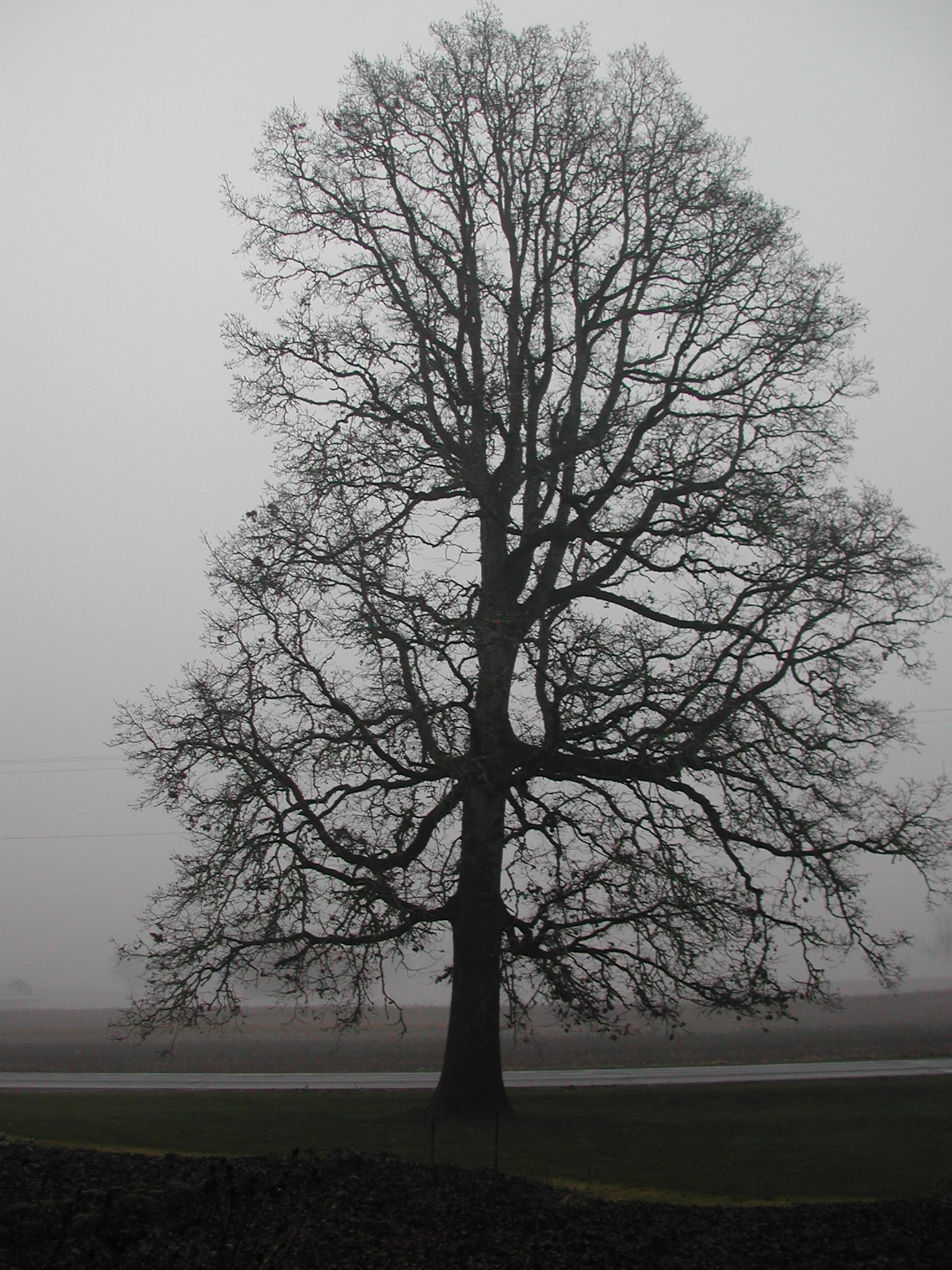
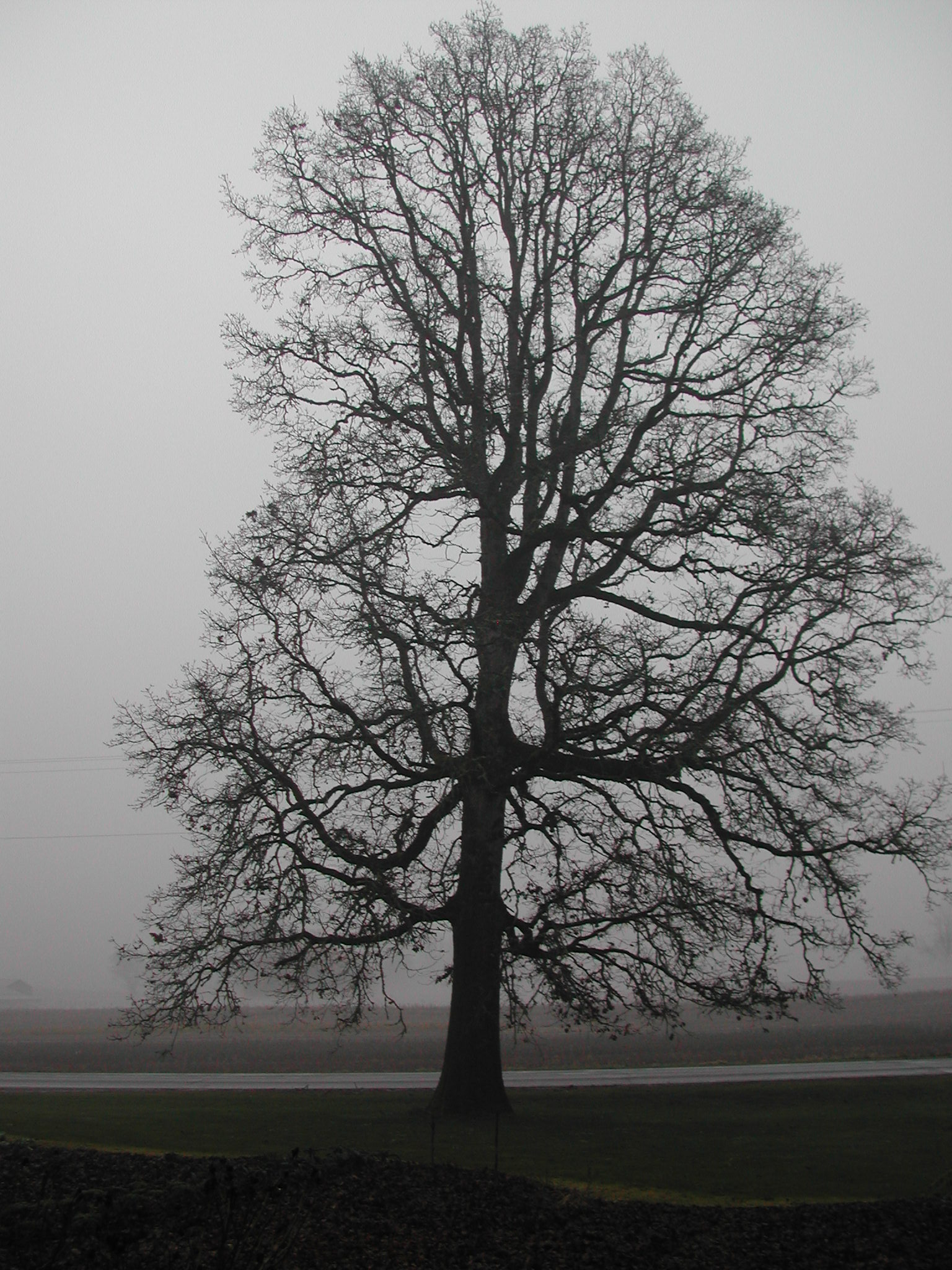
An early January foggy afternoon
Early January was a good time to work inside, with lots of cold, foggy days. Sometimes, on Sauvie Island, the fog does not burn off until mid-afternoon. The first week was devoted to technology. I have wanted to be able to sync my phone with my e-mail for sometime. The prospect of typing all my customer contact information into my phone was not pleasant. It took almost the whole week, but I got my e-mail switched to Outlook (that part was easy) and was able to sync Outlook with my phone. That part took quite some time: consultations with my IT Department (my father) and trying to understand what people were talking about in the help forums that I found online. And then trying out different fixes. Finally, now everything is playing well together.
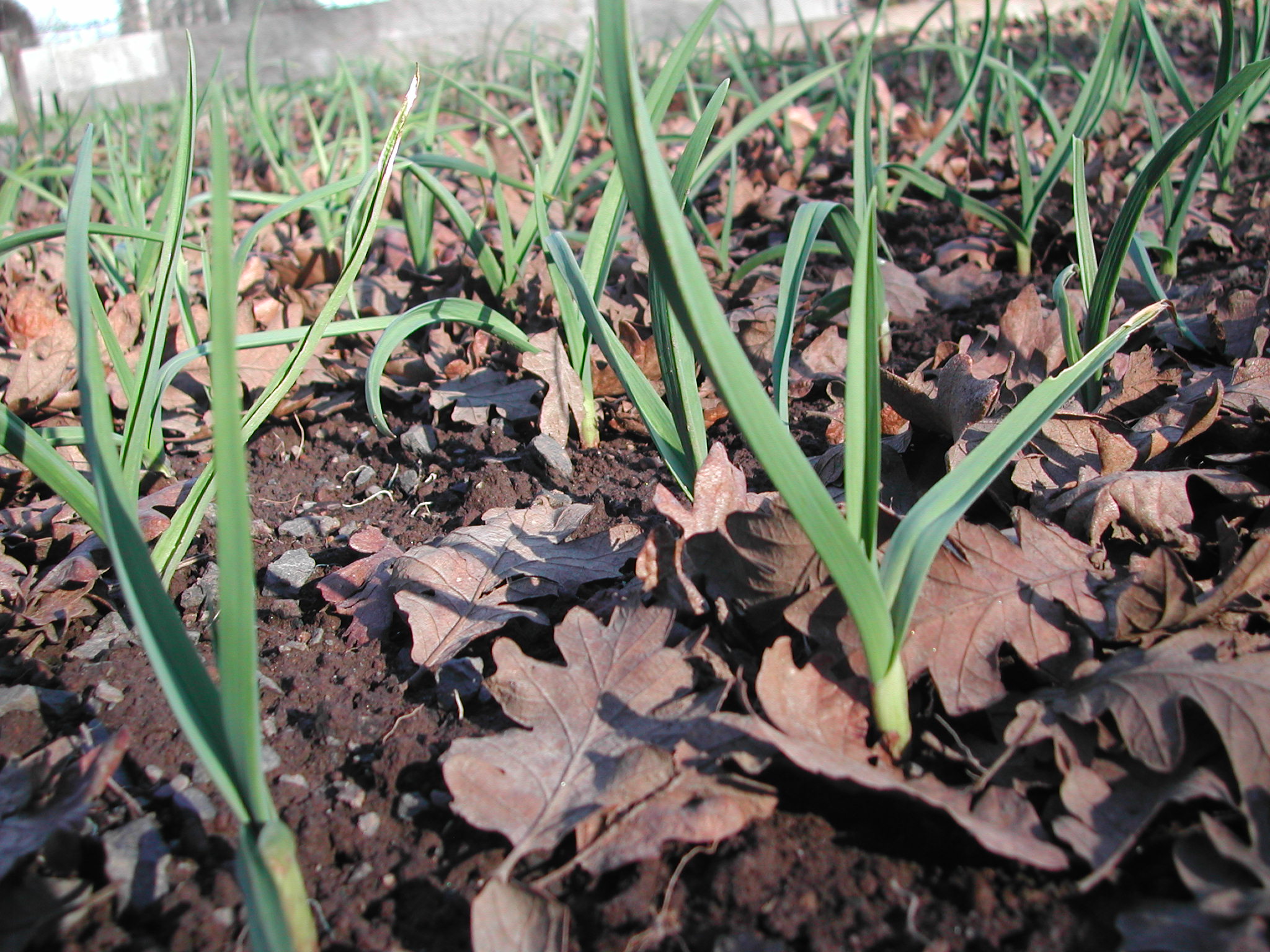
Inchelium Red garlic, seed purchased from Uprising Seeds, is looking good
Next up for the month was the crop plan. Somehow, this took a lot longer than I thought it would. As I was working on it, I realized why: I was trying to find either new varieties or new sources for my seed purchases. Last year, after I bought all my seeds, I learned about some newer, small, organic seed companies in the Northwest that focus on open pollinated varieties, suited for the Northwest. I decided to try to buy as much seed as I could from these companies this year. I still bought seed from some companies in the Northeast and all but one packet of seeds is certified organic. (I bought the Galeux d’Eysines winter squash seed from a company in Missouri that sells ” open pollinated, pure, natural, non-GMO seeds,” the closest I could find to certified organic.) It was fun to look through the catalogs and read the descriptions online, but I had the hardest time choosing varieties. Everything sounds so good and looks so beautiful!
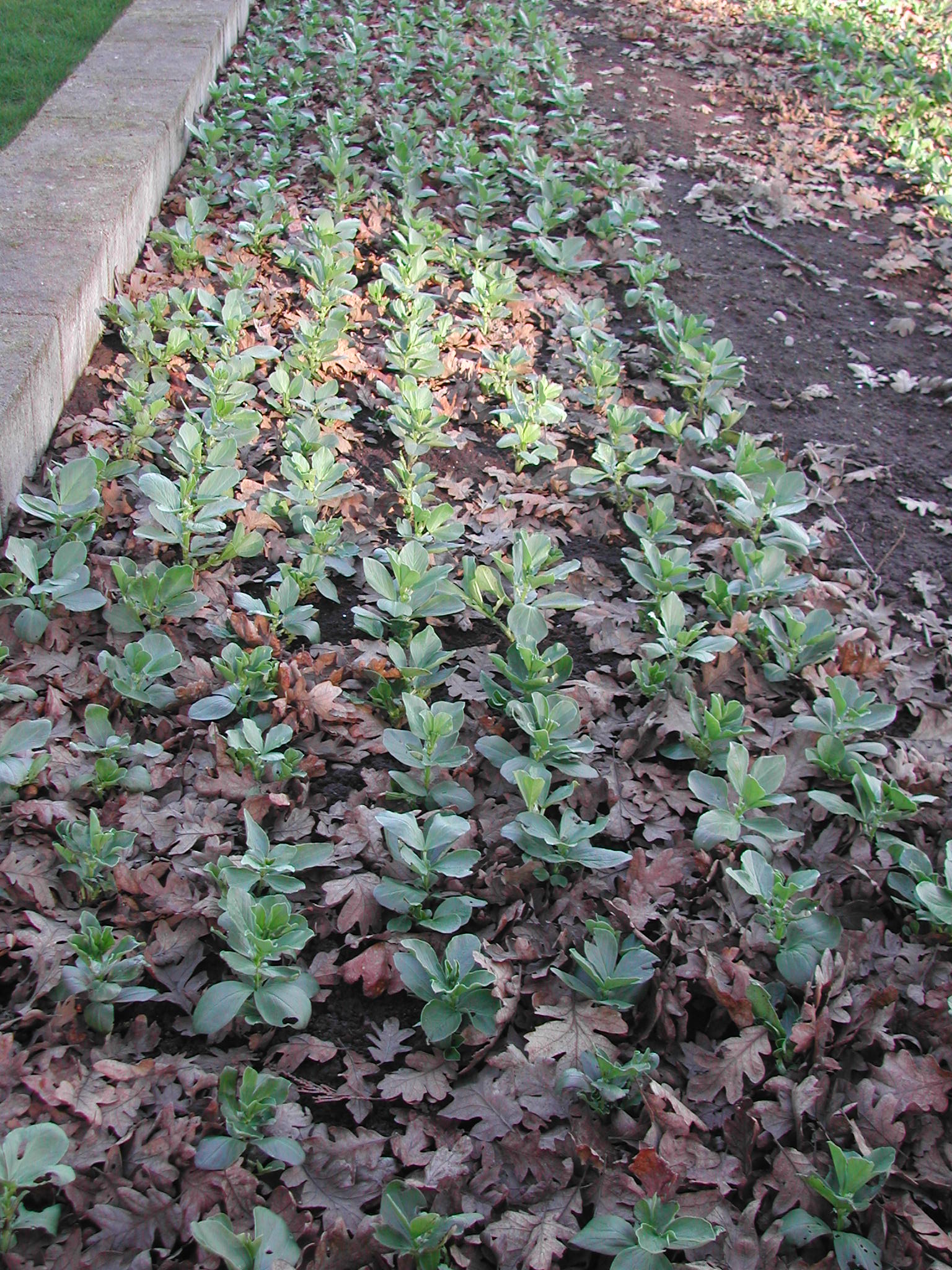
Casine or Italian Farmhouse fava beans, seed purchased from Gales Meadow Farm, also looking good
I have been thinking a lot about the business of seeds this past year. Surprisingly, it can be a cutthroat business on the larger, commodity scale: think thousands of acres of corn, cotton and soybeans. I wish I had all the facts from definitive sources, because what I have heard so far is a bit disconcerting…enough to make me choose to take my business to companies that I believe have more integrity. These are the companies I chose to purchase seeds from this year:
Abundant Life Seeds (I do have questions about this company, but they had organic varieties I wanted that I could not find elsewhere), Adaptive Seeds, Baker Creek Heirloom Seeds (the Galeux squash), Gales Meadow Farm, High Mowing Organic Seeds, Johnny’s Selected Seeds, Uprising Seeds, Wild Garden Seed
Now that it is February, it is time to start seeding and working outside again. But, before I get too far into that, I am attending a conference at the end of next week, called Organicology. The first day is all about soils. It should be good!
2010 Employee of the Year
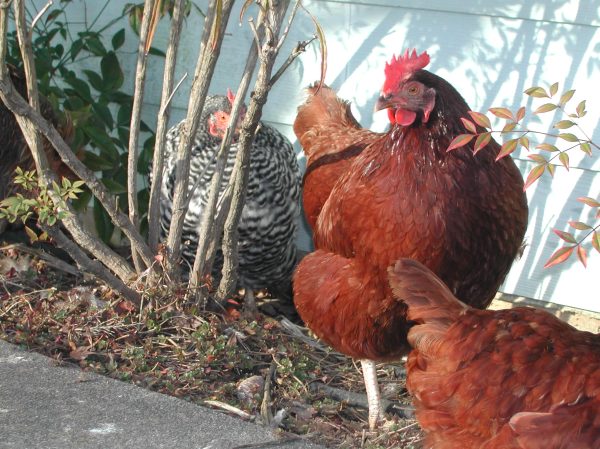
- Medium Girl, the 2010 Employee of the Year

Medium Girl, a nearly three year old Rhode Island Red hen, is the 2010 June’s Corner Garden Employee of the Year. It was a hard decision, as all the girls did good work in the garden, but Medium Girl stood out from the rest. When two of our other reds passed on last summer, Medium Girl held fast, keeping healthy, laying eggs, ferilizing the soil,and scratching for bugs and seeds. I even saw her eating slugs, a direct path to my heart. This winter, she is the only hen who is still laying eggs. All the others stopped laying in the fall, when they started molting. But there was no molting for Medium Girl. She persevered, giving us 4 to 5 eggs a week, with the same old feathers. Not bad for the winter.
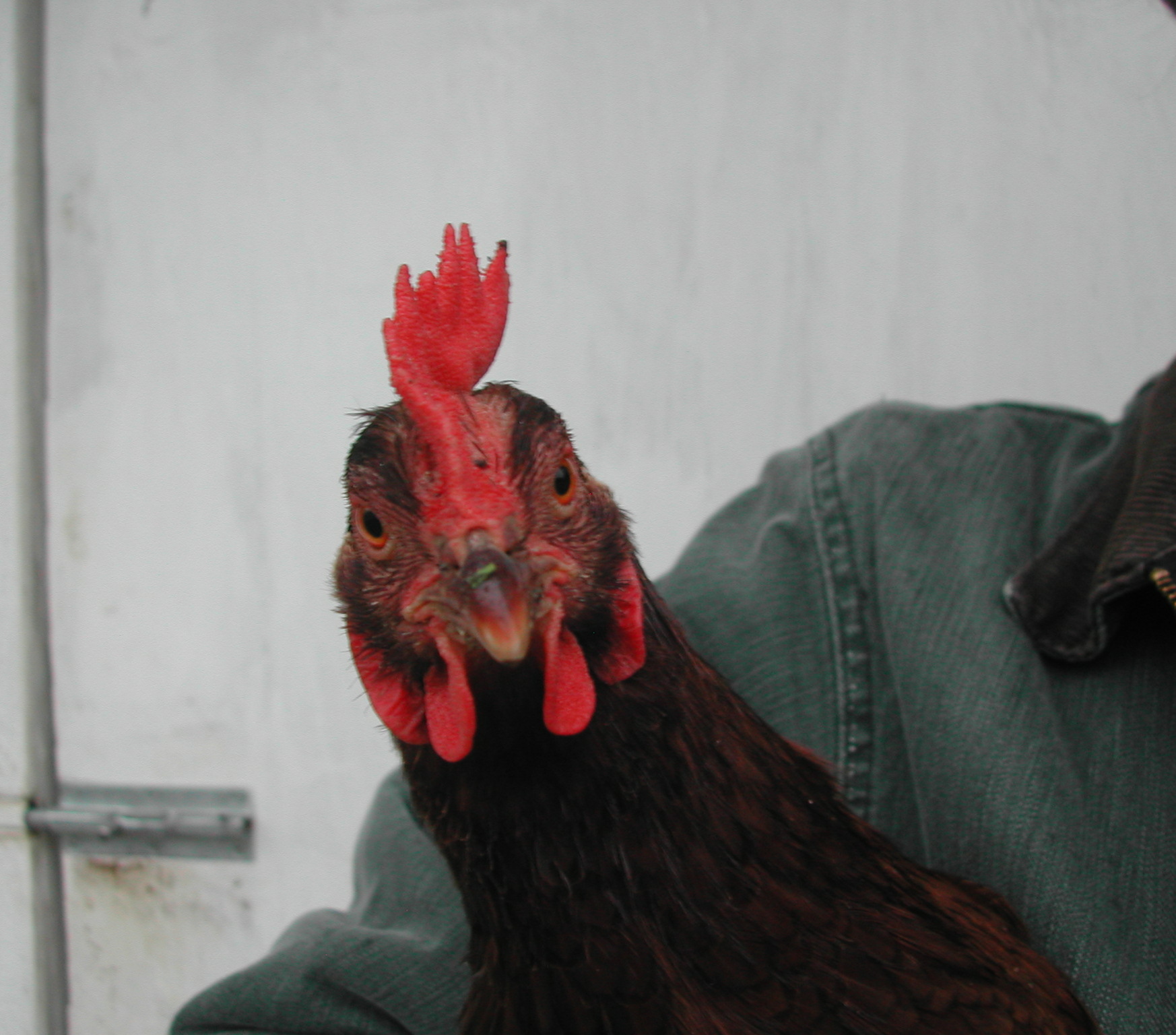
Congratulations, Medium Girl!
As you might guess from the name, Medium Girl, Steven and I haven’t intentionally named our chickens. We do give them functional names, so we can talk about specific girls. There is a Brown Girl (an Americauna, mostly brown), Gray Girl (an Americauna, with gray undertones), Fat Head (an Americauna, who as a chick had the fattest head), Medium Girl (the medium sized Rhode Island Red), Scraggly Girl (a red, with scraggly, thin feathers, especially on her head) and Sore Foot (a Dominique, who hurt her foot a year or two ago). That leaves four other Dominiques that we usually can’t tell apart. Until they develop a defining characteristic (one may soon be known as Black Foot, for the black spots on her feet and legs), they will be referred to as “one of the Dominiques.”
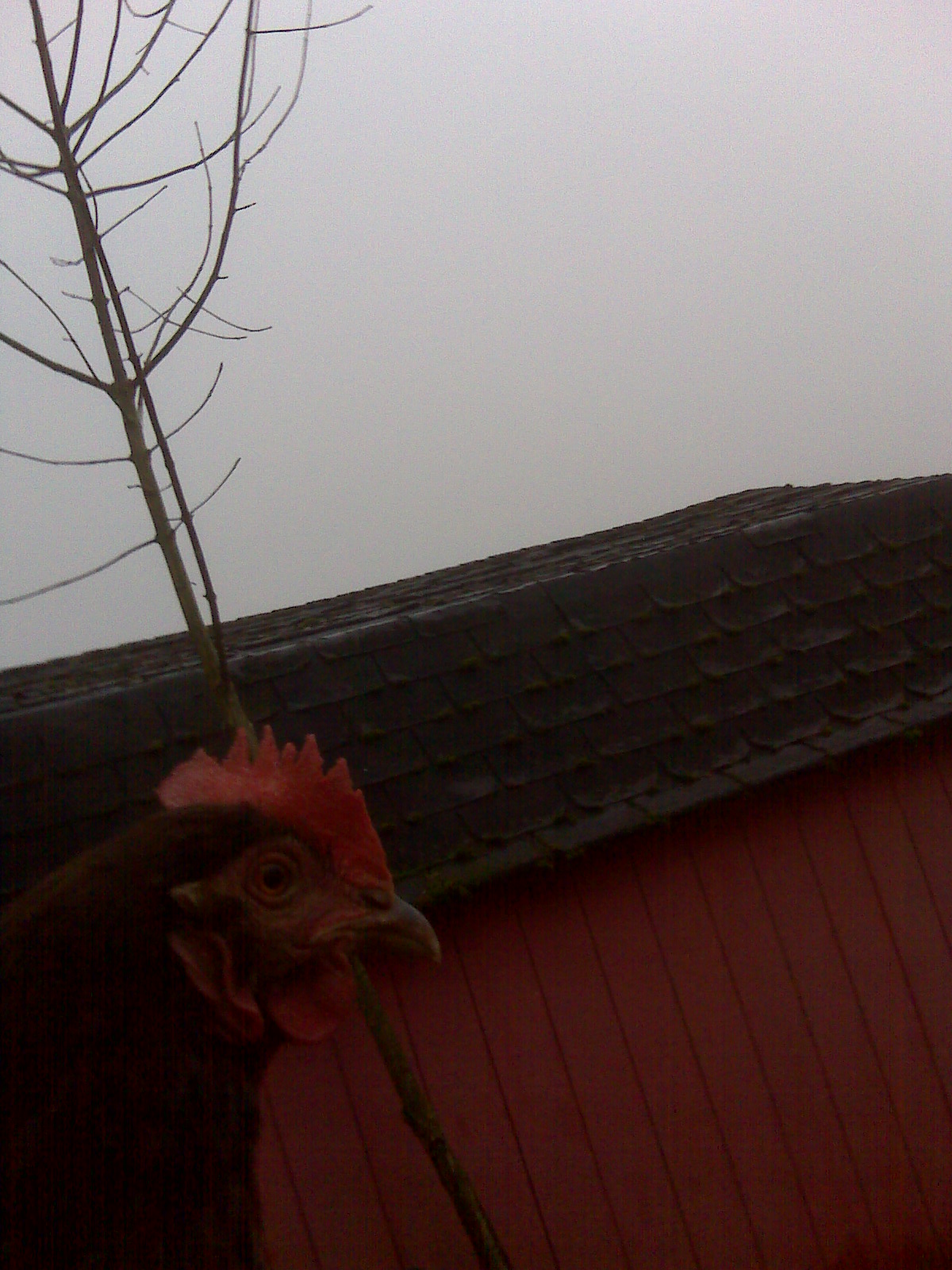
Medium Girl, ready for 2011
Congratulations, Medium Girl! We are lucky to have you working for us!
Forks Over Knives
Just this week, I heard about this documentary, that is having a debut in Portland, January 7-13. The film, Forks Over Knives, as described on its web page, “examines the profound claim that most, if not all, of the so-called ‘diseases of affluence’ that afflict us can be controlled, or even reversed by rejecting our present menu of animal-based and processed foods.”
I haven’t seen this film yet, so I can’t give any recommendations. But, if it encourages eating fruits and vegetables, that is a good thing. If you happen to see, tell me what you think.
Winter is Almost Here

The garden is ready for winter
The 2010 season is over for June’s Corner Garden. The last delivery was three weeks ago, just before Thanksgiving. And what with the three week gap to the delivery before that, the season feels long gone. Before moving on to anything else, I want to thank everyone who ordered from or was a part of June’s Corner Garden this year. Despite our lack of summer, it was a good season. I feel so lucky to have a job that I love to do so much.
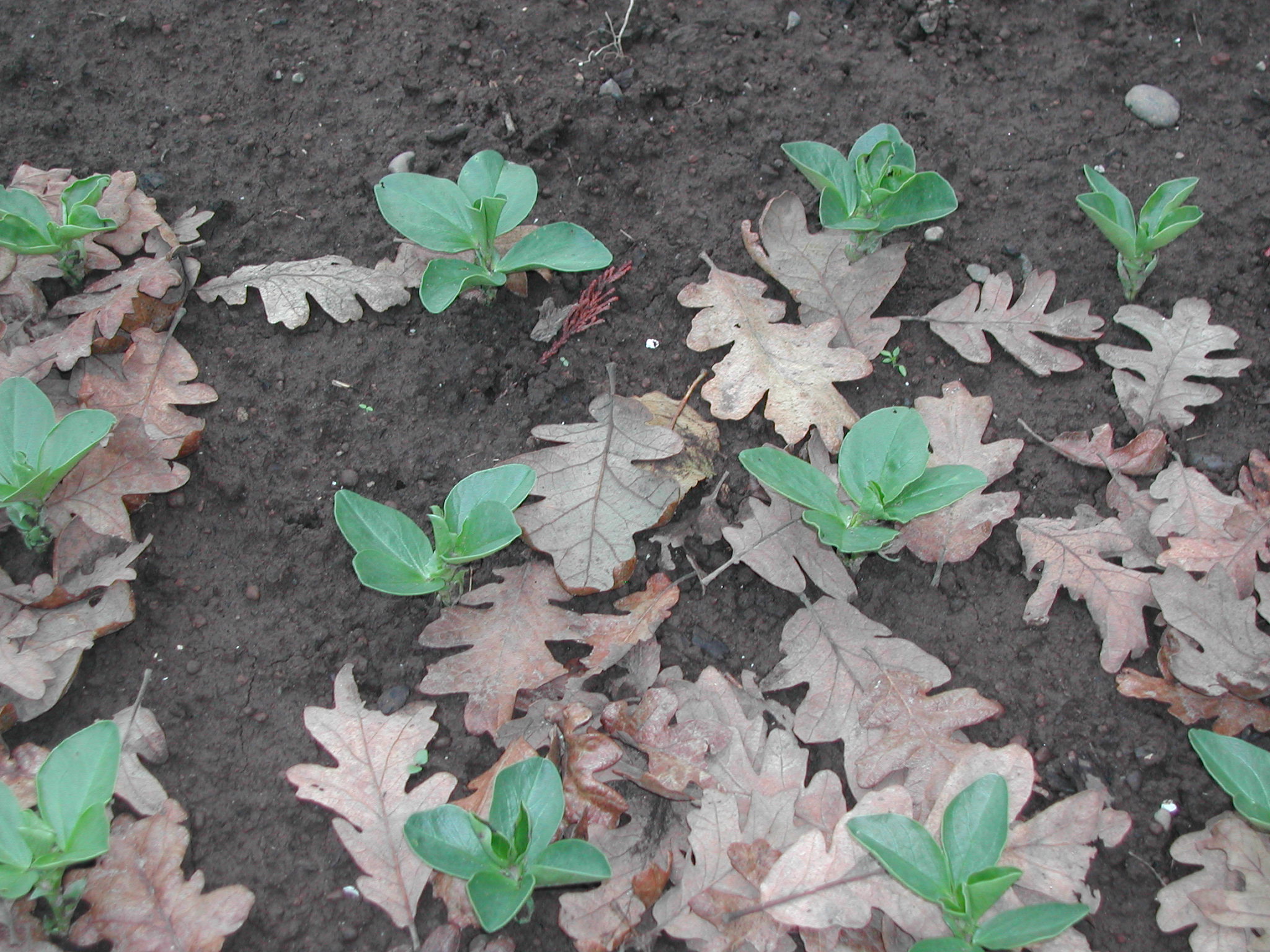
Next year's Italian Farm House fava beans are getting started
The end of October and November were all about getting the garden ready for winter. Beds were cleared of summer plantings, cover crop was seeded, and a few overwintering crops were planted. Of course, there was weeding, too. There is always weeding to do! Luckily, the weather cooperated quite well. There were enough dry days to get more beds seeded in cover crop than ever before. Though it would have been nice to get it in a little earlier in the season, even the last planting that went in the week before Thanksgiving is now showing up…despite sub-freezing temperatures barely a week after it was planted and despite the flocks of wild birds coming in to eat any seed that was still on the surface.

The wild birds descended on this bed, eating all the seed on the surface
Speaking of wild birds, not long after the last post about the birds eating our grapes, there was an article in The Oregonian about the trouble vineyards were having with flocks of migrating birds. I wasn’t the only one with this problem. It seems that the wild berries and seeds that birds usually eat were not as plentiful, thus the need for another food source. First the grapes, then the cover crop seed. Maybe I won’t have to work so hard to think up a way to protect the grapes next year…as long as the wild food has a good year.
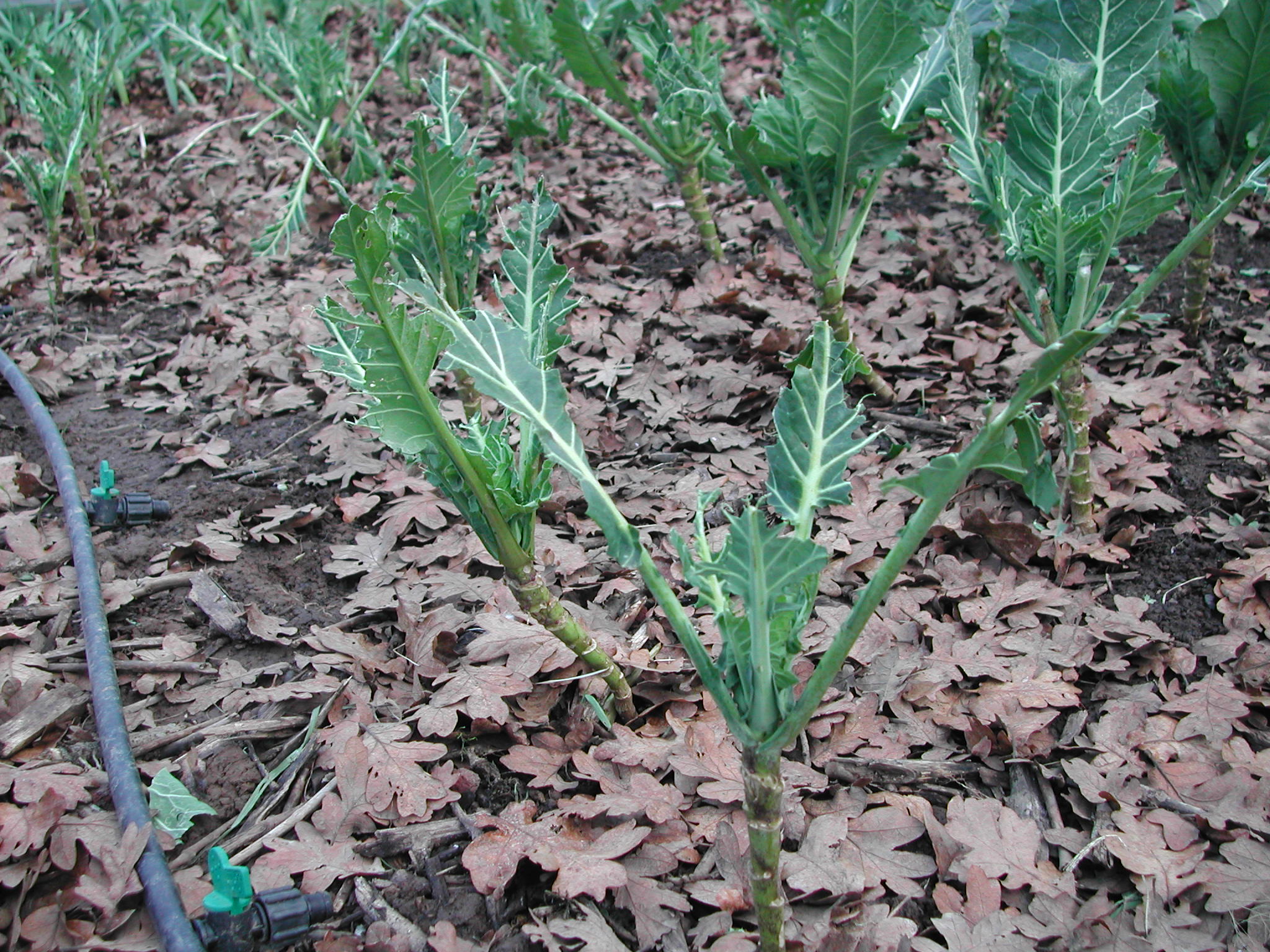
The girls haven't eaten all of the collards yet
Now about our birds. After the last delivery, I decided to let the girls free range. As long as they didn’t cross the road (which they did the last time they free ranged), they were free to roam the yard. They discovered the collards right away, which they liked. I had to quickly run out and cut some collards for us before they ate them all. Luckily, they don’t seem to like leeks. The earliest planted cover crop has withstood their scratching. Today they discovered the cover crop planted last and as long as they don’t stay in it too long, I think it will make it.
It is not official, but I’d say winter is here. Time to slow down, move inside and say thank you, one more time, for a great season.

The birds didn't get all the cover crop seed; a lot was buried and is now showing up
A Few More Dry Days
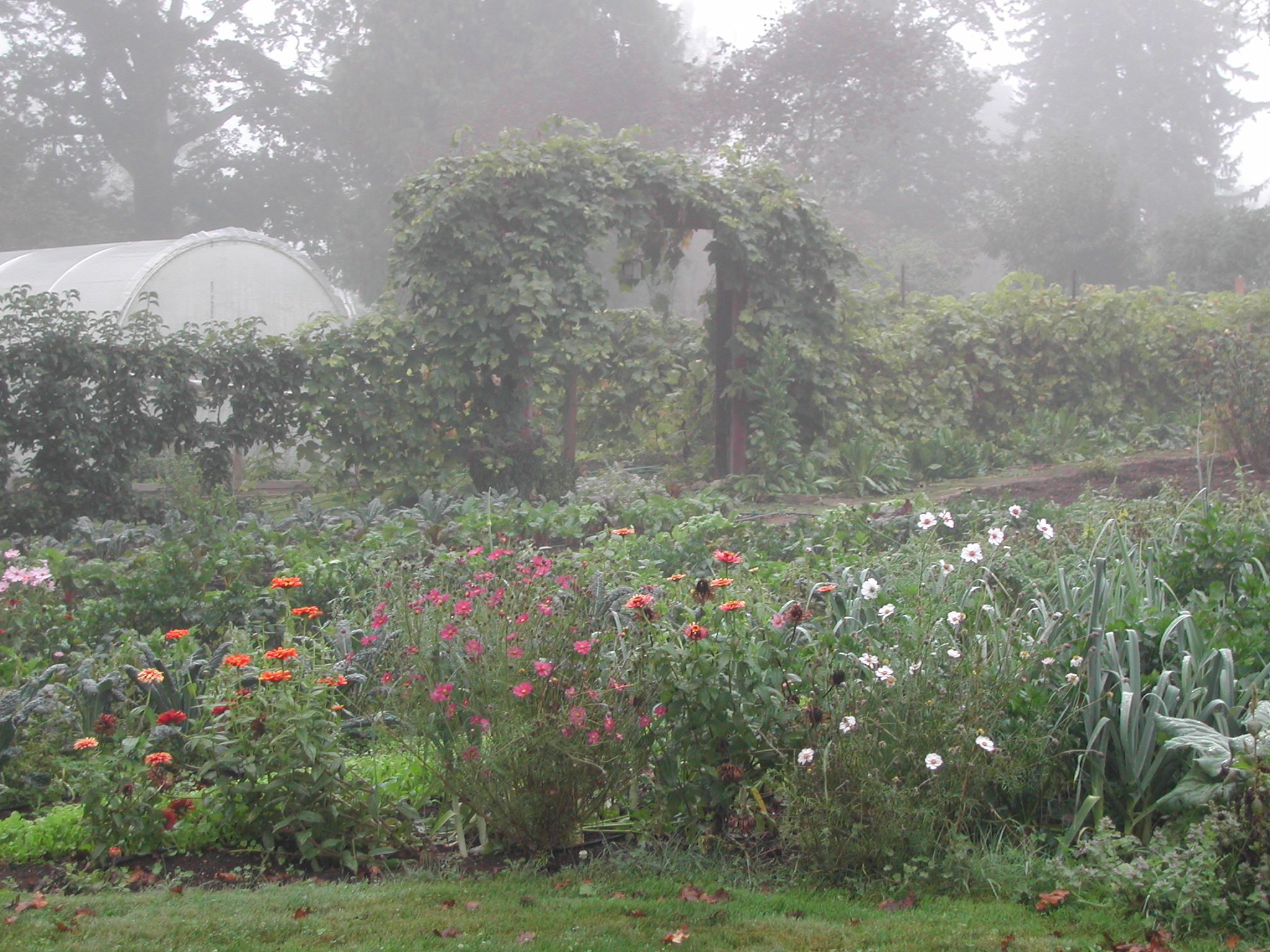
Today, Friday, October 15, 2010: a foggy morning
I am trying to take advantage of the few dry days we have left this fall and get as many beds cleared out and planted with cover crop as possible. I don’t like cold, wet gloves, though, so I am usually pretty slow to get started outside on the cool, foggy, dewy-wet mornings. The extended forecast on AccuWeather shows we have about a week left of dry days and then rain starts in again. In The Oregonian today, there was an article about a La Nina winter: cold, wet and stormy. All the more reason to get out now and get the garden ready for what is to come.

The crimson clover is germinating
I did get a start last week, when I cleared out and seeded crimson clover in five beds and bought the rest of the cover crop seed that I will need. Hopefully, this weekend, with Steven’s help, we’ll get all the dead tomato vines out and get more cover crop in those beds. I should give up on the summer squash beds as well. I keep thinking, maybe there will be one or two more…it is time to move on. Lots of beds are still full though: winter squash, lettuce, cabbage, chicories, carrots, beets, celeriac, leeks, kale, collards, parsley, spinach, arugula, miner’s lettuce and peppers (those are in the hoop house).
Where are the potatoes? Here is a quick update: If you recall, I dug two varieties of potatoes in early July, because the vines were dying from blight. The third variety was doing alright, so I let it continue and it seemed to do well. I dug those potatoes about two weeks ago, but was very disappointed. There just wasn’t much there, so there will not be any more potatoes this year.

I saw a bit too much of this: skeletons of grape clusters
I am getting to a decision about when the season will end…the end of October, with one additional delivery before Thanksgiving. Grapes were the deciding factor. There were not a lot of grapes to begin with this year. On top of that, they have been ripening on a weird, uneven schedule, making it very hard to find fully ripe grapes…especially before the birds found them. There seem to be more birds than ever this year and they have really been enjoying the grapes. Lucky for them, they have plenty of time to check on the grapes to see if they are ripe enough to eat. They definitely have checked more often than I have. I tried to cover some with netting (a feeble attempt on my part), but the birds got underneath the netting and still got at the grapes. I picked the rest of the Canadice on Tuesday and sold what was good on Thursday. The birds finished off the Buffalo and Concords and got a lot of the Niagra and Stueben already. Some were ripe, some not yet. There just is not enough left to sell. This gives me another project for the winter: the best methods to protect the grapes from the birds. It may be a good thing lots of rainy, stormy weather is coming this winter: more time to read and research by the fire.

I have put a little netting over some of the grapes
Finished
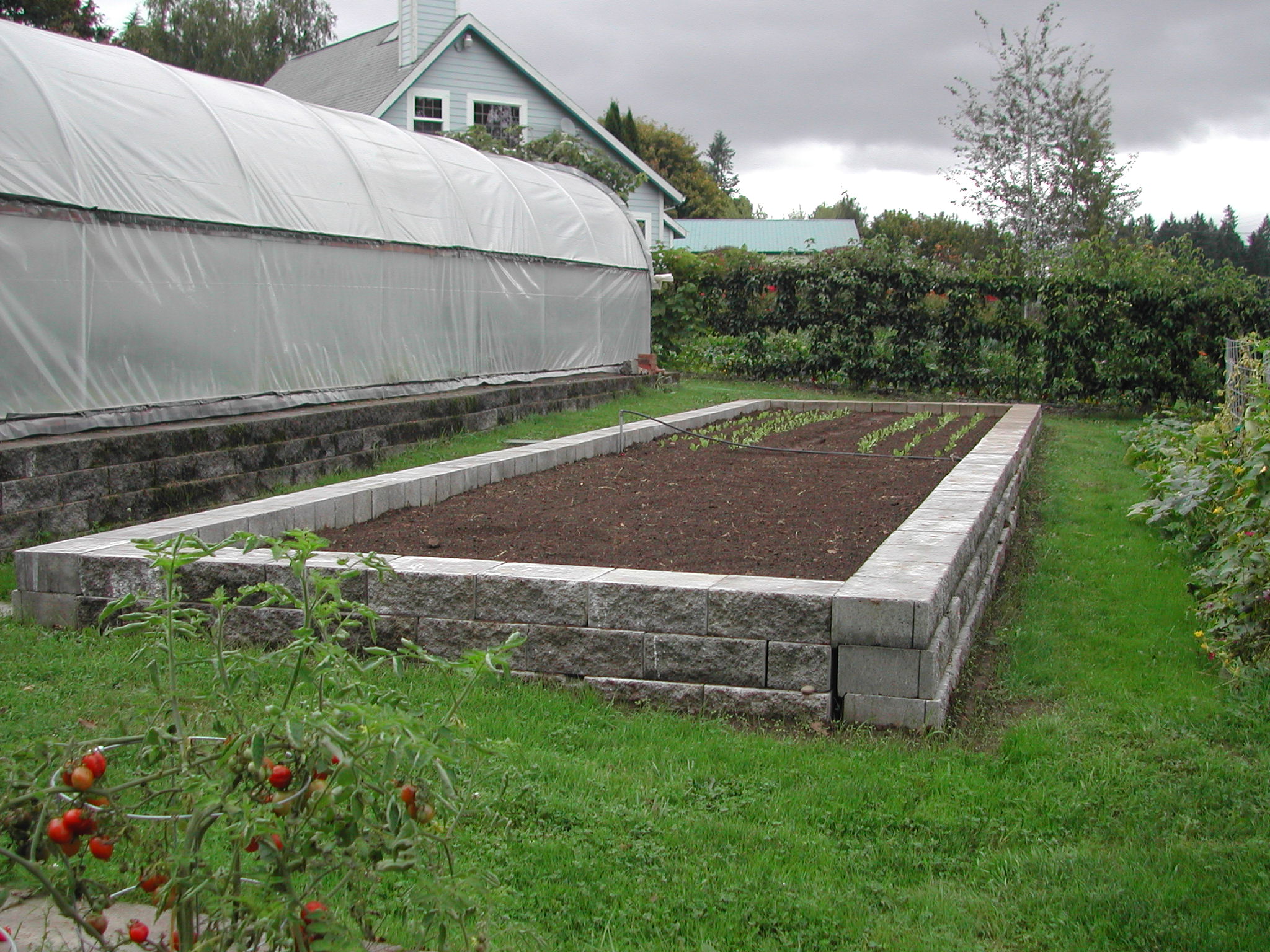
The fourth blocked in bed is finished.
I started thinking about this post about four weeks ago, with this title in mind, when Steven finished building a blocked in bed. A lot happened in September and now a few more things are finished. Here they are:

Chicories are planted in half of the new bed.
The blocked in bed. I get these crazy ideas sometimes and for some reason, Steven gives in and goes along with me. This one started a few years after we moved here, when I thought, what if we enclosed our vegetables beds with concrete blocks? It would level the beds (there is a very slight slope), keep them in place (no shifting from year to year, leaving uneven ground in between beds to trip over), keep them of uniform size (easy for planning how much can fit in a bed and irrigation lines will fit in any bed), keep the grass from growing into the beds (I do not like grass) and we would get some of the benefits of raised beds. It was a ton of work and a bunch of money, but I loved it. We built one bed each year for three years. The next year we started one, but didn’t finish. It sat unfinished for two years and then Steven completed it this summer. Another blocked in bed is ready. I have already planted half of it with fall chicories (hopefully they will grow to full size by November). The other half will be planted with cover crop. I still love it.
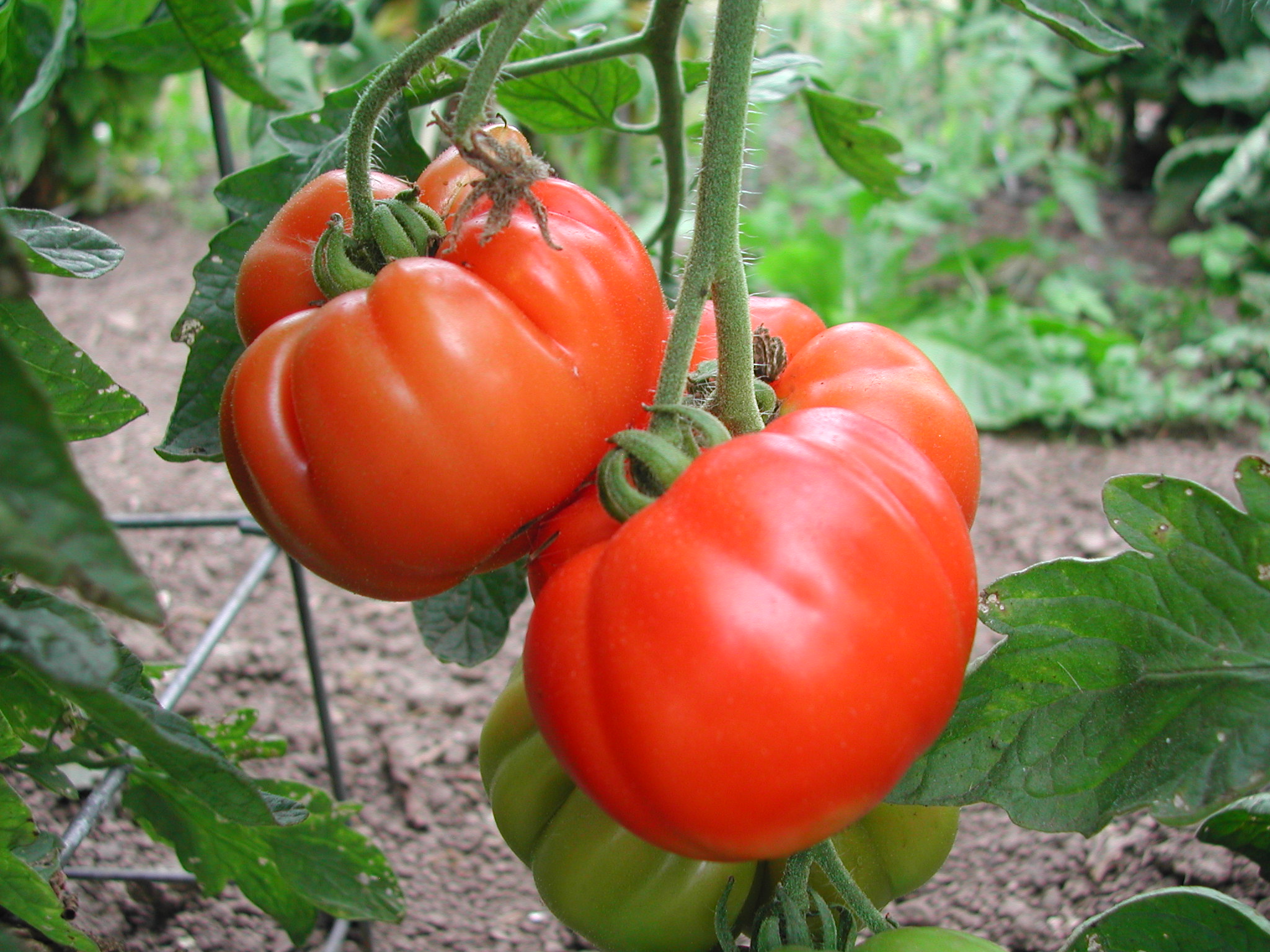
The tomatoes were beautiful before the blight hit.
Tomatoes. I should have told you about this sooner. The tomatoes are finished. They finished around the second or third week of September, during a week of warmish temperatures (low 70s) after some wet weather, ideal for blight to take hold. It did and it wiped them out. I thought maybe I could cut back all the foliage and just let the fruit hang on in the open to ripen, but it didn’t work. The tomatoes were gone. This winter, I’ll look at my methods for growing tomatoes and see if I can improve them.
Summer. That was an easy one, since we hardly had a summer this year. You might have thought it was over sooner, but it officially finished on September 23.
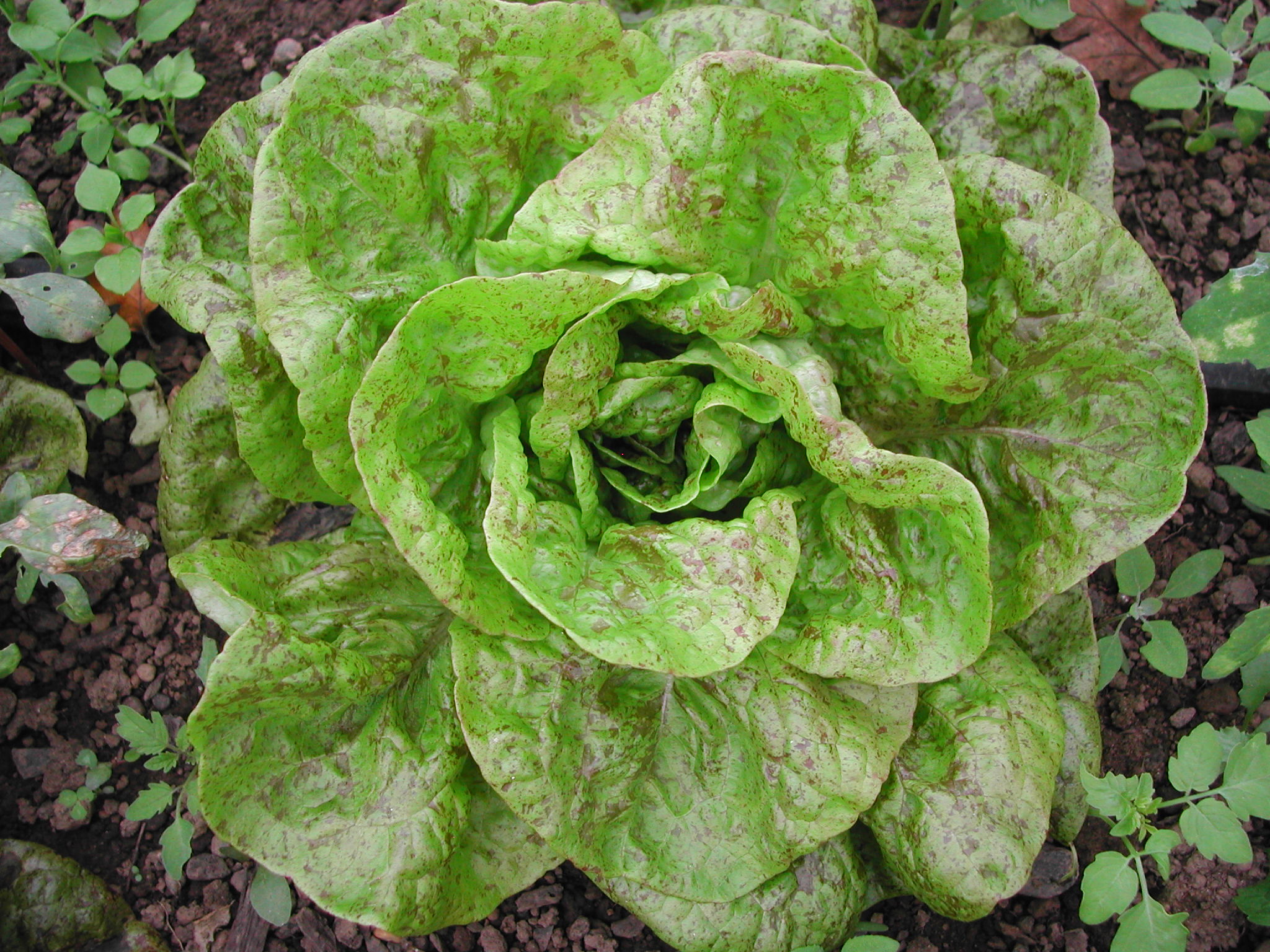
Speckles is on the way.
Lettuce. Lettuce is not really finished, just on leave for a week or so. Despite my efforts to keep it going every week of the season, there are some gaps in growth. Growth is slower with fewer daylight hours. The days are getting shorter, but lettuce should be back very soon.
One thing that is not finished yet is the season. There are still crops to harvest. I am not sure everything that I planted for fall will make it to maturity. That will depend some on the October weather and some on whether I planted things early enough or not. I am having some doubts about making it to Thanksgiving (my goal), but the season should at least make it to the end of October/beginning of November. Here are a few things I hope will make it:

spinach

cabbage

Brussell's sprouts

kale

more carrots

maybe cranberries?