Muddy Harvest
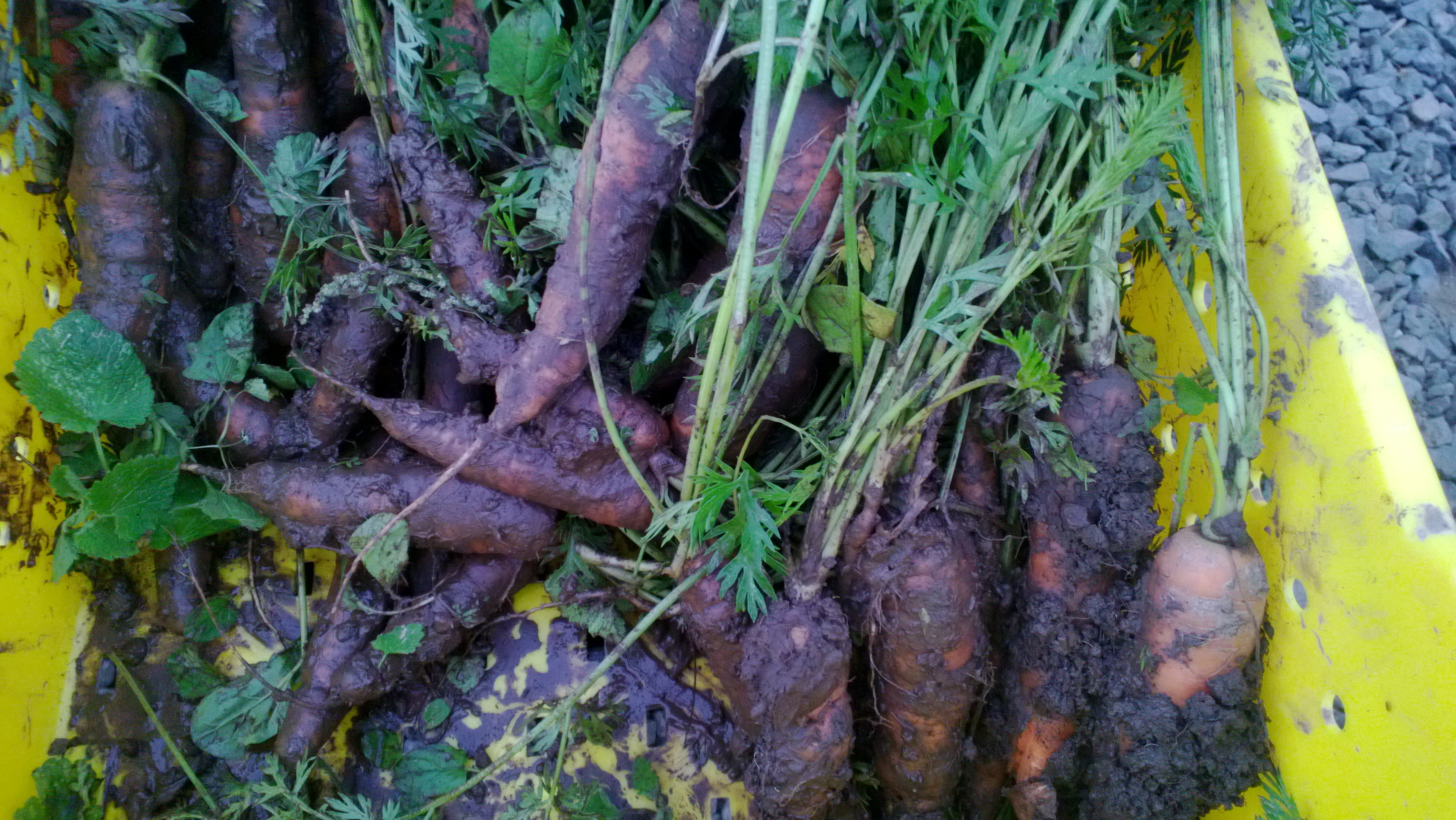
Muddy carrots
A couple weeks ago, we starting harvesting some storage crops in anticipation of rain. We dug onions and potatoes and pulled the dry beans to finish drying in the hoop house. The rain that I saw in the weather forecasts never quite materialized, but I was glad to have gotten things in. Then I started thinking about getting the early field ready for winter, which meant getting it ready for cover crops. I decided to dig all the leeks, carrots and beets in that field; first, to get them out of the field so we could sow the cover crop and second, so the gophers and voles wouldn’t eat them before we did. A week ago, I dug the leeks and we dug more potatoes, but before we could finish it started to rain. It wasn’t too bad, but enough to make the fields a bit muddy.
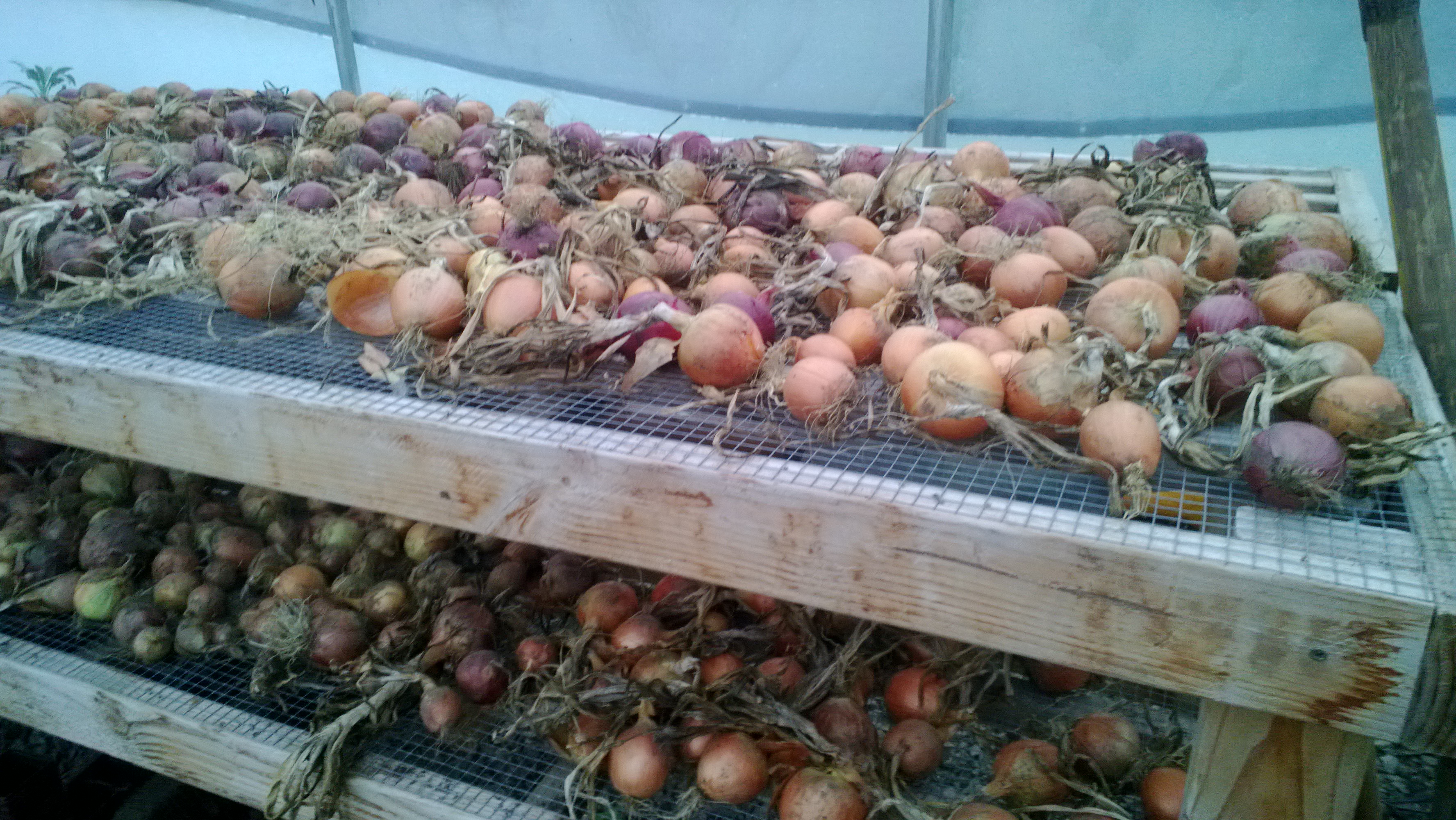
onions drying in the hoop house
This week, we dug the carrots, beets and the rest of the potatoes. Despite the bit of rain last Sunday, the potatoes weren’t too muddy, but the carrots…
Most of the soil on the 18 acres we are working with right now is Helvetia silt loam, a silt loam about 15 inches deep, with a subsoil of silty clay loam that is 62 inches deep, according to the USDA Soil Conservation Service Soil Survey of Polk County. But we also have Dayton silt loam, which makes up the soil in the wetter areas of our farm. The Dayton silt loam has only about 5 inches of silt loam on the surface, then about 7 inches of silty clay loam and under that, 30 inches of clay, which makes for a soil that doesn’t drain well. The clay content also makes for a very sticky mud.
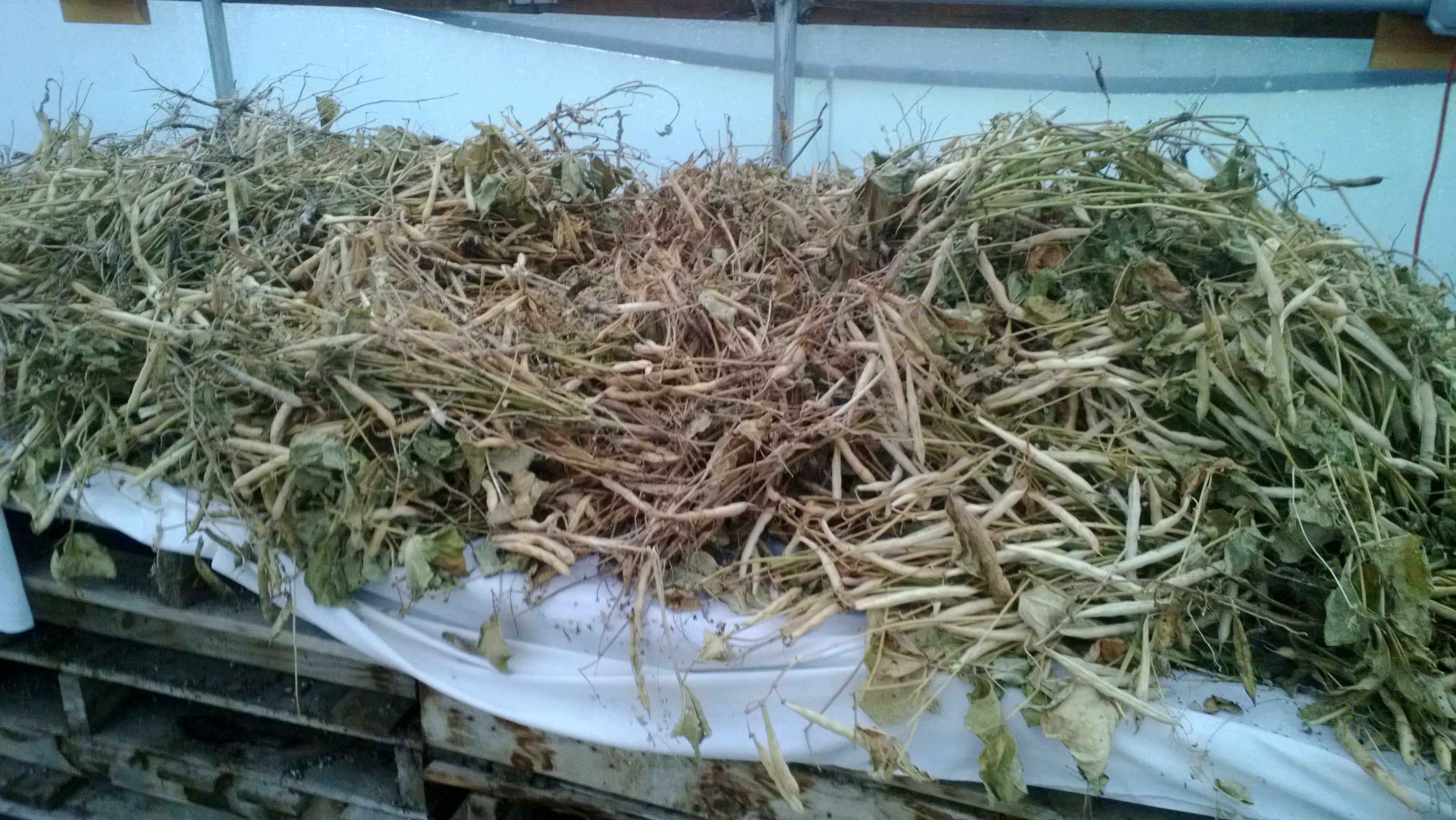
It’s a big hoop house: the beans are drying in there, too.
The carrots might be a lot closer to that Dayton silt loam than we realized. As we dug the carrots, they were coated in mud that was very hard to wipe off. Not only did it stick to the carrot, but when you wiped it off, it stuck to your hand (not to mention your boots, which can add a lot of weight to your feet). Despite the soil being hard to work with when wet, it sure grows some good crops. The carrots we dug were very nice. As it rained yesterday and today, we were able to work in the dry hoop houses (I am so glad to have them!), getting the carrots cleaned, sorted and stored in the refrigerator. It is good to have them in.
Summer Squash Twister

Winter squash, summer squash and cucumbers all growing into each other
I tried an experiment with summer squash this year. It is not completely valid, since I was late in getting it done, but I think it will still be worthwhile. A farmer friend told me she put out a second planting of summer squash, though she never said why. I imagined that as summer turned into fall, they bore less, and the second planting came on as the first one slowed down. So, I thought I would try it. Unfortunately, I was about six weeks later than I planned in getting the second planting seeded and out into the garden. I wasn’t sure if I would get any squash at all, getting them in so late, but the second planting is starting to produce now. I cut the first few zucchini on Friday.
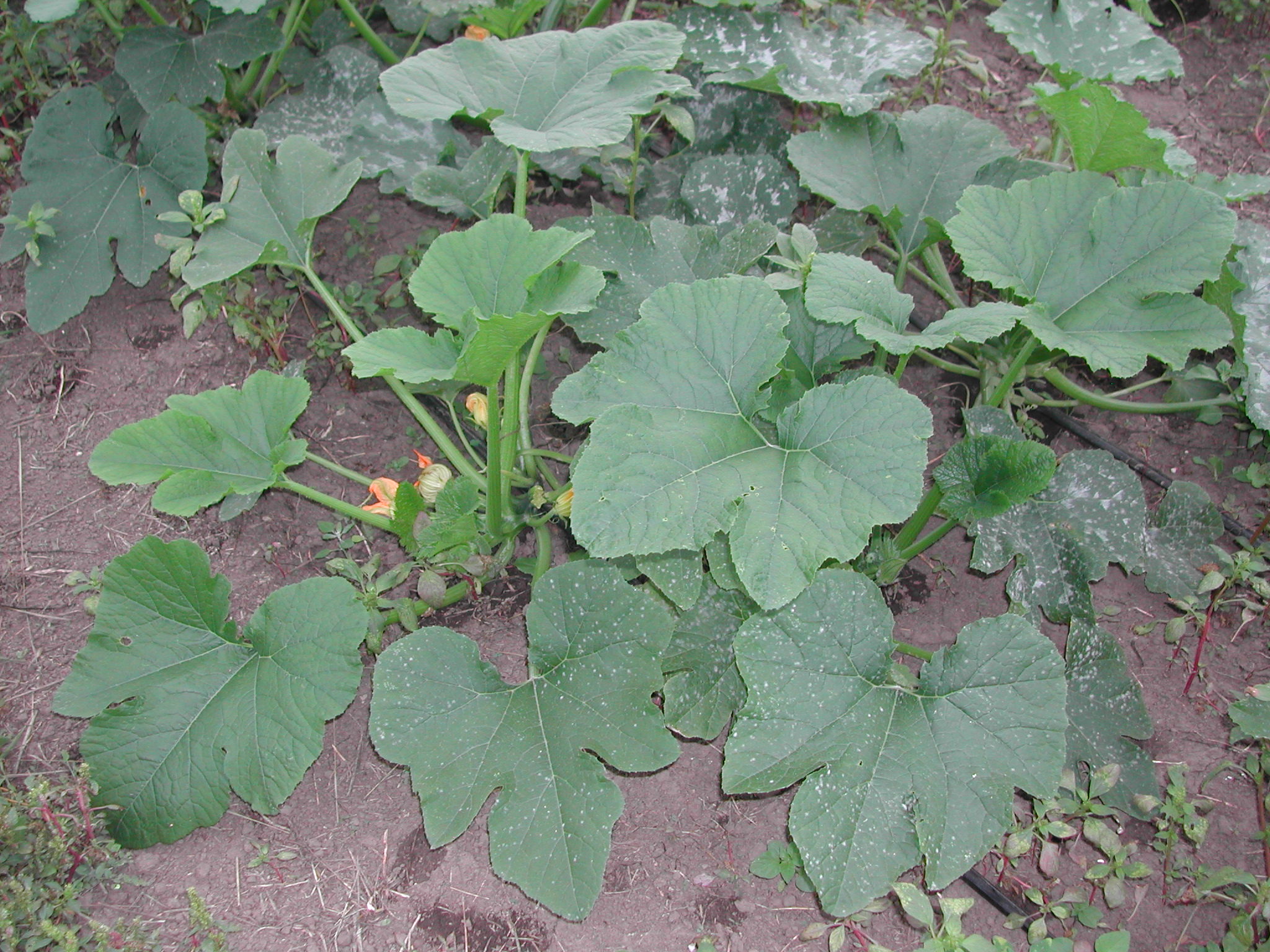
The second summer squash planting, as of today, September 15
My first planting is starting to slow down now. But, I think I discovered the real reason my friend put out that second planting: for efficiency in harvest. My summer squash has done extremely well this year. Almost all of the plants are huge and they have produced well. As they have gotten bigger, I have gotten slower in harvesting. The plants are so big, it is really difficult to get in and around them and to find the squash under the leaves. I gave them more room than I have before, thinking I would keep my pathways clear. I used to put two rows in one bed, this year, it was just one. They have still filled the bed and overflowed into the path and even into the next bed. That has left me playing summer squash Twister, as I try to step between plants without stepping on them and reaching in to cut the fruit without falling into the plants. It is a lot easier and faster to harvest when the plants are smaller. If the newer plants got to peak harvest levels sooner, I could stop harvesting from the older plants before they got too hard to work with and just harvest from the easier ones.
Efficiency in harvest is something I have been thinking about a lot this year. I am, and will be, scheming ways to improve things for next year, like getting that second second summer squash planting in on time.

A gratuitous picture of Famosa, a savoy cabbage, that will hopefully mature in time for this fall
Melons

Emerald Gem melons
I decided to try growing melons again this year. I tried a few years ago, with mediocre results. It wasn’t a very hot summer and the hoop house I grew them in spent the greater part of the afternoon in the shade of oak trees. But this year, on the new farm, we have a hoop house in full sun all day and with a lot more space. I planted three varieties: Emerald Gem, Rocky Ford and Prescott Fond Blanc. Emerald Gem is an heirloom variety, introduced by W. Atlas Burpee in 1886. It has orange flesh, with a musky flavor; rich, sweet and juicy. Rocky Ford is an heirloom muskmelon. This one has green flesh, that is also juicy and sweet. The third variety, Prescott Fond Blanc, is a true cantaloupe from France, with thick orange flesh.

Prescott Fond Blanc melon
The melons are doing pretty well this year, especially the Emerald Gem and Rocky Ford. Unfortunately, the voles are finding many of the ripening melons before I do, and they seem to like the Prescott Fond Blanc in particular. Since it is not as prolific as the others, it may never make it off the farm and will just be a special treat for the voles.
In other farm news, the harvesting continues. I seeded the last batch of lettuce a week or so ago and planted out another batch yesterday. Despite the fact that we have now caught about seven gophers in our traps, the lettuce is still disappearing. Now, I think it is not just gophers, but also voles at work. The only other seeding I plan to do now, for this year, is spinach and arugula, though it may already be too late. Still, I try, because you never know, maybe the weather will be perfect for them, though shorter daylight hours are likely the bigger issue. Forever the optimist in the garden!
Third Verse, Same as the First

Gopher Cinch trap
Maybe it is not exactly third verse, same as the first, but there is a lot of repetition going on here right now. Harvest, look at the damage from gophers and cucumber beetles, harvest, look at the damage from gophers and cucumber beetles….I have talked about it all before, maybe too many times, but harvesting is the most time consuming task at present and the gophers and cucumber beetles are the pests of the summer (maybe flea beetle, too). This morning, I am feeling some optimism concerning the gophers. Yesterday, we bought 10 Cinch traps for the gophers. Steven set them last night, focusing on the lettuce area, where the gophers have gotten 20 of the next set of heads to harvest so far. I went out to check this morning and, though nine of the traps were still set, one was sprung and there was a gopher in it! I normally would not rejoice in the death of any creature, but this one was in the tunnel nearest most of the missing lettuce, so I was pretty happy about it. (I took a picture, which I will put at the bottom of the post, in case you want either to see it or skip it.) I managed to bury the gopher and set the trap in another tunnel, this time in the carrots.
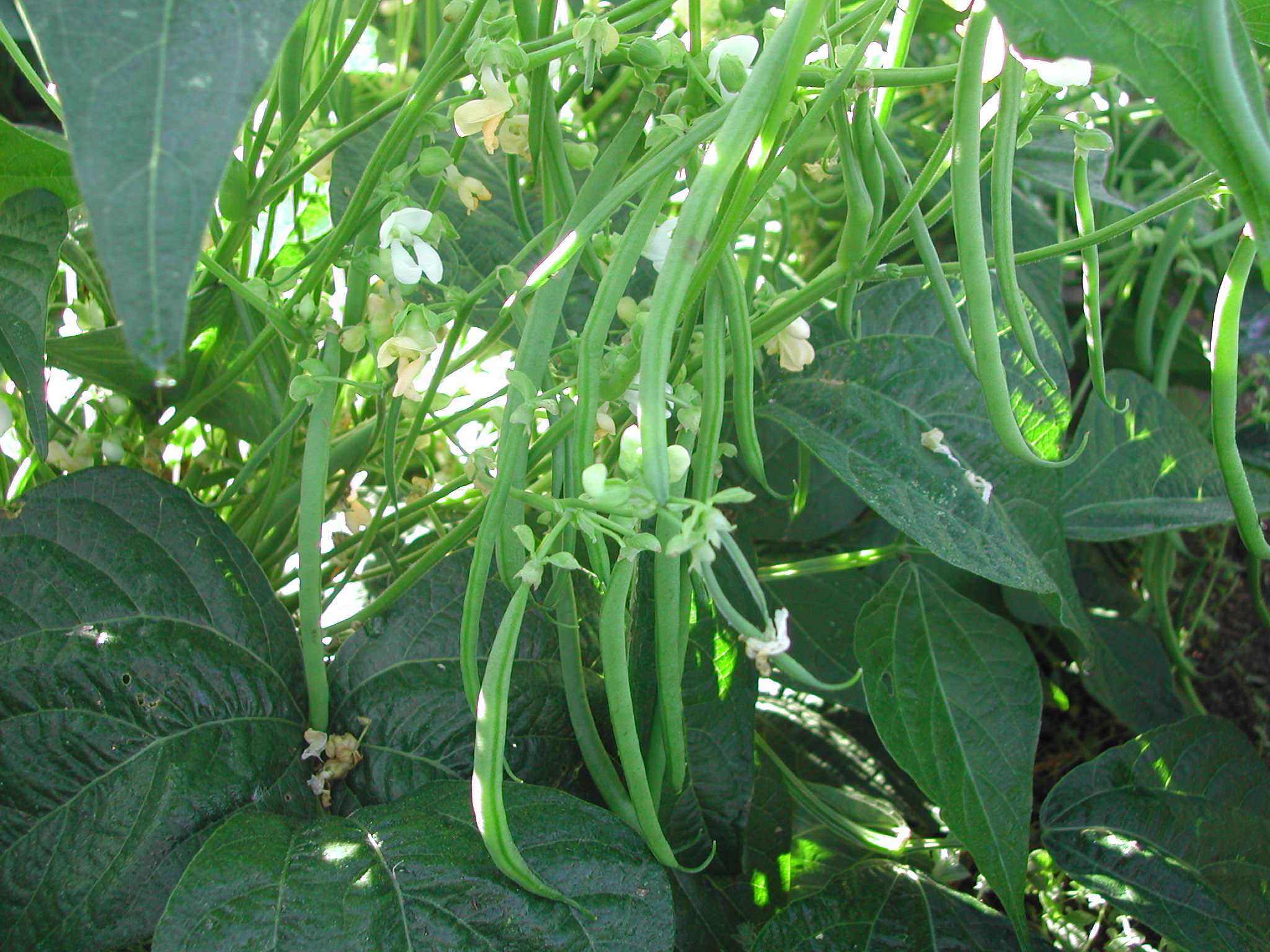
Tavera beans
Beans have joined the focus of harvesting now. I pick them every two to three days. First, it was just one row of Provider beans, but the Tavera beans are starting (one row right now) and the second planting of Provider are not far behind. The timing looks to be just about right, with one planting coming to an end as the next begins. The daily summer squash and cucumber harvest continues. I decided to skip a day on Saturday, and I had some nice large summer squash when I harvested yesterday. A little something for the compost pile!
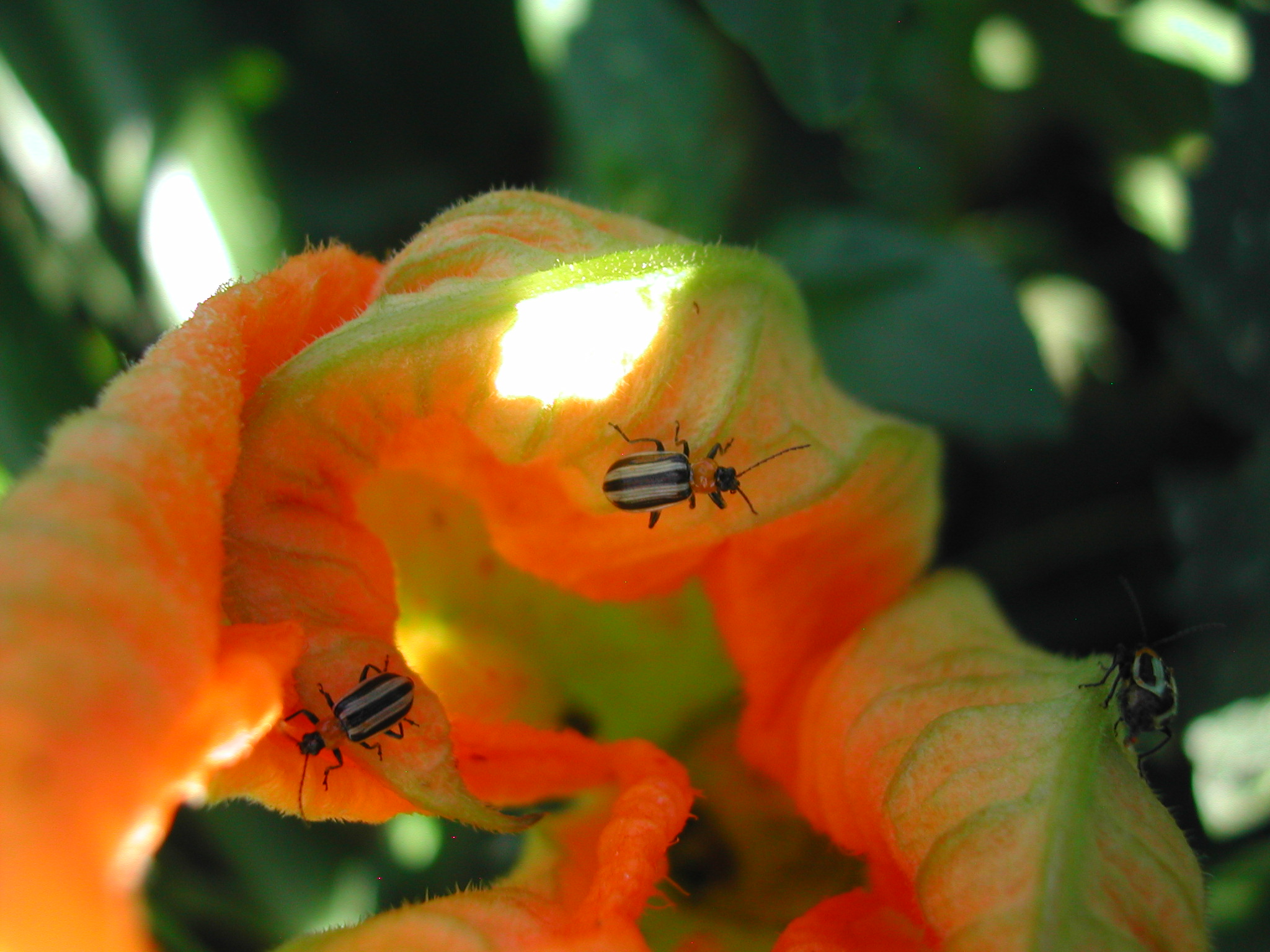
Western striped cucumber beetle
The cucumber harvest also brings us to the cucumber beetle. Most of my experience with cucumber beetle has been with the Western spotted cucumber beetle eating my greens (mostly chard and lettuce). Though they did enough damage, I didn’t find them in huge numbers, usually one or two at a time. That experience is expanding to include the Western striped cucumber beetle this summer. I see them in the cucumbers and summer squash mostly, but other places, too. They are faster and fly more than the spotted beetle, so they are harder to catch and squish.
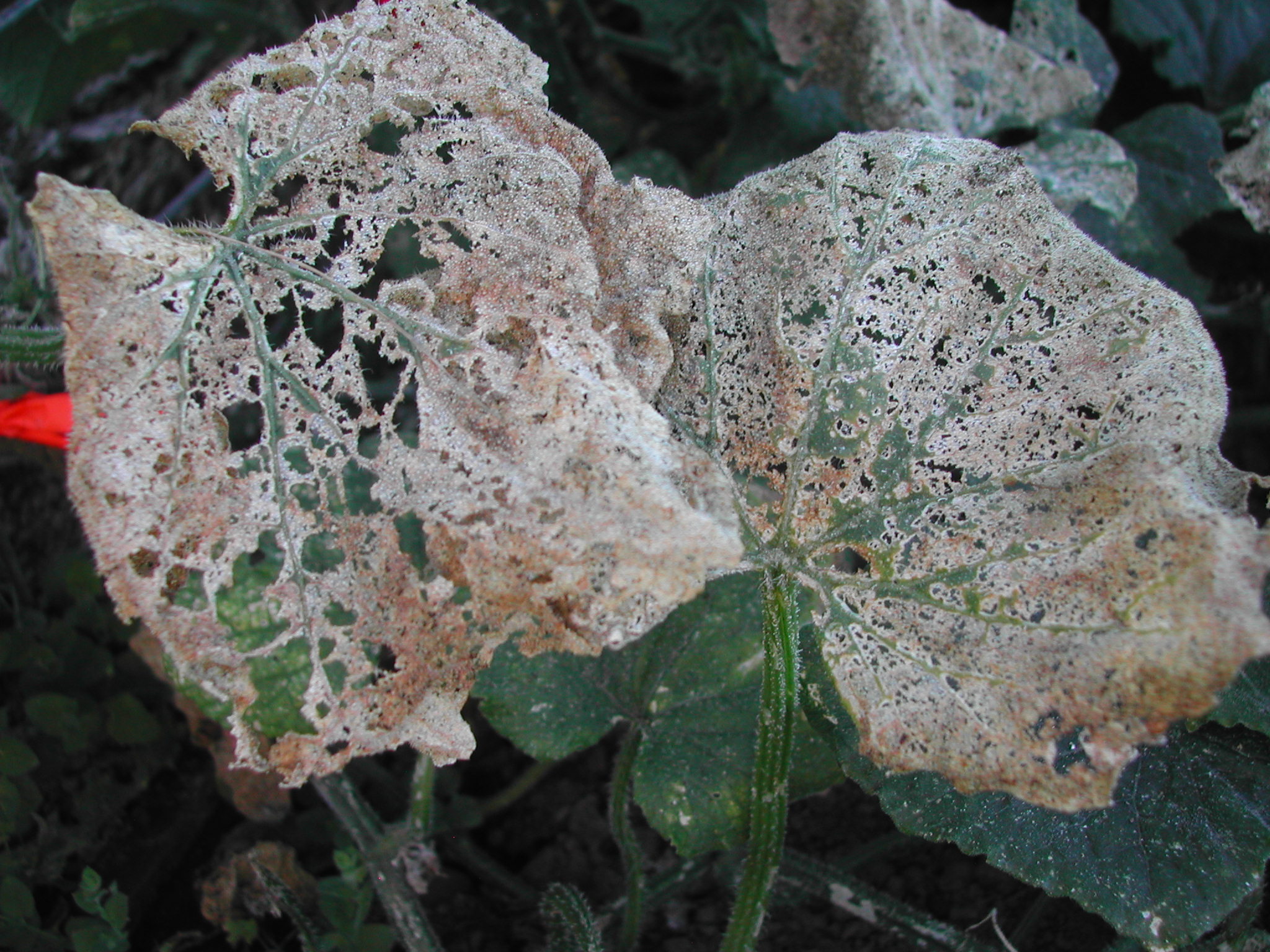
Cucumber leaves, after the beetles have eaten
They congregate in larger numbers, too, and can destroy the surface appearance of cucumbers and make lace of leaves. I am still researching how to control them, but there doesn’t seem to be a lot you can do. Most information talks about covering plants when they are young, giving them a chance to get big enough to survive any damage from the beetles. My cucumber and squash plants were big enough when the beetles arrived, so most have survived the assault. Luckily, the beetles don’t seem that interested in eating the fruit of the squash, but they sure like cucumbers. You may start seeing more damaged skin on the cucumbers, as fewer cucumbers escape the beetles. They seem to especially like the Shintokiwas and not so much the Lemon cucumbers (knock on wood). And, though I am a bit afraid to say it out loud, they don’t seem to have found the cucumbers in the hoop house yet (knock on wood again). I hope they won’t. I will be planting out the fall hoop house cucumbers this week, and those plants are small. I will have to cover them with row cover, just to be sure they are not discovered. I am also going to try setting out some yellow sticky traps, to see if I can catch a few beetles. Until they are gone, I hope you won’t mind peeling away the damaged skin of your cucumbers.
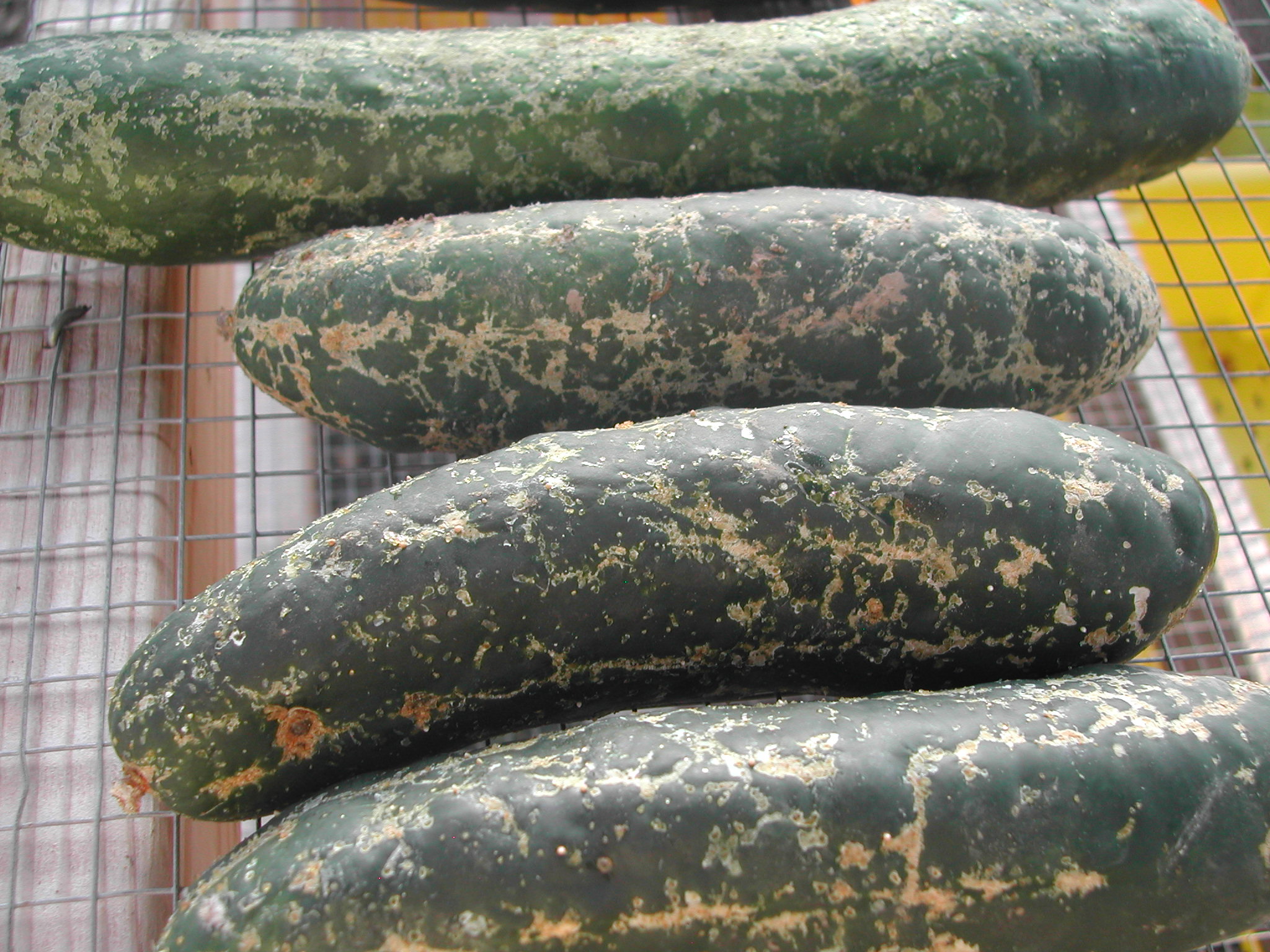
Cucumbers with the worst beetle damage
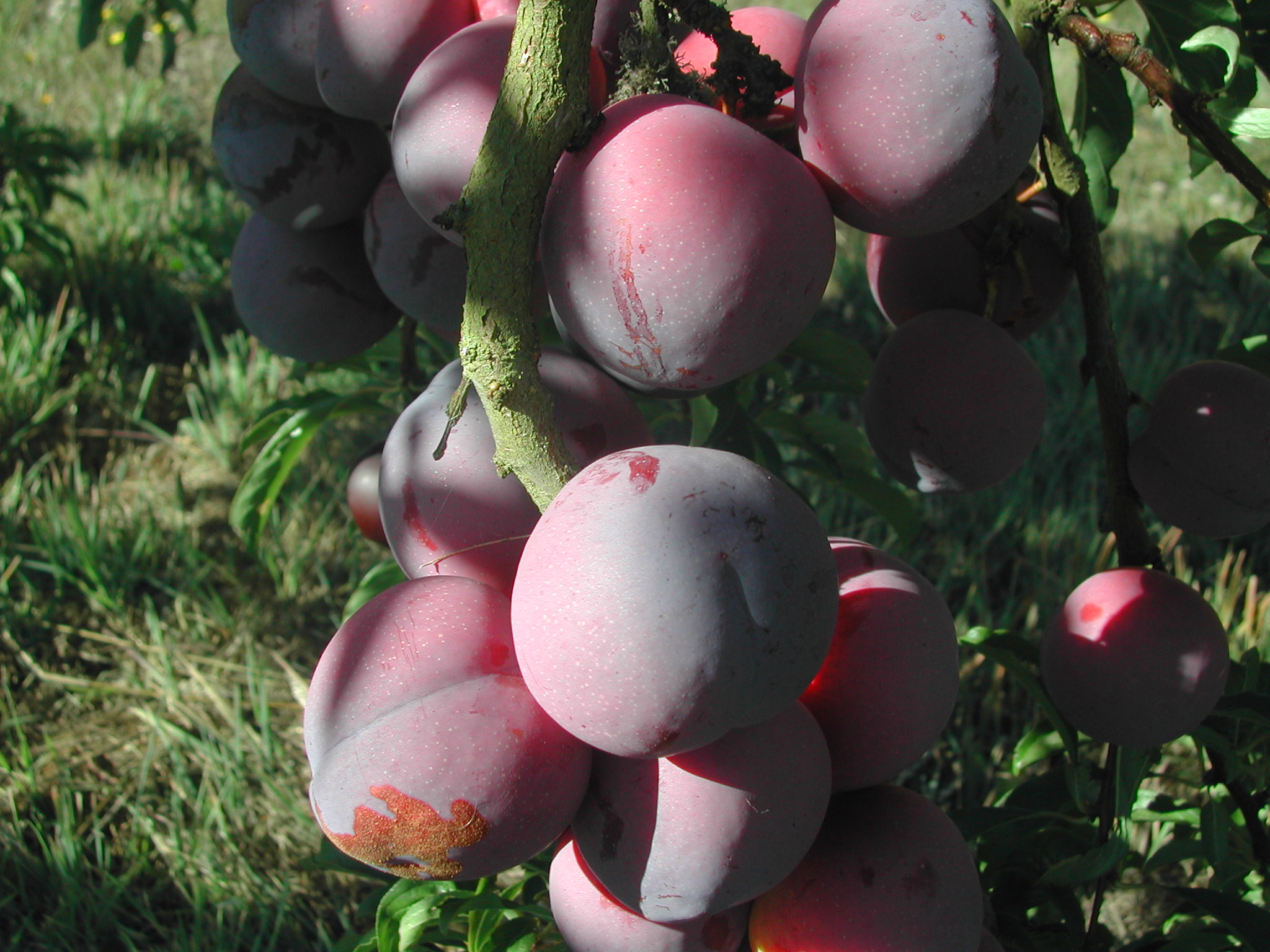
A nice surprise: Pluots are coming! Warning: dead gopher next.

We caught one! Hopefully, it was the lettuce culprit.
Pumpkins and Summer Squash
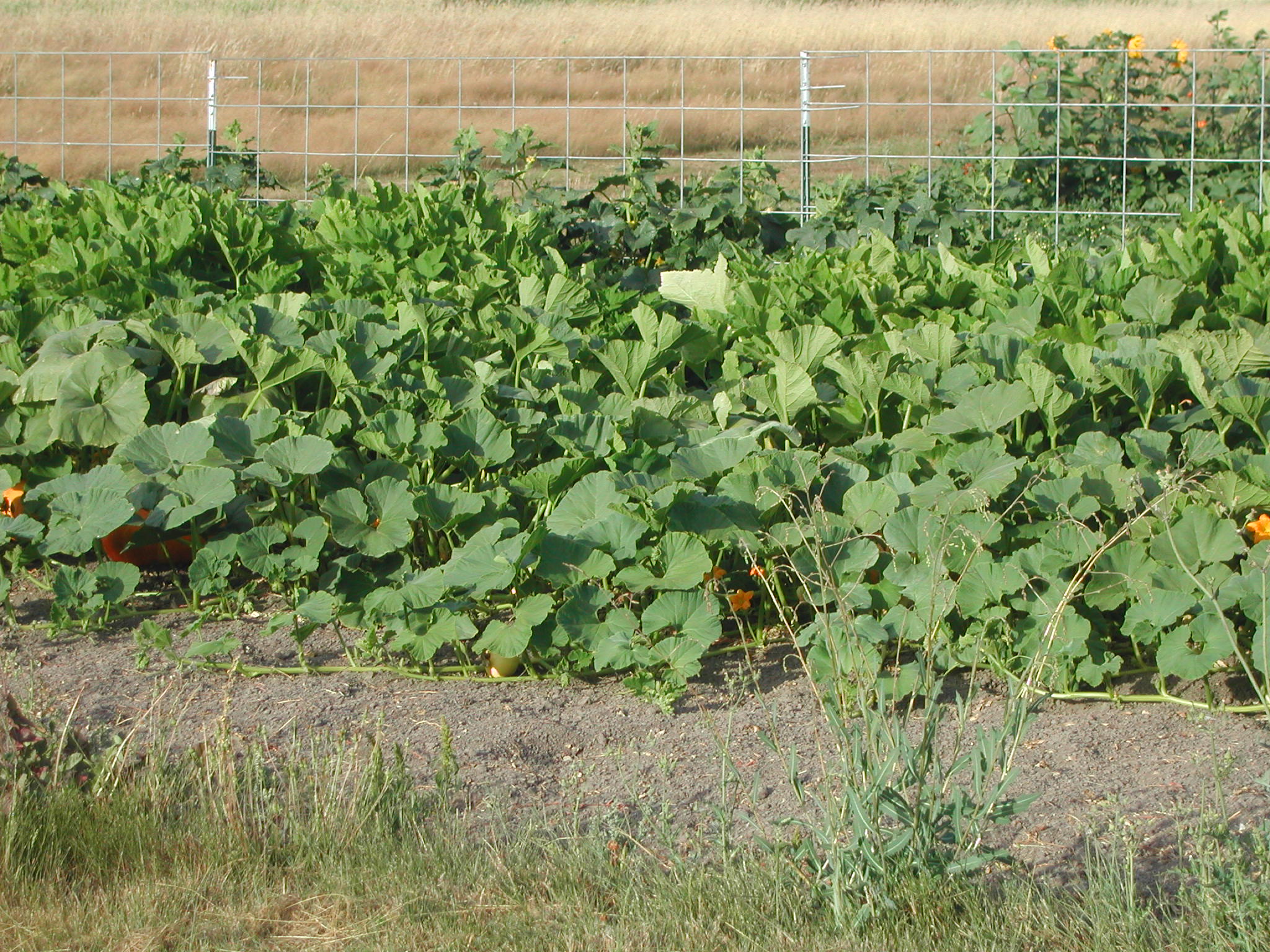
Cinderella pumpkins, patty pan squash and lemon cucumbers, in three consecutive rows
It is a little early to be talking about pumpkins, considering they won’t be on the list of produce until October. But, everyday, when I harvest summer squash and zucchini, I walk by a row of Cinderella and Kakai Hulless pumpkins and I look forward to October. I have grown the Cinderella pumpkins before. They are a beautiful pumpkin, both decorative and good to eat. The Kakai Hulless is a new one for me this year. It is a pumpkin that is grown mostly for the seeds, which are hulless (as the name indicates) and make a great snack, but it is also decorative, with green and orange stripes.

I found this Cinderella pumpkin in the patty pan squash.
They are doing very well so far this year. I enjoy watching their progress. Some of the Cinderella pumpkins look like they will be quite large. When I was cutting some patty pan squash, I saw a strange looking one and thought it was just some odd mutation of a patty pan. A few days later, I realized the Cinderella pumpkins had grown into the patty pan squash and it was a Cinderella pumpkin! Sometimes a stray seed does get into a seed packet or there is a mutation/hybrid of somekind.
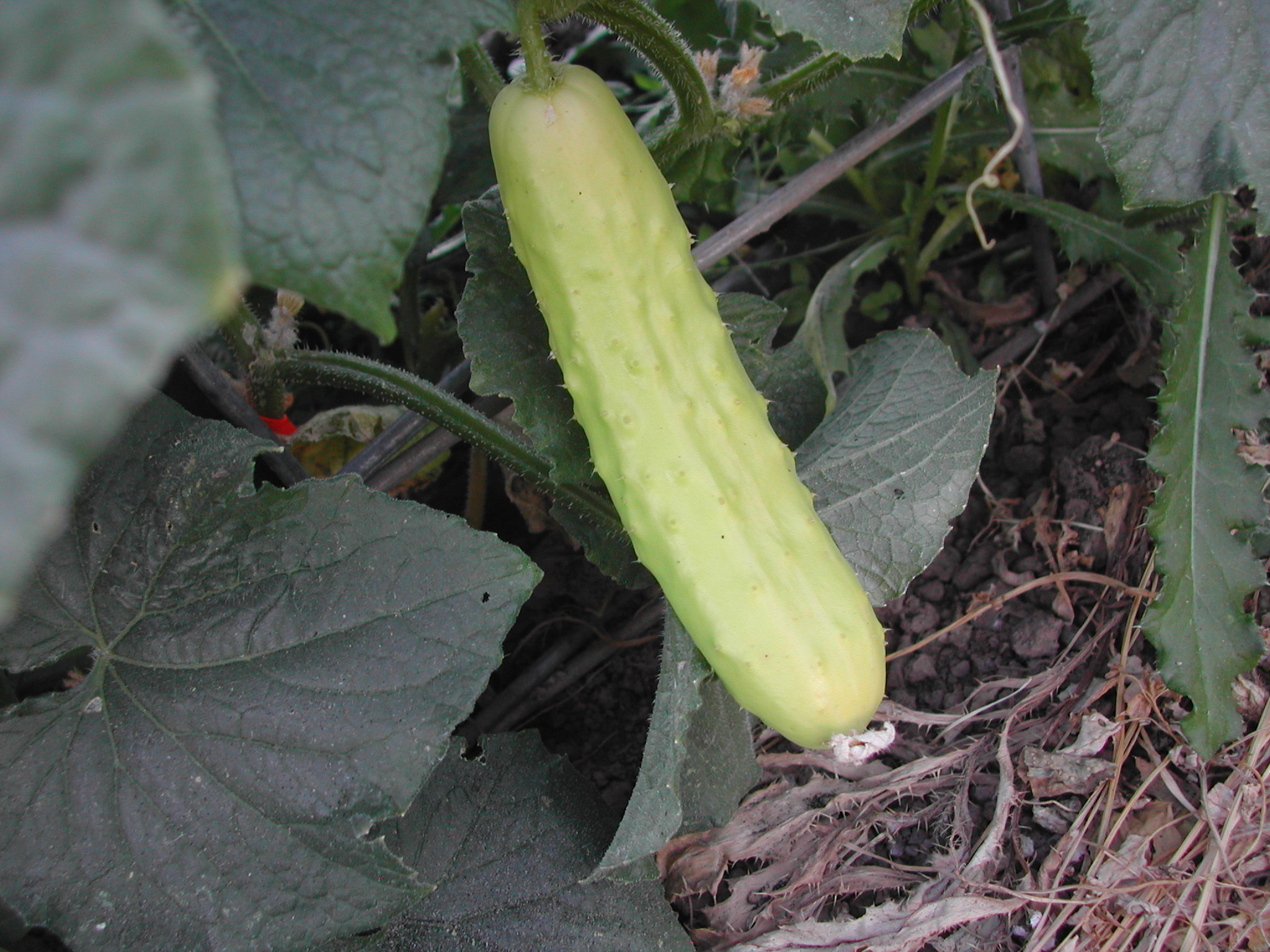
This cucumber is growing among my dark green Marketmores.
I have this cucumber growing among my dark green Marketmore cucumbers this year. The farm is keeping me on my toes.

A Cinderella pumpkin

A Kakai Hulless, starting to get its orange stripes

One day’s harvest of zucchini and summer squash
Garlic, Gophers and More
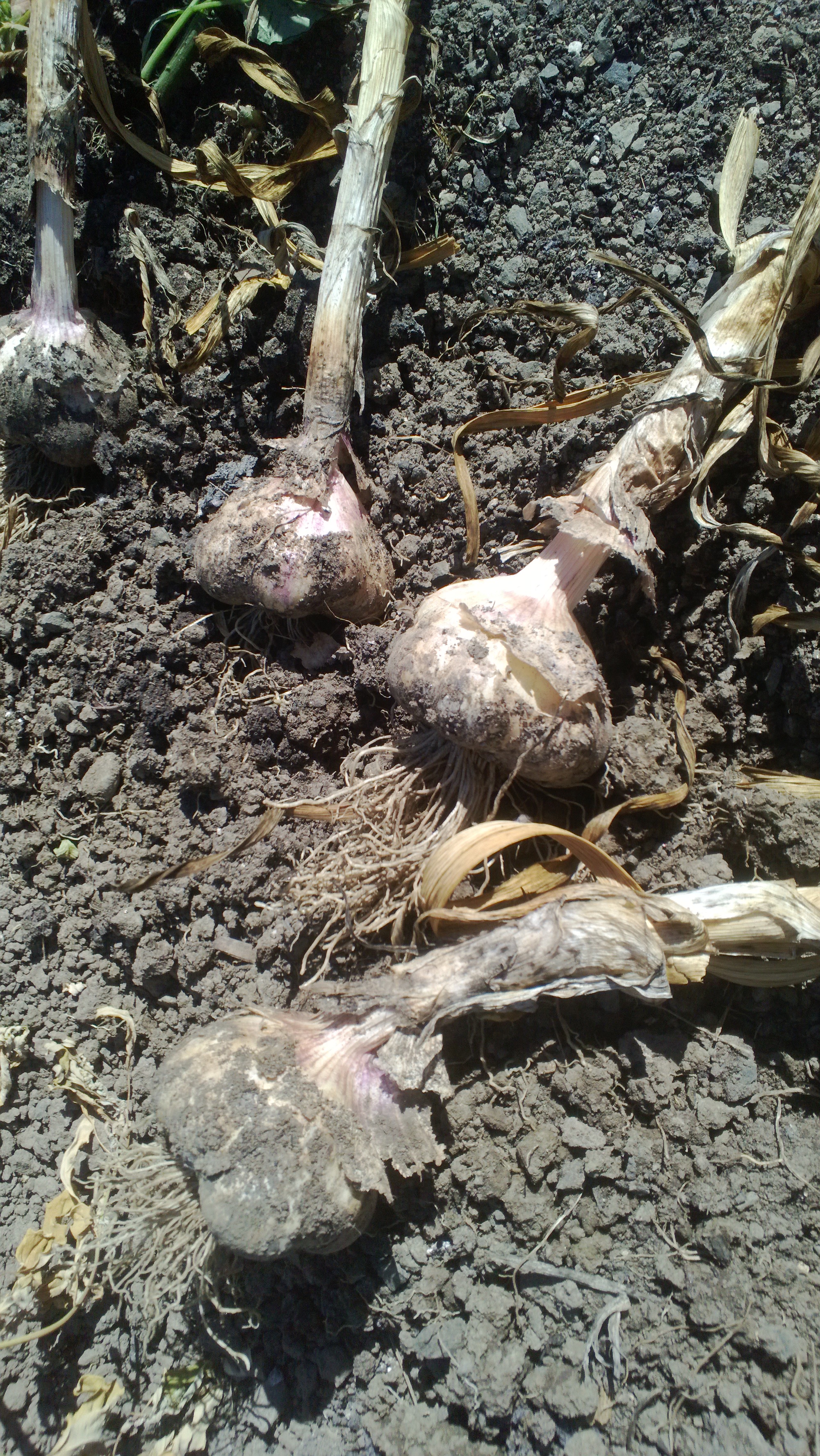
Inchelium Red garlic, out in the field
I dug the garlic just about two weeks ago. It seemed early to dig the garlic, though it looked like I should have dug it even a week or two earlier than I did. It surprised me that it was ready so soon, though I attribute that to the warm weather this spring and early summer. I wasn’t expecting it to do very well, since I planted it in early January, instead of my usual late October. I thought it wouldn’t get very big…but it did! Even bigger than usual! I think this is due to the spacing I gave it this year. In the past, with my limited space, I put 6 rows, 6 inches apart, in a 3 foot wide bed. This year, I only put 2 rows in a 3 foot bed. The row spacing was the same, 6 inches apart in the row. That was the only major difference I made in how I grow garlic, besides completely different soil, on a different farm. I was expecting to buy seed garlic again this year, but now I think I can save quite a bit of this garlic for seed. I planted four varieties, so I just have to make sure I can tell which garlic is which, since the writing faded on the markers I set out in the beds. I took pictures when I planted, so I think I’ll be able to figure it out. The best heads will be saved to seed next year’s crop, but there will still be quite a bit of nice garlic to share.
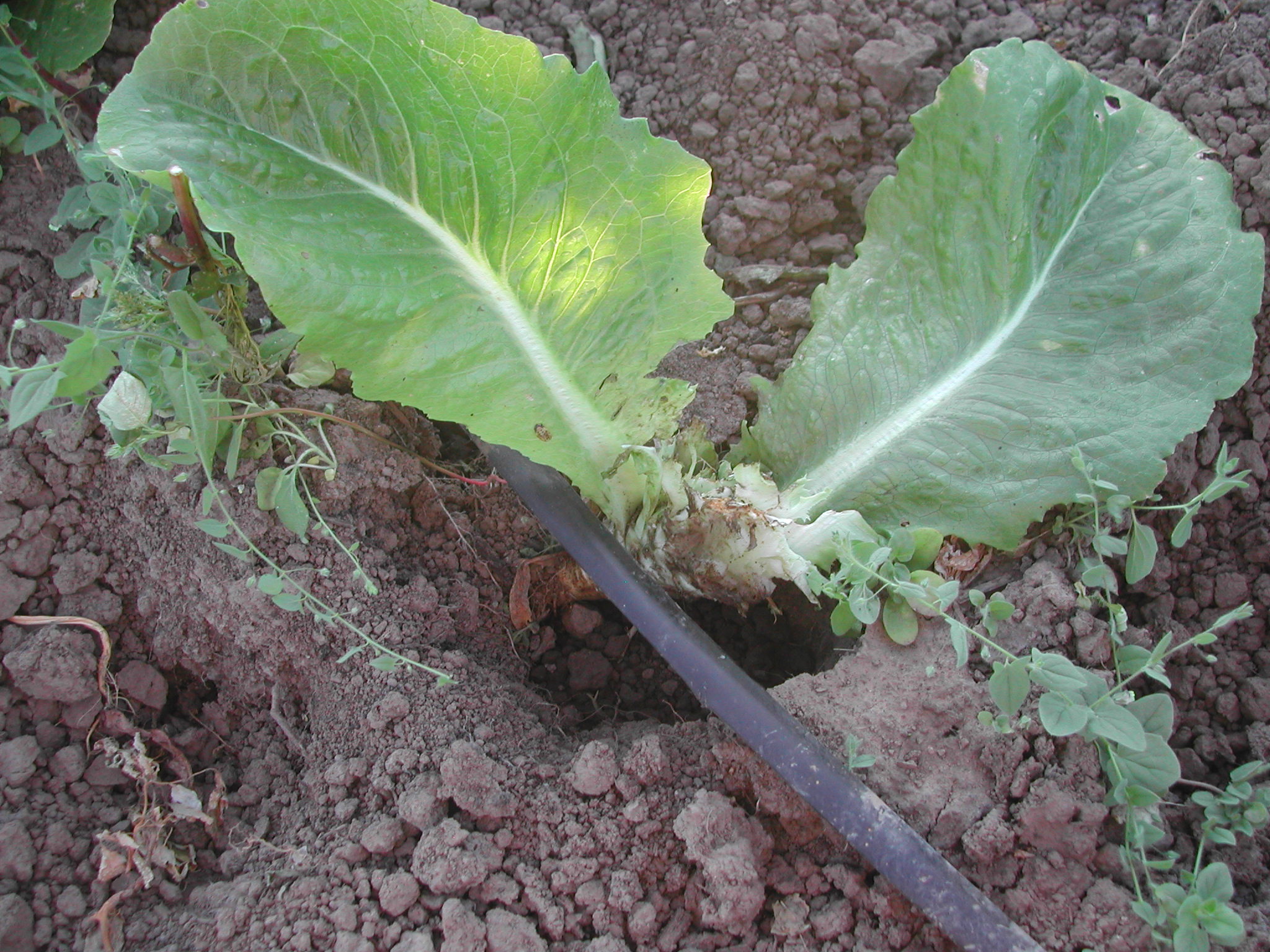
Sometimes, nothing is left, sometimes, just a little.
On another note, the gophers seem to be increasing their activity in the fields. I know this is going to be a long process, to get the gophers under control, like it will be with thistle. I had one positive sight last week: the top half of a gopher. We were taking the trellising out of the peas to move into the hoop house for the melons, when I saw the top half of a gopher laying there. Something got it. The next day, it was completely gone. I certainly hope this means that something is out there eating the gophers. Maybe coyotes? Whatever it is, we need a lot more of them! I went through the lettuce this morning, after I turned on the irrigation and found 5 spots I had to repair, where the gophers snagged the t-tape as they were digging their tunnels. It gets a little frustrating. Not only did they eat a bunch of lettuce, leaving just a hole where the lettuce was, but they damaged the t-tape, too. I am afraid I have no sympathy for these creatures. We may end up losing the battle with them this year, but I am determined to win the war.
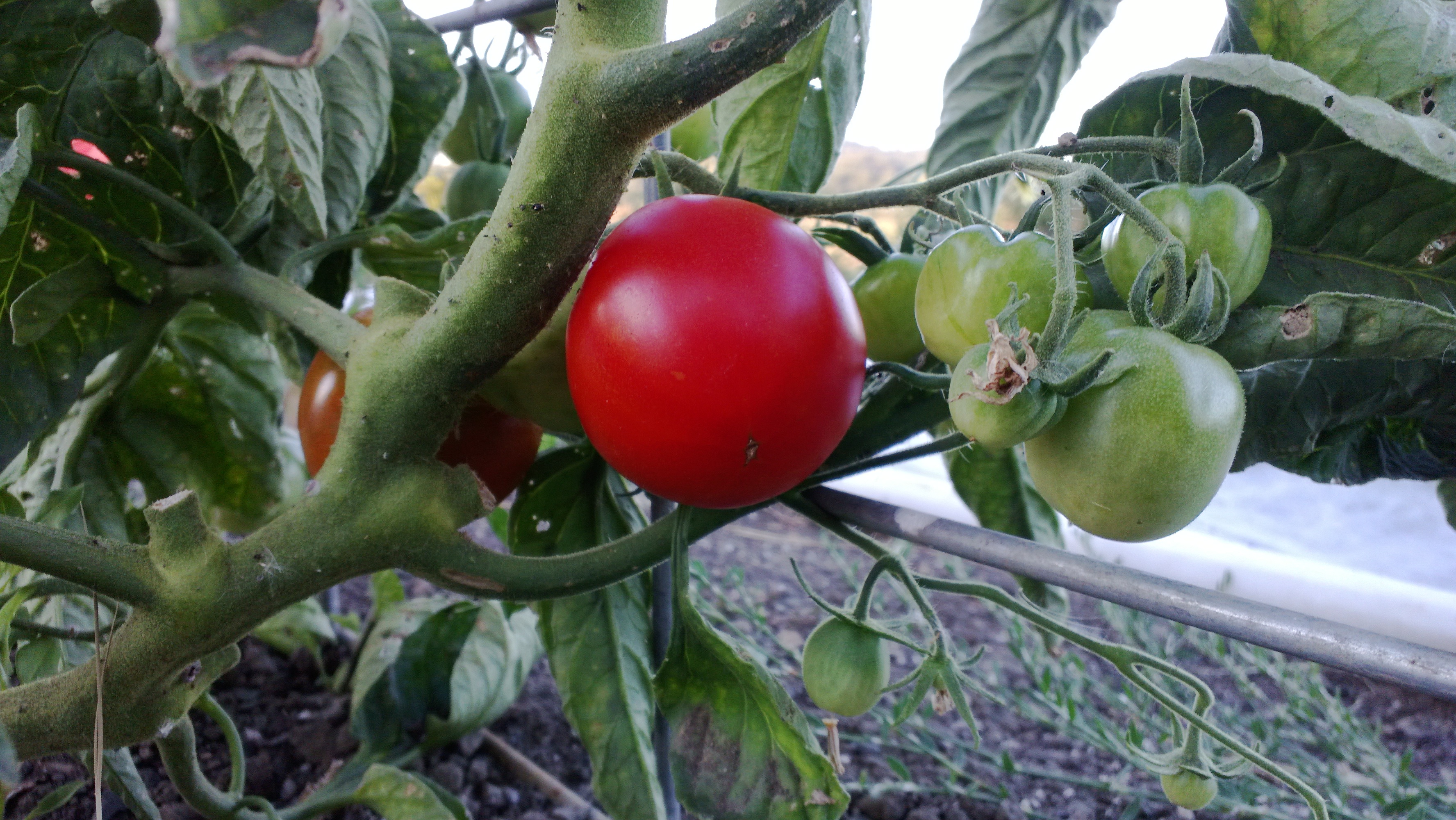
The first ripe Stupice tomato
I made a few other sightings this past week. One was the first ripe tomato. Yeah! We ate the first one and more are coming. Soon, very soon. Just tonight I saw the first little beans forming. And melons, too! Yes, there should be melons this year. Another sighting was two elk (we think), in the field we lease. We watched them browse through clover and oats, hoping that would be enough and they wouldn’t find our fields. And finally, we saw a pair of owlets in the hay loft. I don’t know much about owls, but given the fact that we have only seen the adult pair until now, I am guessing these will move on when they are old enough. Anyone who knows about owls want to comment?
First sightings are one way to make my week.

The Provider beans are on their way
Transition
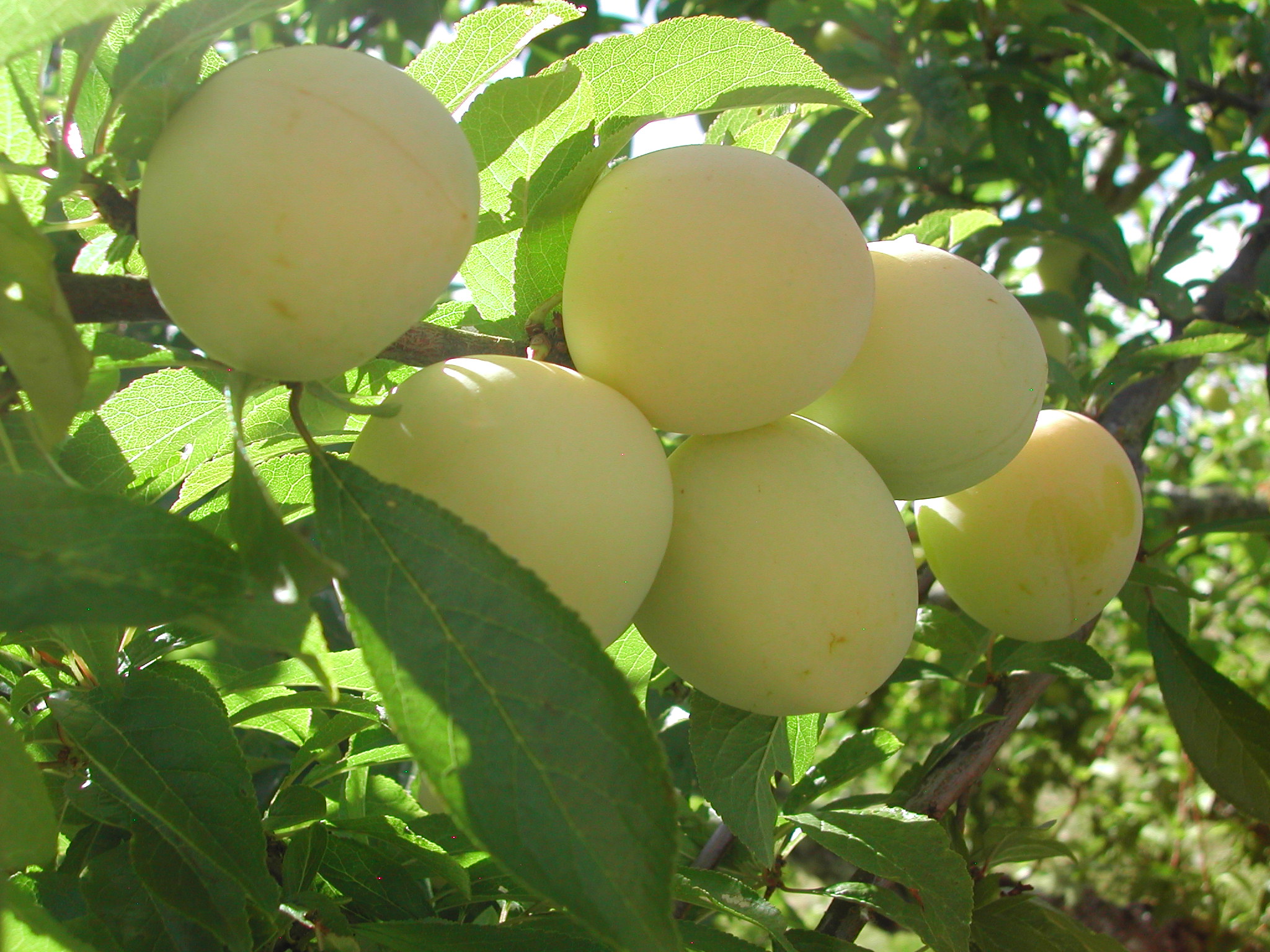
Shiro plums are almost ready
I often worry at this time in the season, the transition from spring to summer crops, if I will have enough vegetables to sell. I did cancel a week of deliveries one year, early on, for just that reason: not enough produce was ready. But it was only one week and it only happened one year. There is plenty out in the fields, but there are so many things that come later, it feels like there isn’t enough.
Here are some pictures of what is coming…some things very soon, some not for a bit. I am looking forward to them all.
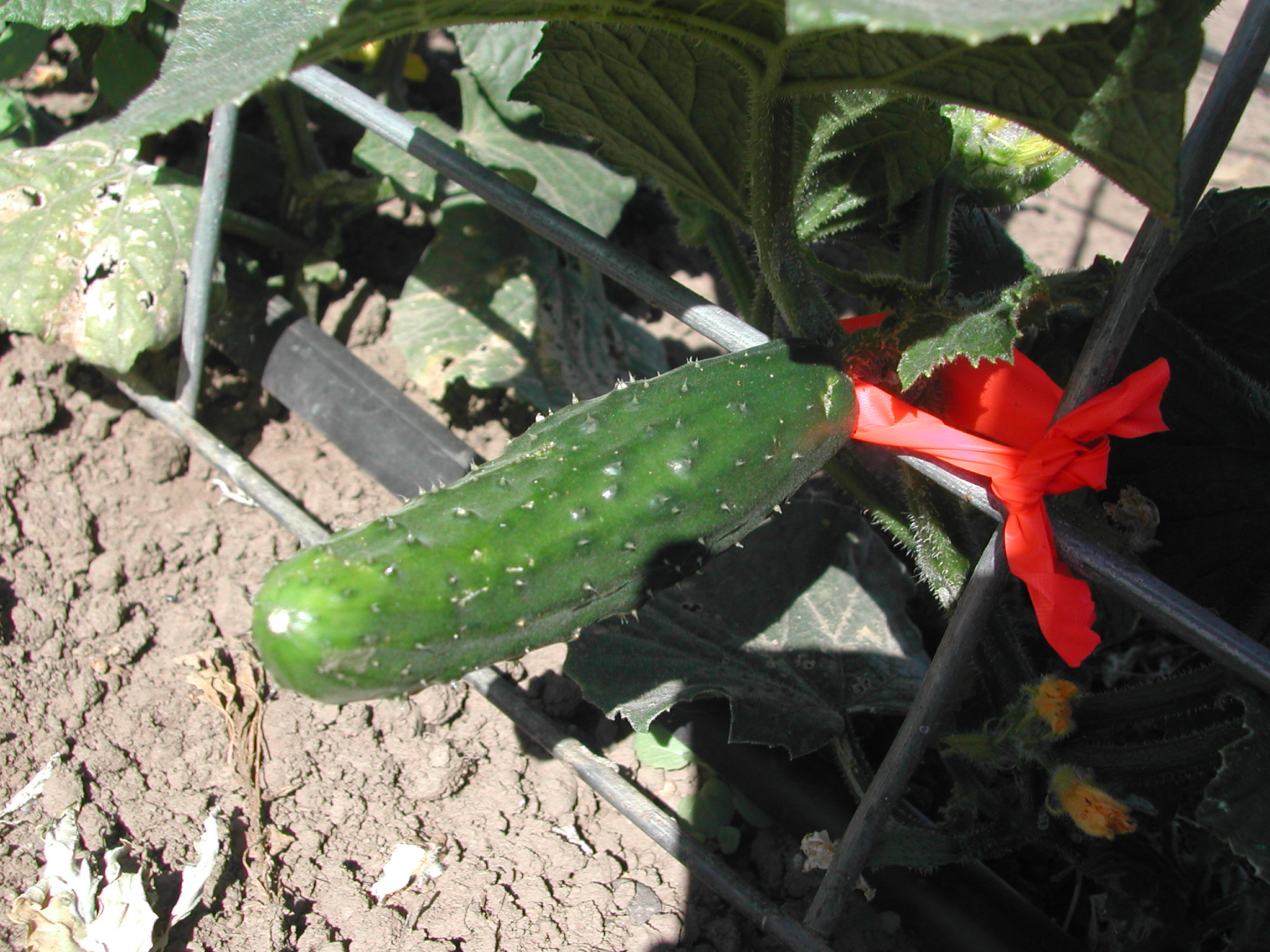
Marketmore cucumbers

Farao cabbages are ready now!
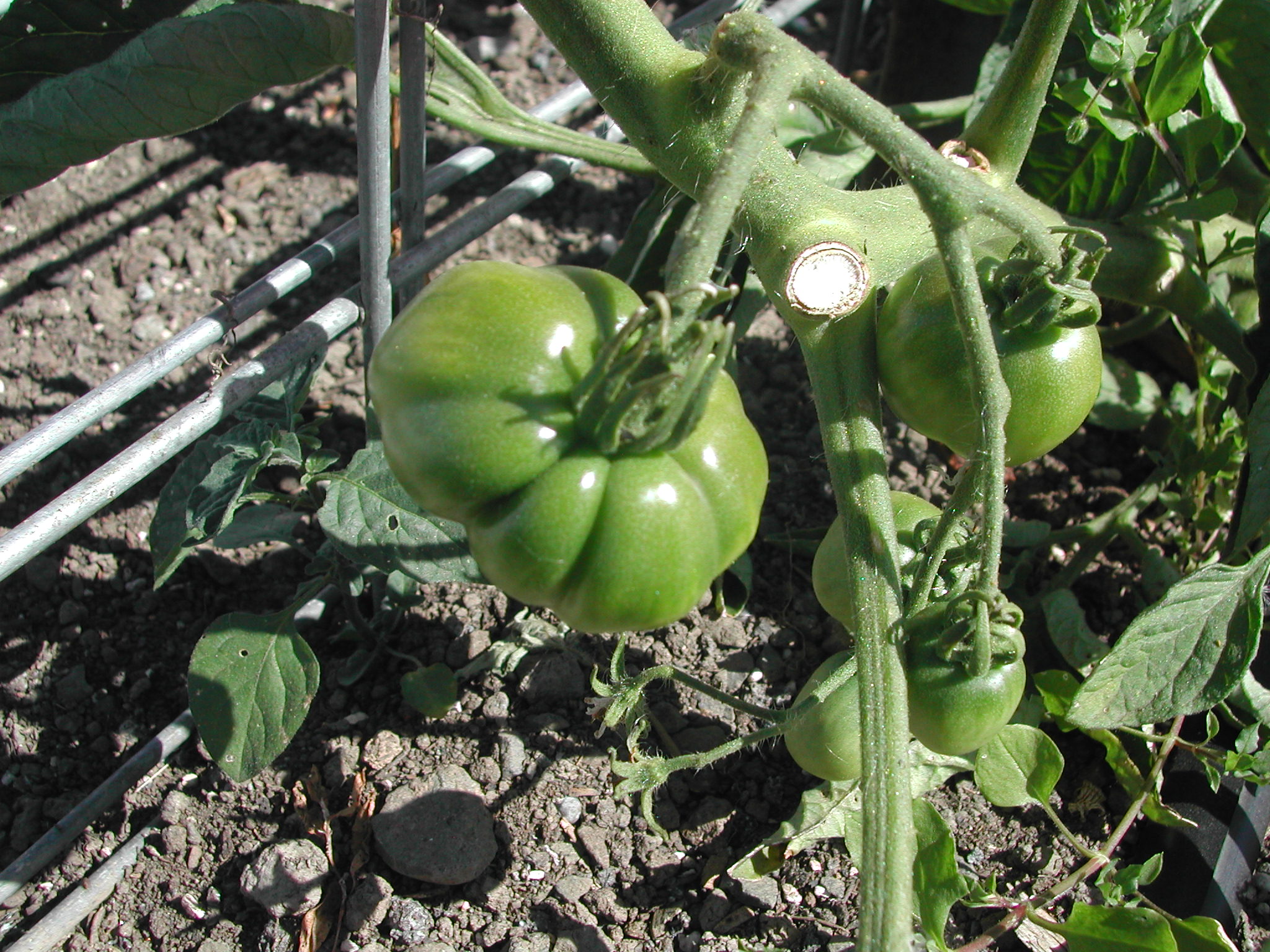
The tomatoes are coming
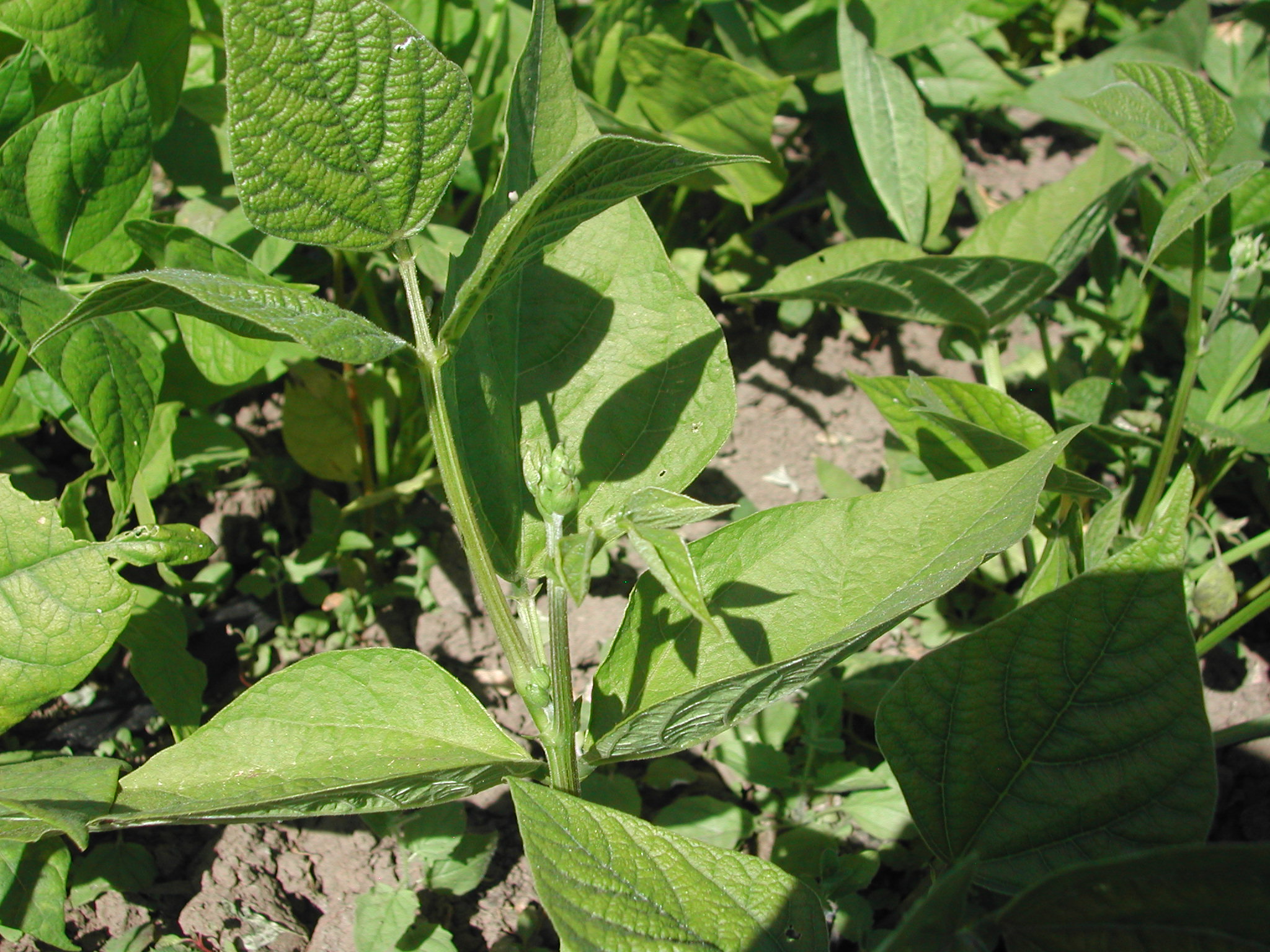
The first beans will bloom soon, then just a bit longer for beans!
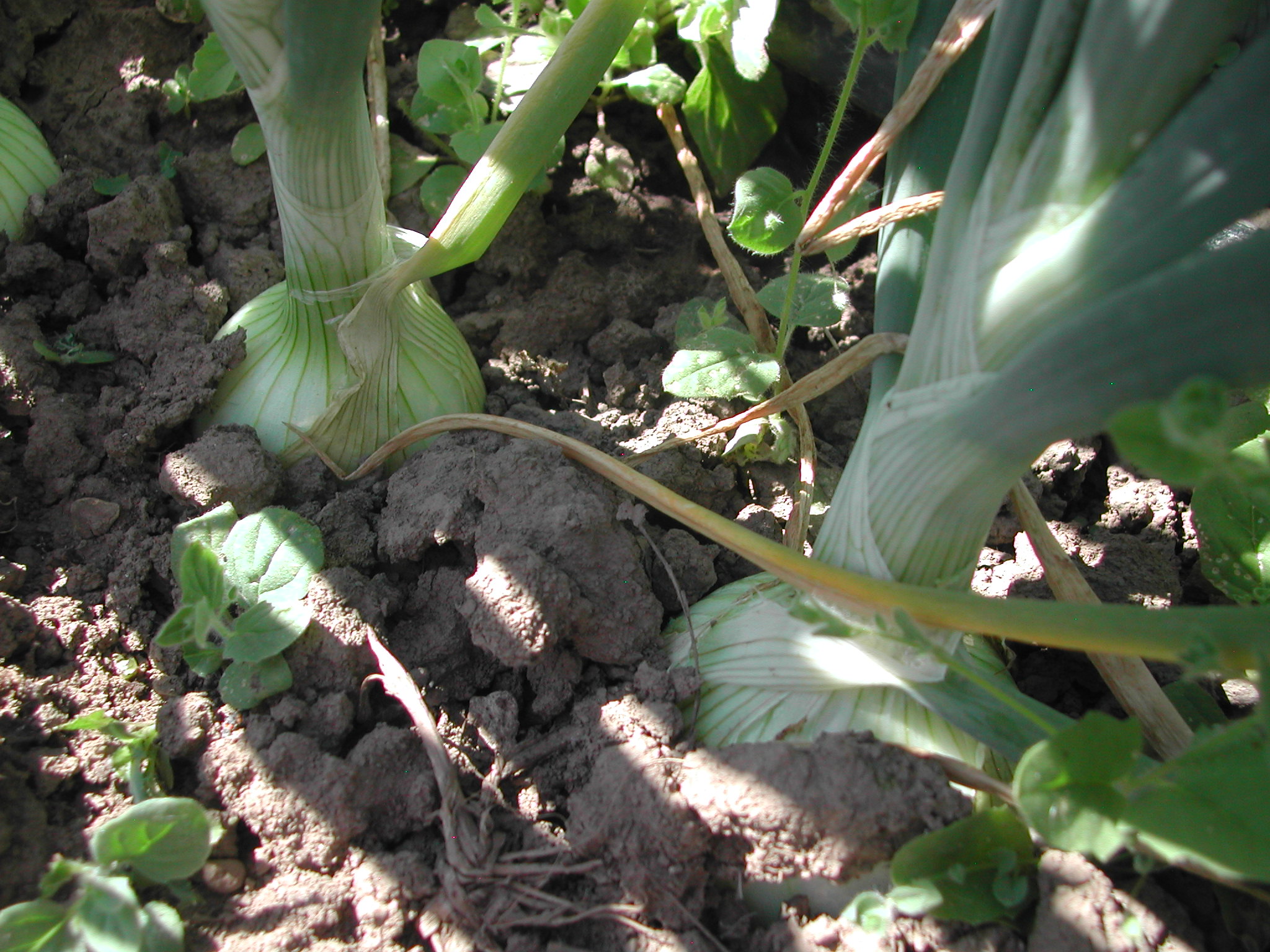
The sweet onions are bulbing up
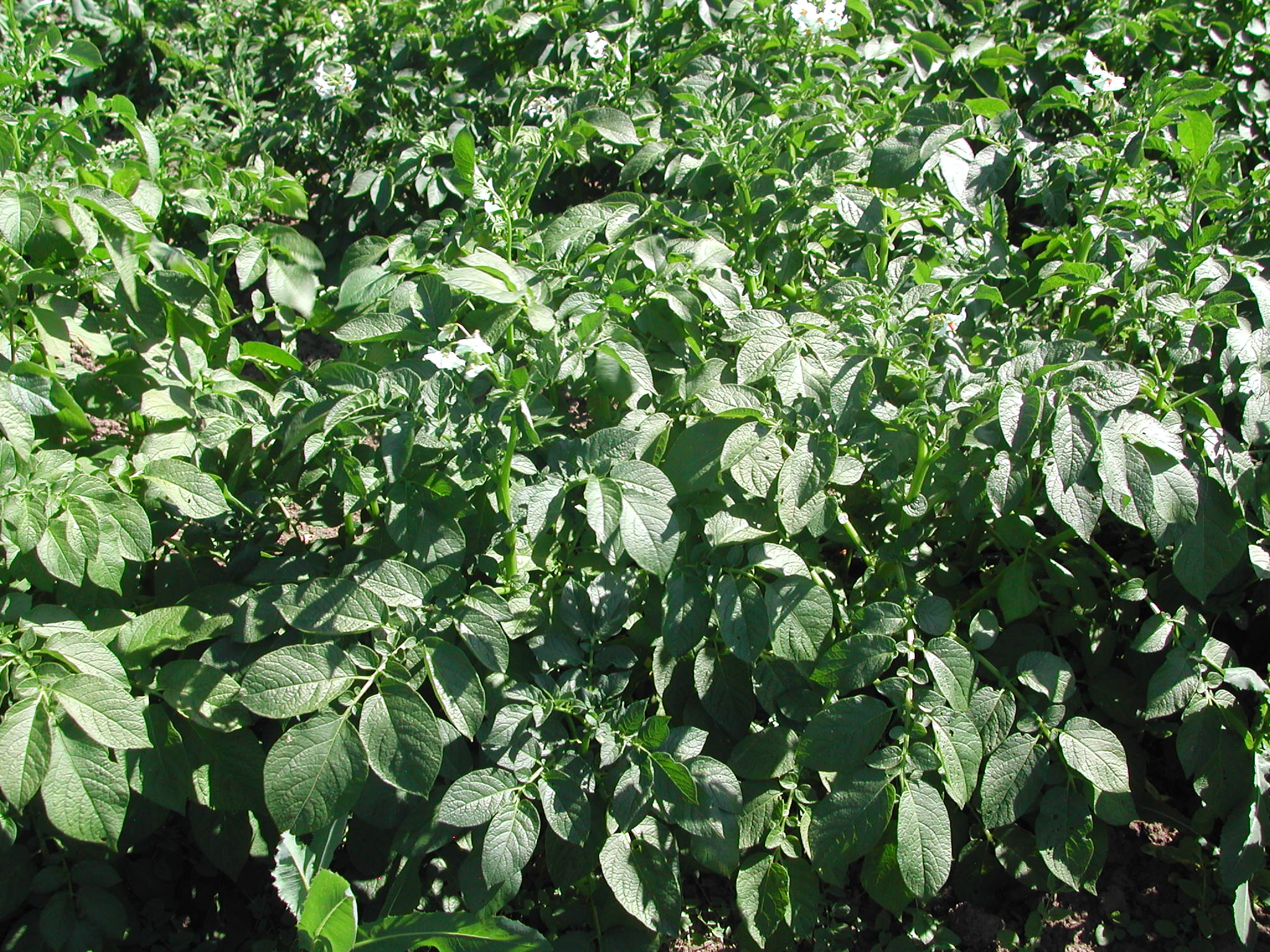
I don’t know what got into me to plant so many potatoes. They look good right now. (Except for the ones the gophers got.)
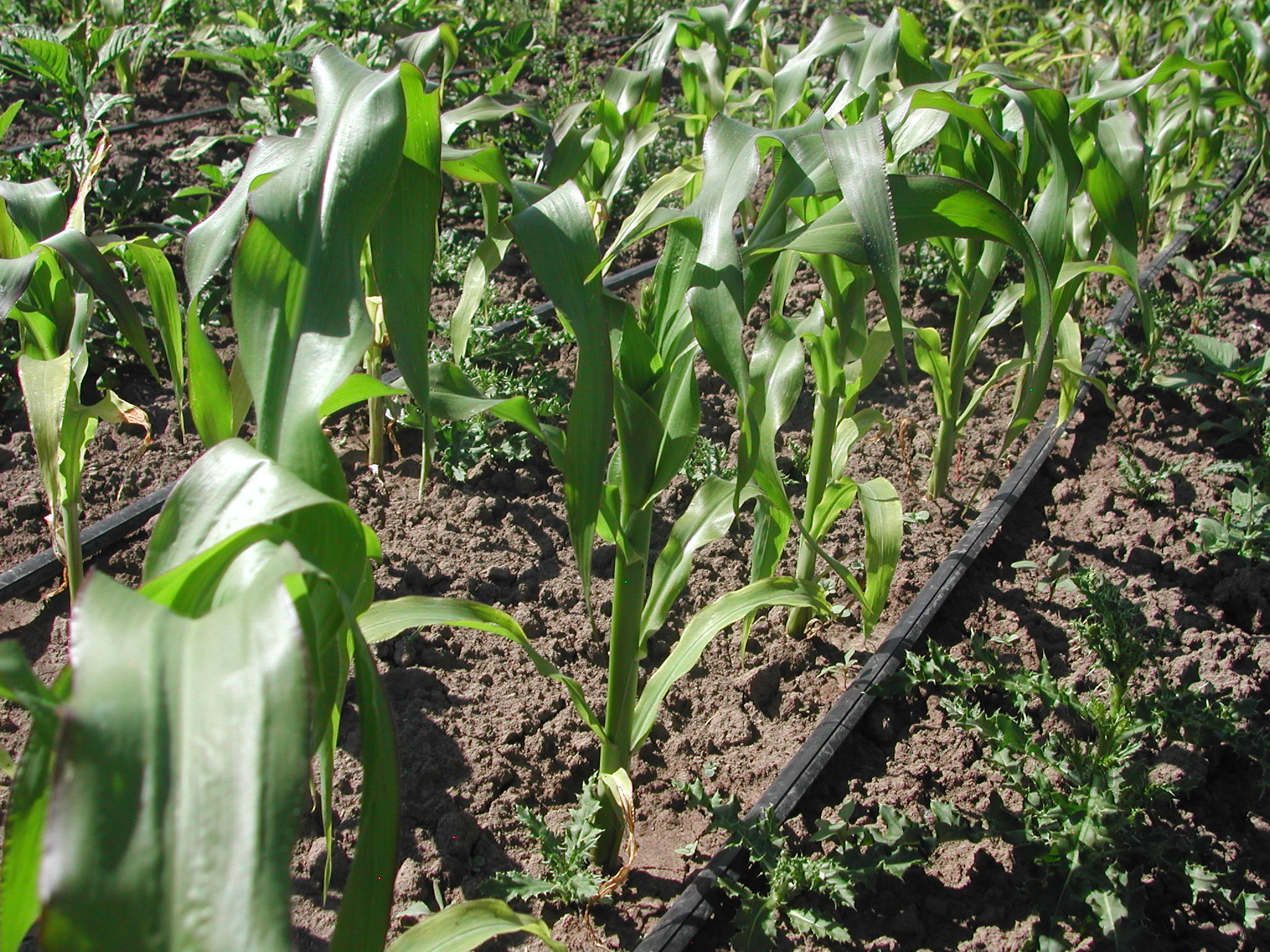
Perhaps there will be sweet corn this year?
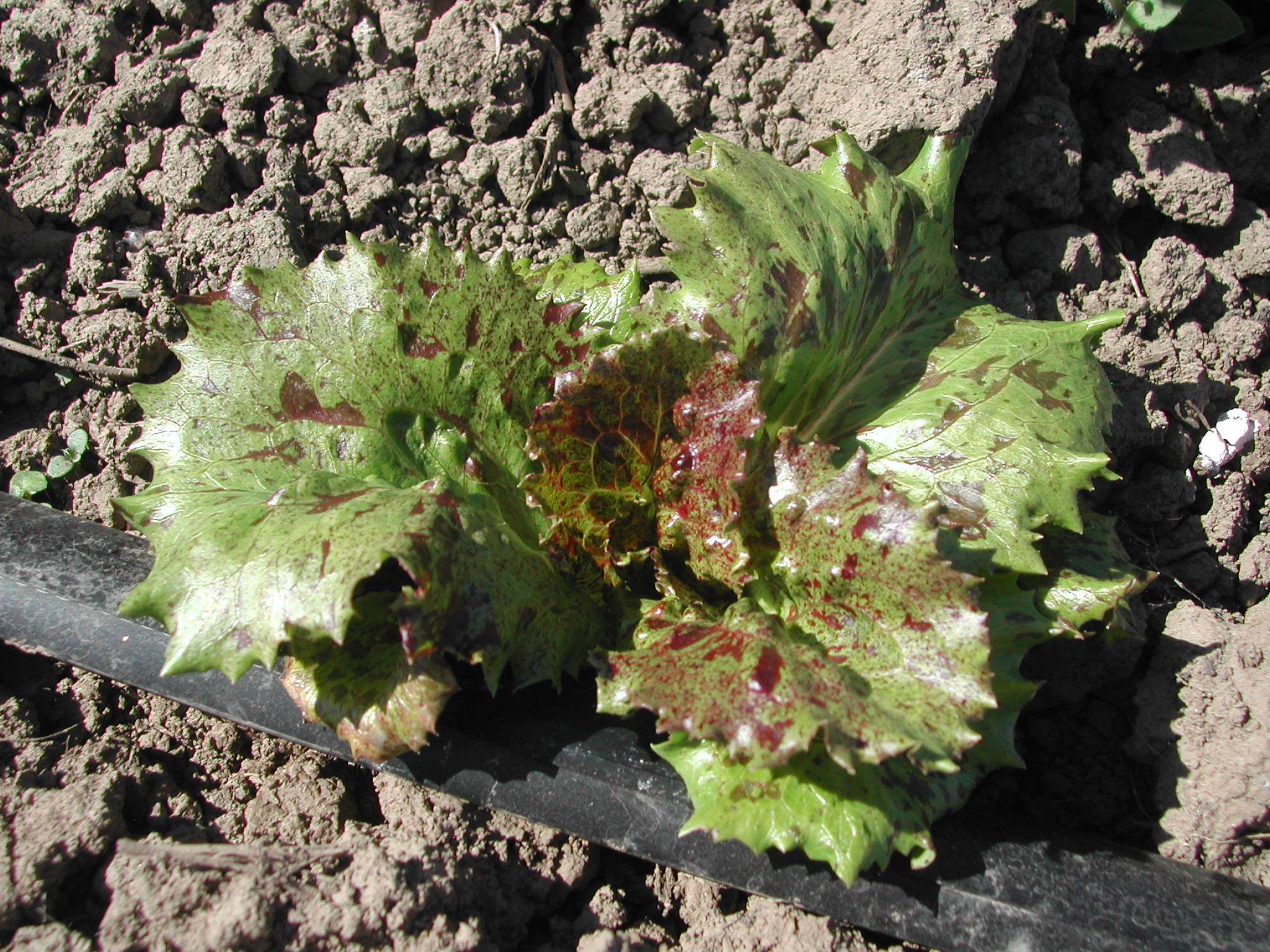
There should be summer lettuce, like Jester.
Propagation Hoop House and Parents

The propagation hoop house today
It is hot today. It is hard to believe the hot weather is coming so early this year, after several years without much heat all summer. I hope all those warm season crops are enjoying the heat.
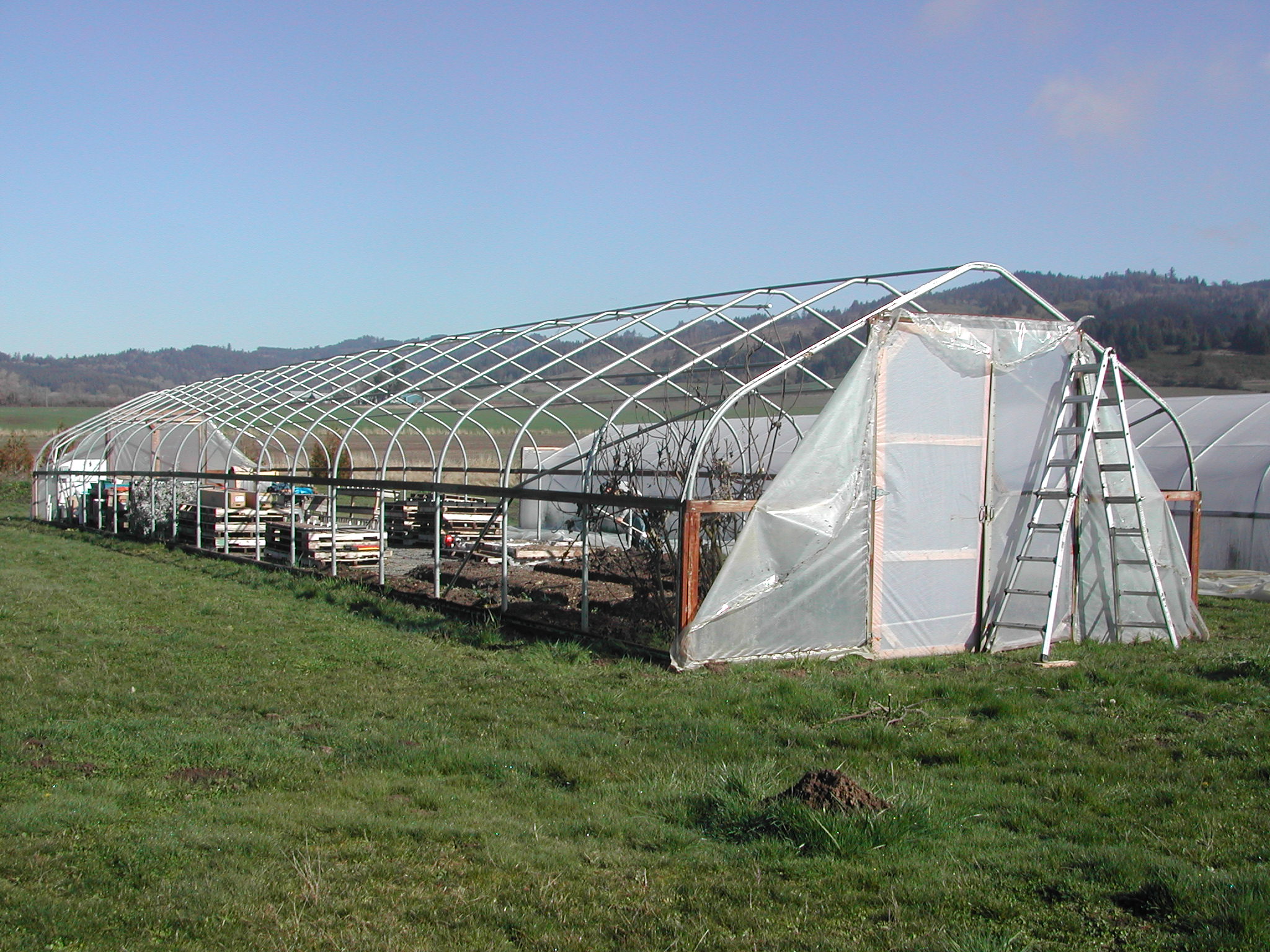
Replacing the plastic, on a beautiful weekend in February.
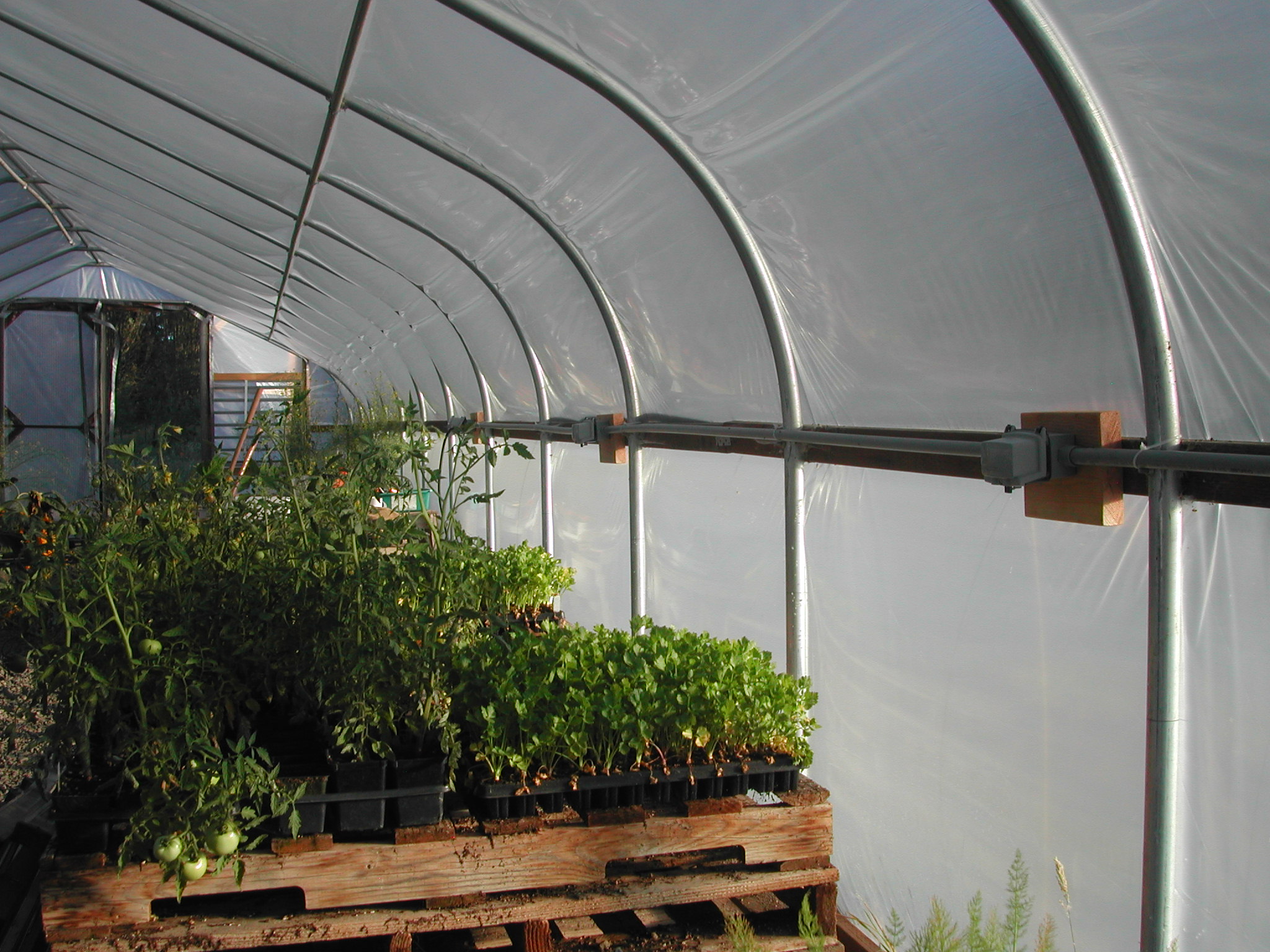
Last week, my parents came to visit and help us with a project, and just in time for this heat. My dad volunteered to help us with wiring in an exhaust fan and vents for our propagation hoop house. Since February, Steven and I have been working on upgrading one of the hoop houses into a propagation house and temporary packing area. First, we took off the old plastic and put on a new double layer, with a fan to put air between the layers, for a little extra insulation during the cold months. Then, over the course of the next few months, Steven framed in a new 36 inch exhaust fan and two 36 inch intake vents, to help cool the temperatures on those sunny days. We set up the packing area, adding gravel to level the ground and making small repairs. Everything was looking good, but I knew the hot weather was coming and those hoop houses sure can heat up. We put up a shade cloth over the propagation hoop house, which made a significant difference in the temperatures inside. Then, Steven took a week off work to help my dad wire in the fan and vents and put in electrical outlets along the length of the hoop house. Just in time. That hoop house is still hot, but I can’t say how much hotter it would be without the ventilation. Thanks, Dad!
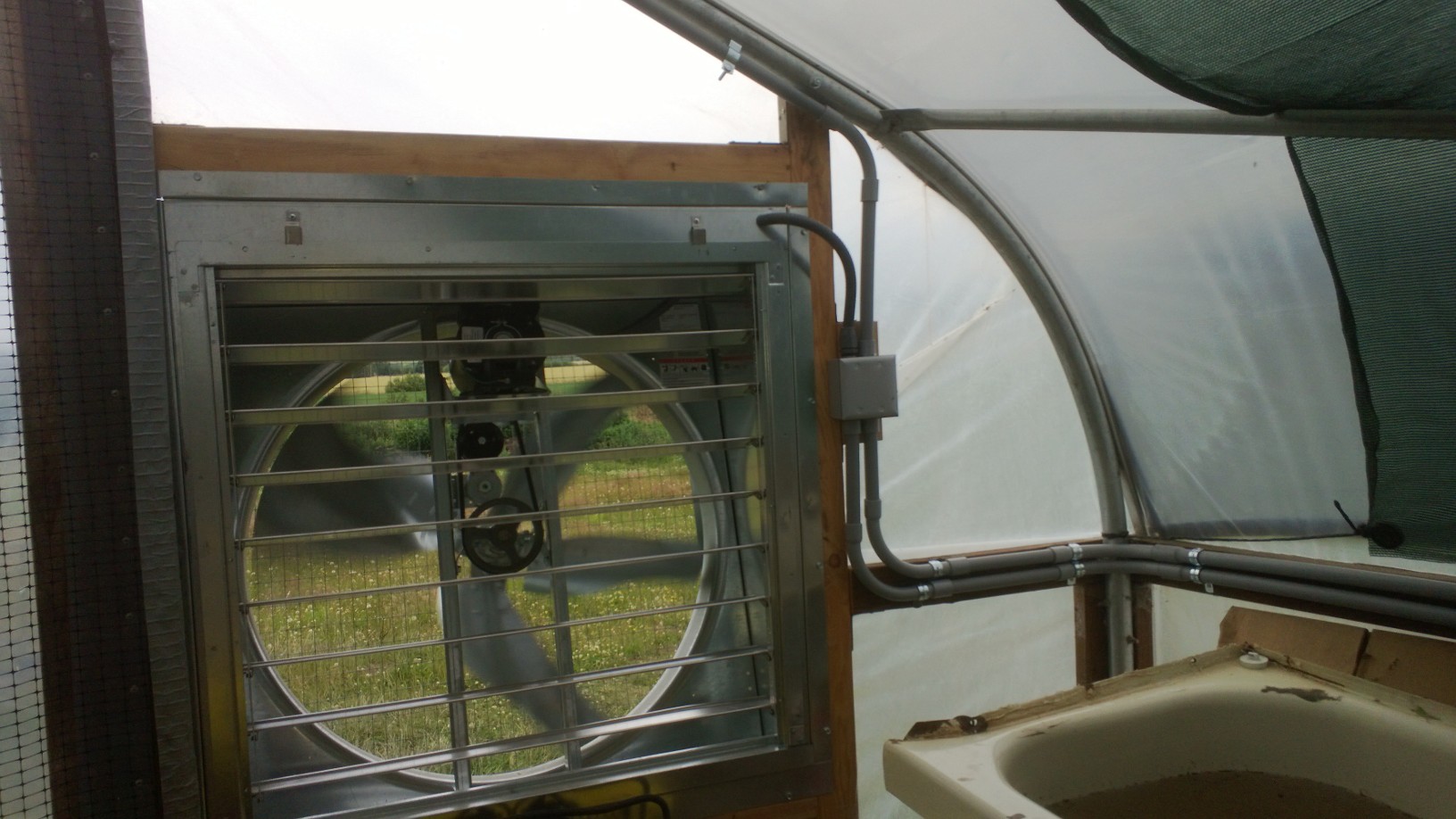
The exhaust fan, wired in and in action.
And thanks to my mom, we have June’s Corner Garden cotton bags again! Quite a few of the bags split at the seams when I washed them. I kept all those bags, thinking some winter I was going to sew them up. That never happened. But, my sister stopped by a few weeks ago and took a box of bags needing repair to my mom. She sewed them up and brought them back last week. Yeah! And though she didn’t work on the wiring (nor did I), she did seed the next batch of lettuce and basil, and the the fall kale, which are already germinating. She also picked peas, did a bunch of weeding, found the biggest slug I have seen on the farm to date, and washed lots of dishes. Thanks, Mom!

The intake vents
Ever helpful, Steven’s dad has been making weekly treks to Rickreall to work on the farm. He planted all the apple trees we brought with us (about 60 of them) and has kept them watered. He is keeping the grass mowed and working on those gophers with the Rodenator. And did I mention that he helped me plant potatoes and later hoed and hilled them? I don’t know how we would keep up without him. Thanks, Dale! And Steven’s mom, though she hasn’t been out to weed, she has been my best customer the past several years. What is she doing buying vegetables? Shouldn’t she get them for free? We think so, but she insists on buying them and they eat a lot of vegetables. Thanks, Bonnie!
Steven and I both feel lucky to have such great parents. They all have been behind us 100% in this crazy, mid-life farm venture. It means the world to us to know we have their support.
Electrical outlets all along the hoop house
First Farmers Market
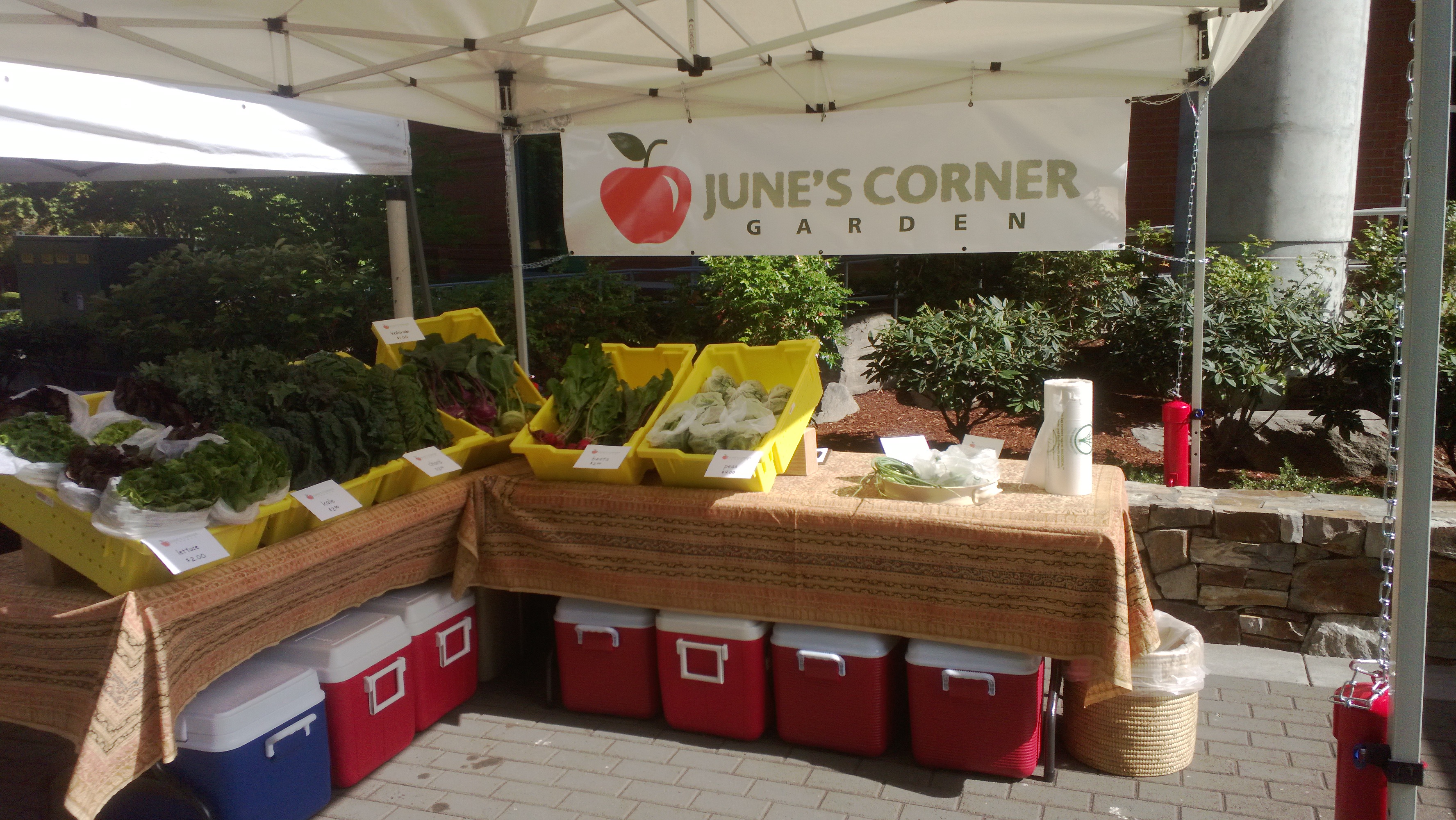
June’s Corner Garden at the Salem Monday Hospital Market
Last Monday, I participated in my first farmers market, ever, as a vendor. After our move to Rickreall, we had been planning to sell at a farmers market in the area, to try to build a market close by. As I looked at all the farmers markets around us, there were plenty of big, active markets to apply to, as well as other, smaller farmers markets. After narrowing the markets down by the day of the week that worked best for harvesting (opposite side of the week from the Portland deliveries) and talking with some local farmers, I decided to apply to the Salem Monday Hopsital Market. It is small and low key enough that I could attend the market by myself (without help) and it is a place where the Salem Saturday Market managers like to give new vendors a chance to sell. That can be good and bad: I was accepted into the market, but because they like to give all vendors a space, I was only accepted for every other week.
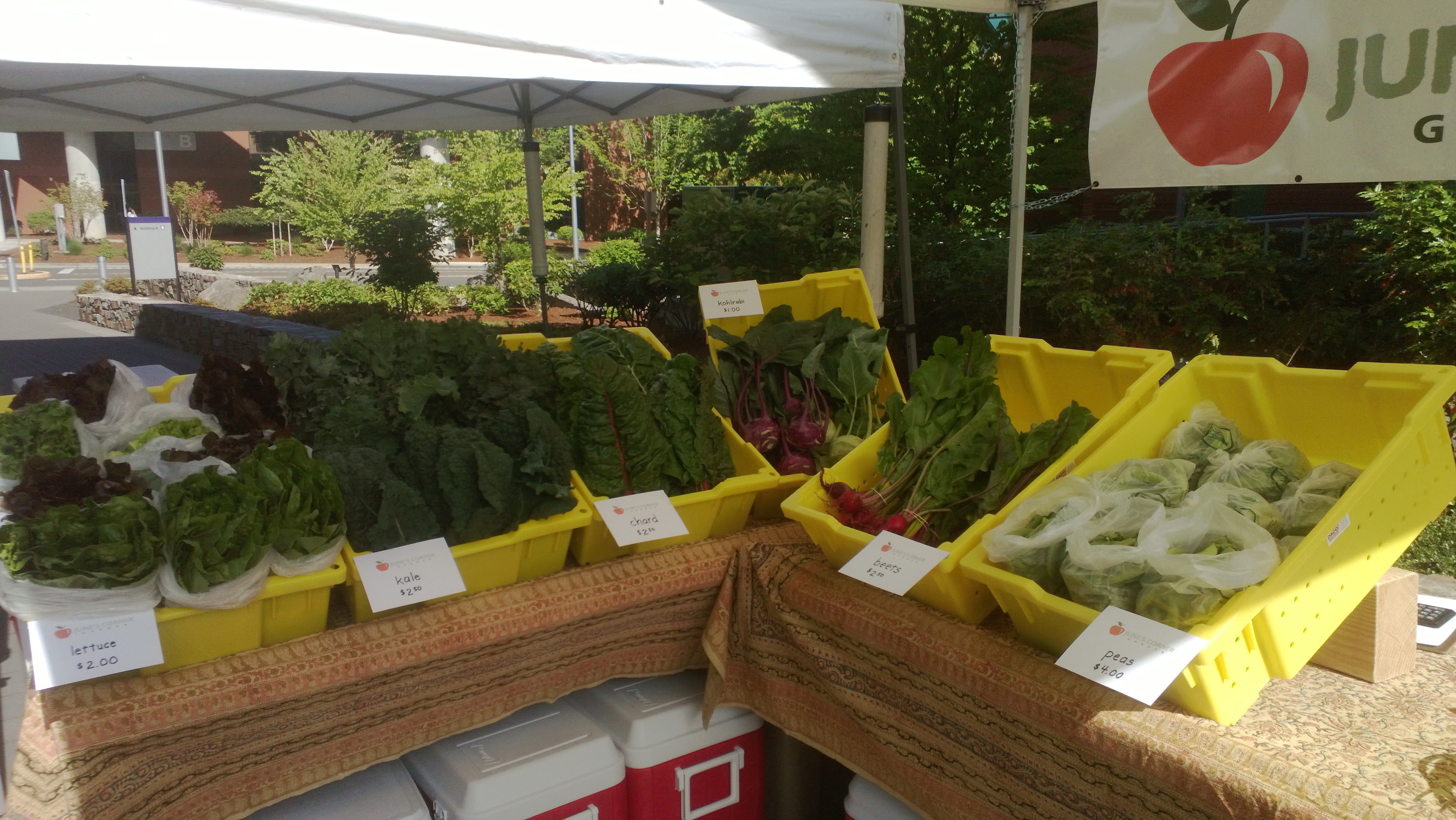
Lettuce, kale, chard, kohlrabi, beets and peas
Over the past few weeks, Steven helped me get all the parts together for the market stall. I made a visit to the market the week before I was to attend, to make sure I had all my ducks in a row, and hoping I could talk with a produce vendor about their sales and what I could expect. Unfortunately, the vegetable vendors didn’t make it that week, but I heard that the berry vendors did very well, selling out before the market was half over. So, last Sunday, I spent the day harvesting, taking what I hoped I could to sell that day.
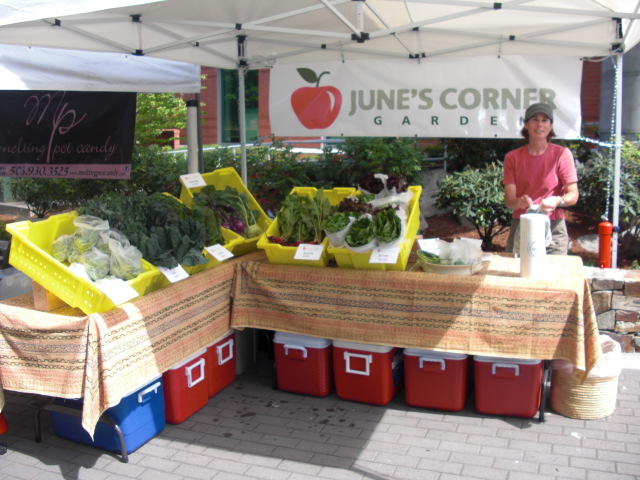
My in-laws stopped by on their way home from a weekend at the coast and took this picture
I was very nervous Monday morning and I arrived at the market before anyone else, not quite sure where I should set up (it is very low key). As other vendors arrived, I picked my spot and set up. All the other vendors and the customers were kind and welcoming and I enjoyed my time there. I didn’t sell as much as I hoped, but sold enough. It was a day to learn what to expect from the market and I definitely met that goal. I see the potential this market has to offer.
If you happen to be in Salem on a Monday, between 10 am and 2 pm, I hope you’ll stop by to see me at the Salem Monday Hospital Market, at 890 Oak St SE, Salem, OR. I’m scheduled to be there on July1, 15, and 29, Aug 12 and 26, and September 9 and 23.
Kale
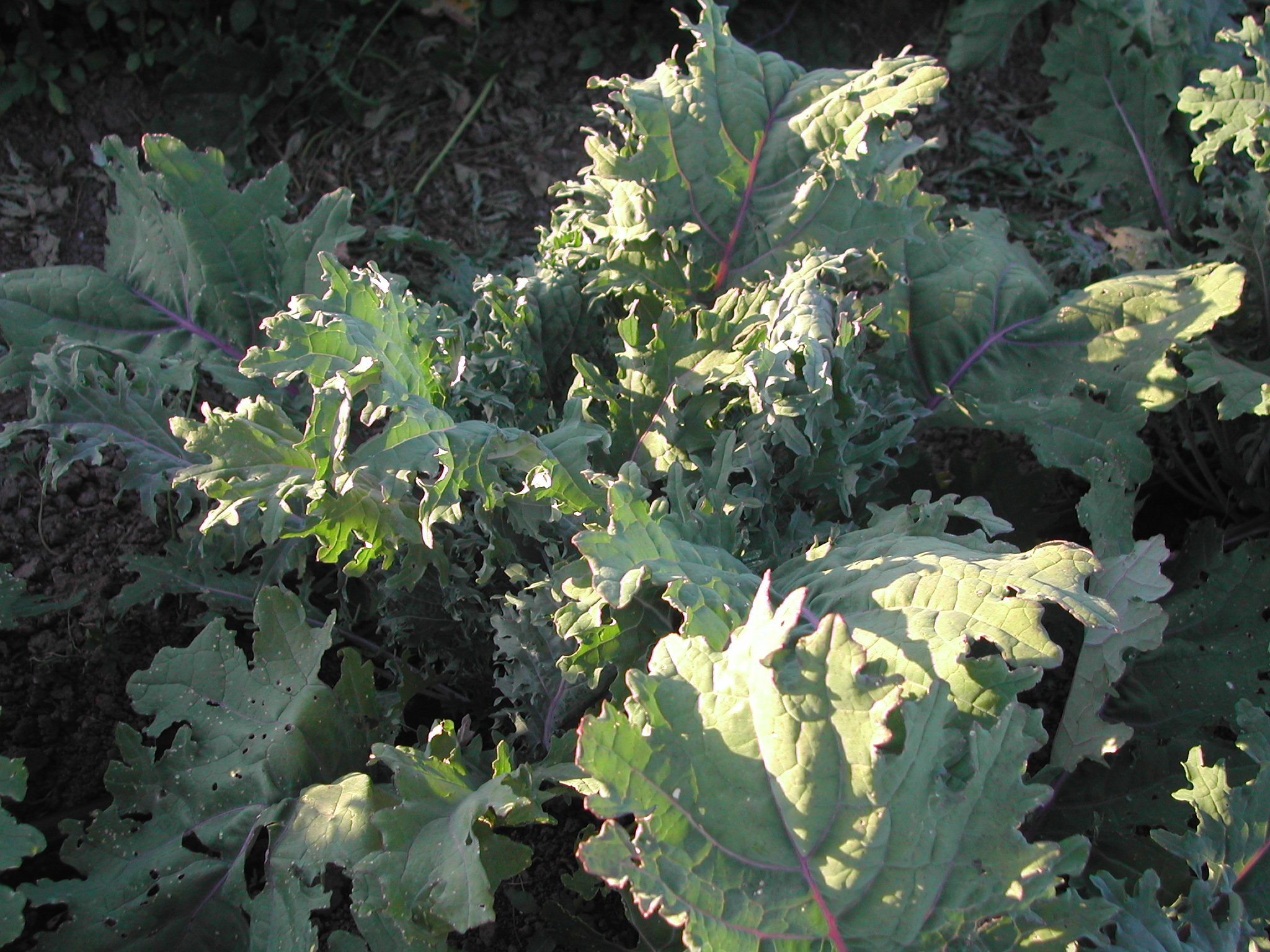
Red Russian kale in the evening light
Kale isn’t one of those vegetables that I fell in love with at first sight. It took time. But I think I know the turning point: when Anna told me about her Killer Kale Salad. Since then, I have been all about kale and I eat that salad as much as I can, when kale is available.
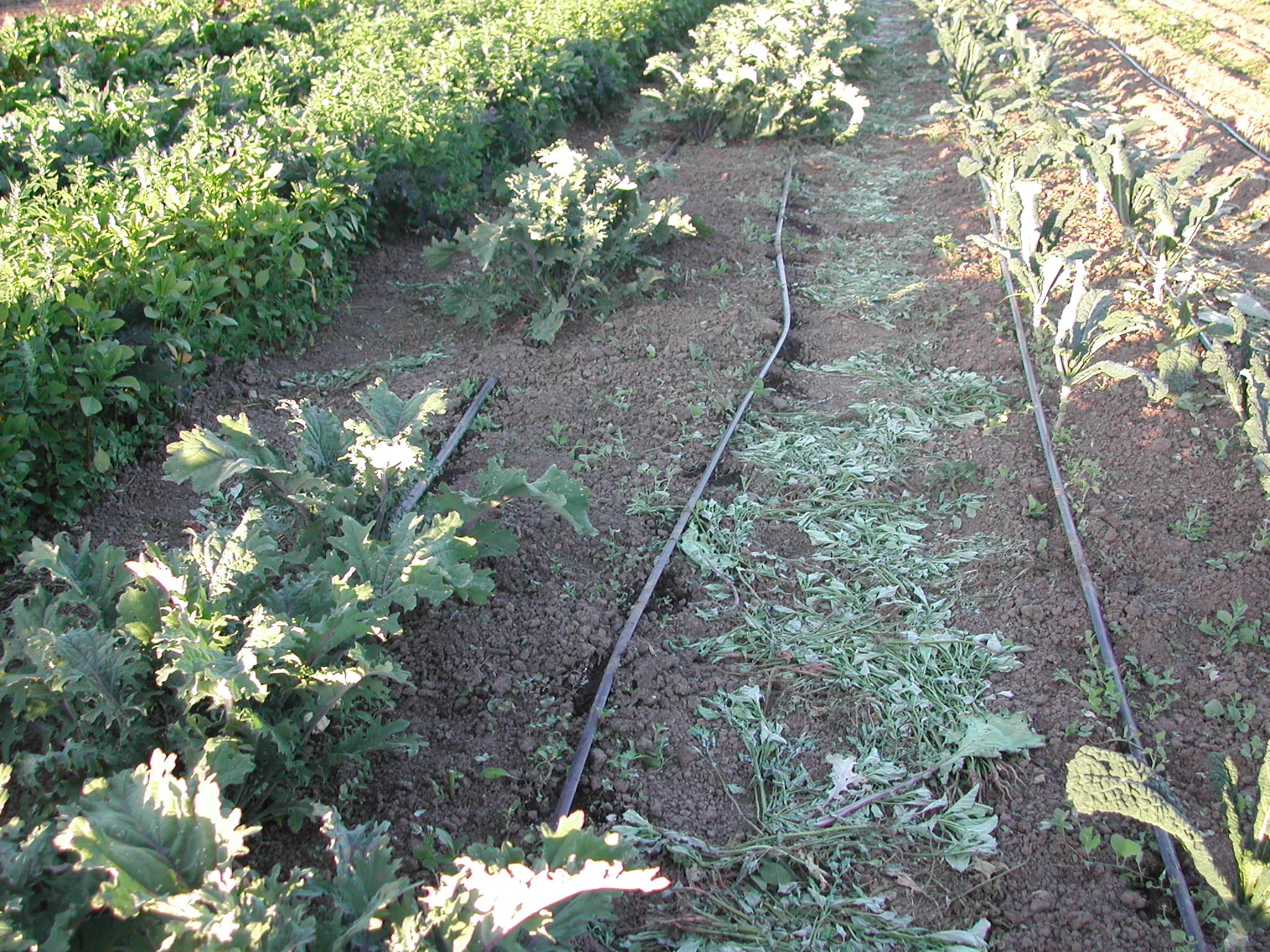
No, not flea beetle. This is gophers’ work.
This year, I have been waiting for kale. I planned for lots of it to be ready by the beginning of June. Having it ready this week is not far off, except for the fact that it was large enough to harvest earlier, maybe a couple weeks ago. The problem has been pest damage (mostly) and weeds (a little bit).
I got hit hard by flea beetle this year. I mentioned it in an earlier post, that it wiped out my arugula, purple mizuna and most of the bok choi. And it got into the kale. I have had very little damage from flea beetles in kale in the past, so I wasn’t expecting it there. They nibble the leaves, leaving little holes. As I noted before, it was already too late. Once they are there, they are there. All I could do was wait for the kale to get bigger and the leaves to grow out of the flea beetle’s list of preferred vegetables.
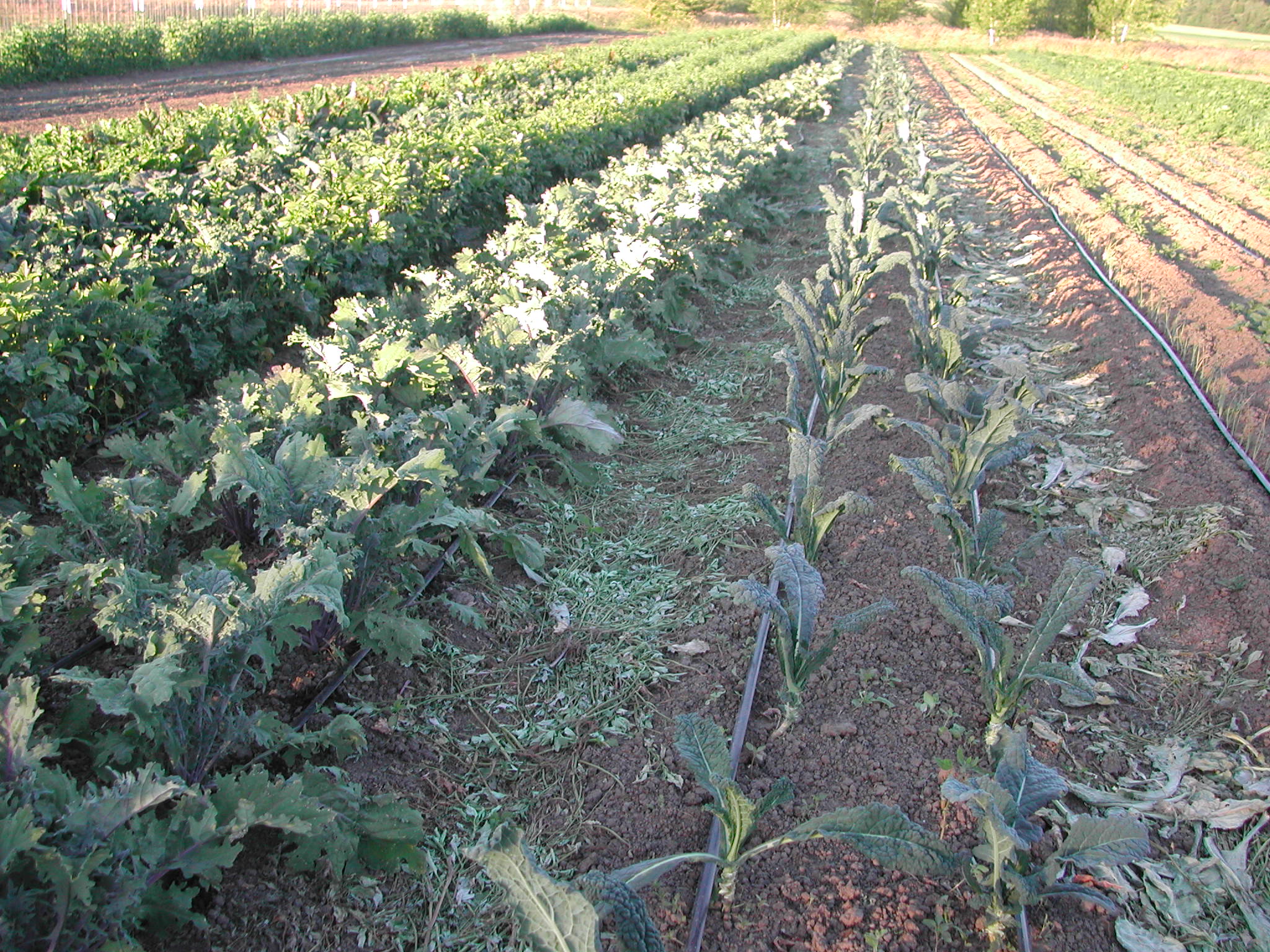
Two beds of kale weeded, one and a half to go.
That finally seems to be happening. This past week, I spent some time in the kale, first pulling thistle out, then getting the rest of the weeds out. The weeds had gotten quite big. It was one of those things where I would walk by and say to myself, “Now is the perfect time to hoe the kale.” But I never did it, because something else was always more important. When the thistles got too big and the weeds were starting to go to seed, it was time. I am not quite done yet, though, one more bed to go. I did discover that the flea beetle is not so abundant is it was earlier and I just might have enough to harvest. I hope, when I go out tomorrow morning to decide what goes on the list, I am still right on this one.
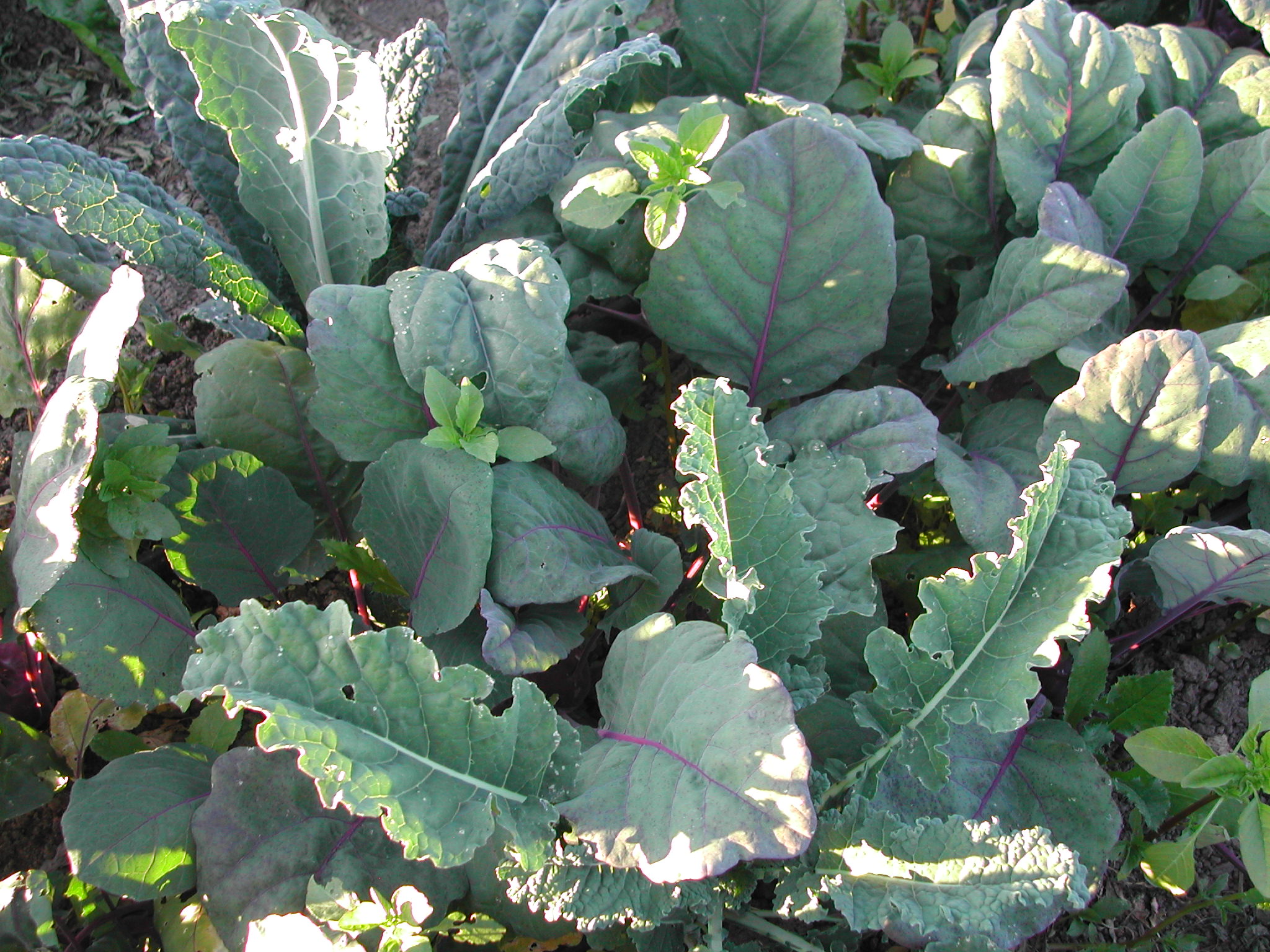
Kale planted with kohlrabi, and a few weeds.

 Bethel Springs Farm