Winter 2012

Beautiful winter sun
Can you believe this is January in Portland? I took this picture today. We do get these cold, sunny days, but it sure seems like more of our winter days are dark and cloudy. It has been remarkably dry so far this winter, which worries me a bit. There is no scientific data to back up my worries, it is more like karma: we are going to get some 35 inches of rain each year. Will come in winter like it should or we will get it later, in spring and summer when I want the ground to dry out so I can plant? But really, it is too early to worry. The rains will come when they come (next week?) and there will be some opening between the showers to get everything planted.
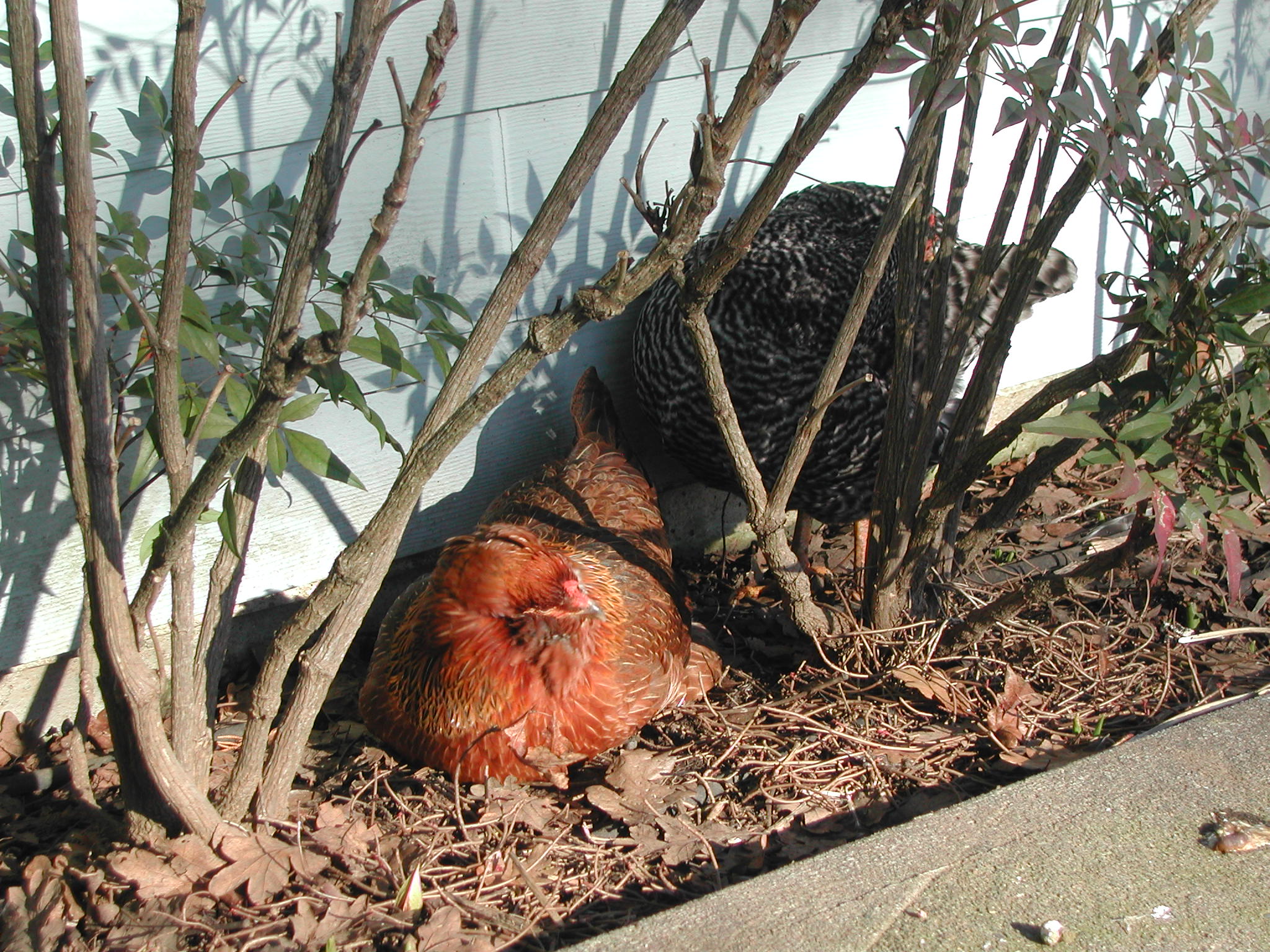
Soaking up the sun
The girls have been free ranging since mid-November now. On the really cold days, they tend to hang out near our front door, under some heavenly bamboo next to the garage. It is one of the warmer places on a cold day, and it offers protection. I like to be able to look out the front windows and see them there, though I like it even better when I see them scratching around in the vegetable beds. On a sad note, there will be no employee of the year this year. Last year’s winner, Medium Girl, died in December. The week before she died, she was out working with me as I finished cleaning up the bean beds. She was snapping up worms, slugs and other bugs right and left. She even ate two little frogs and it takes some time for a chicken to eat a frog. I am not sure why she died, but I suspect she just wore out. Out of respect, I canceled this year’s award.

The garlic is showing up.
The work for 2012 has started. I attended the North Willamette Horticultural Society Meeting: Organic Crops Section on Tuesday this week. There were some interesting presentations. One fellow from Canada presented some research on the benefits of using compost on berries. He was preaching to the choir, but I like seeing the research that validates organic methods. I have a 10 week class starting tomorrow on the business side of farming and The Small Farms conference in February. Lots of good things to learn.

A foggy late afternoon in December: more to come?
Planning is underway. I welcome your feedback on vegetables and varieties that you especially liked or ones that you could do without. Planning will be followed by seed ordering, reading and research, and getting everything cleaned up to start seeds in February. Are there ever enough hours in a day? Even in the dead of winter, time flies.
End of the Season Stats
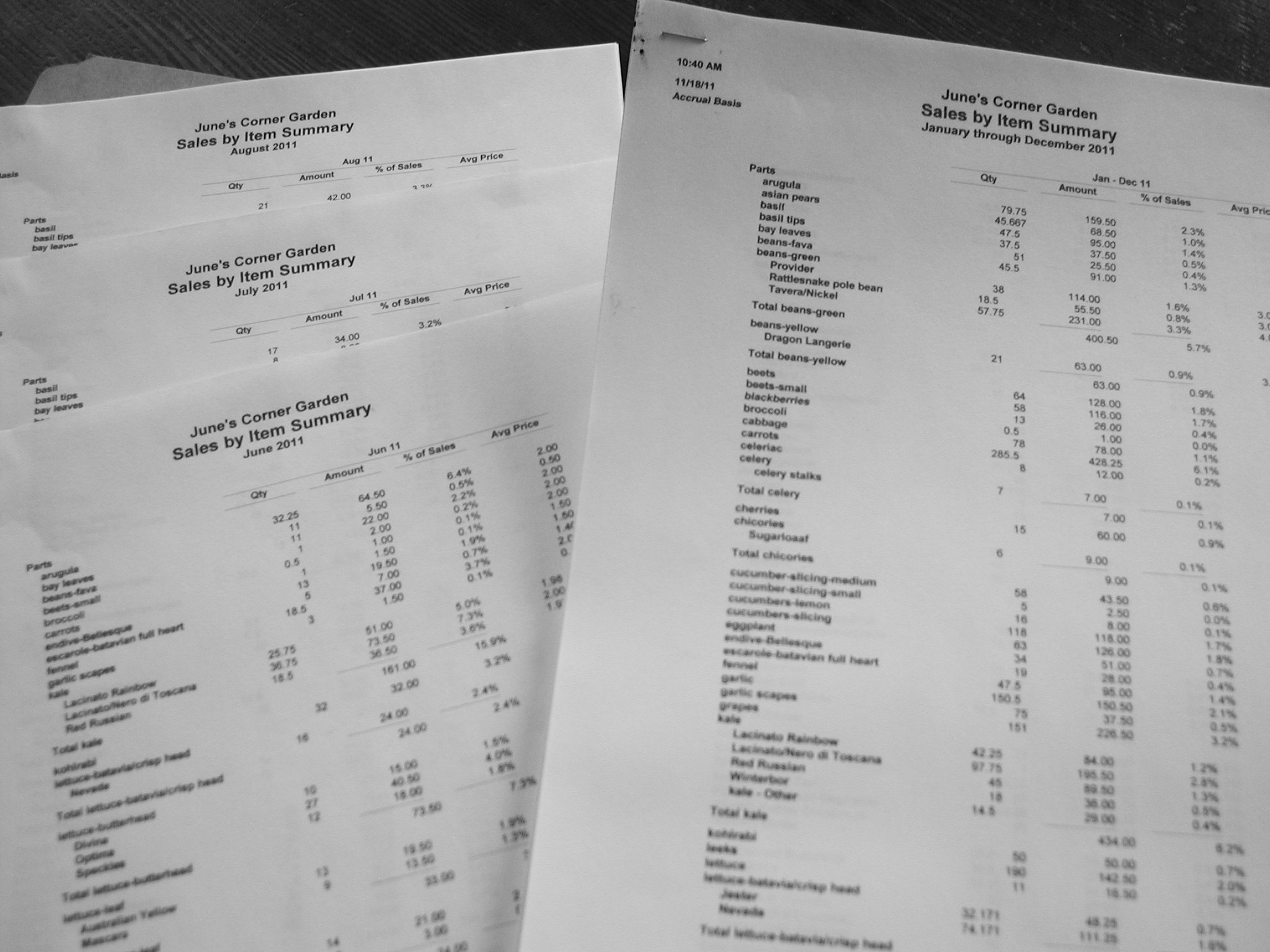
Some 2011 QuickBooks reports
The 2011 season really is finished now, with the last delivery about a week and a half ago. It has been a good season.
I am a detail person. I have always liked things like maps and charts and math class at school. So, it is no surprise that one of the things I like about QuickBooks are the reports you can generate. I’m sure I am not using it to its potential, but I can get some interesting data without much effort at all. So, via my record keeping in QuickBooks, I have the following statistics from the 2011 season:
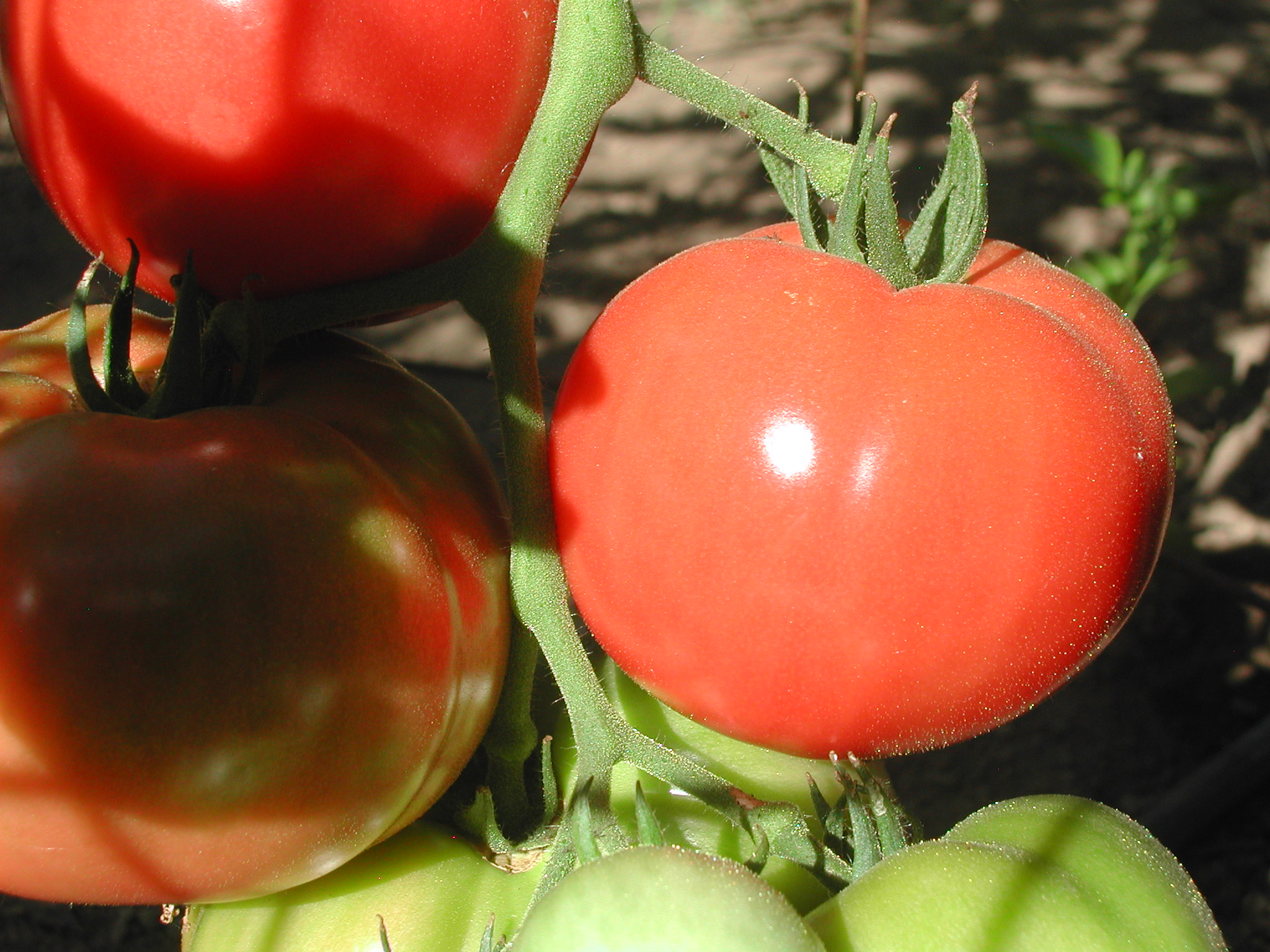
Lovely tomatoes
I delivered produce to 78 different customers this season.
Sales increased by almost 24% over last year. (Disclaimer: percentage increase can be high when the numbers are low!)
Tomatoes brought in the highest percentage of sales, at 11.8%, followed by lettuce at 9.7%, peas (snow and snap) at 7.1%, beans (snap) at 6.9%, and kale at 6.2%.
I sold 285.5 pounds of carrots…more weight than any other vegetable, unless you count all the varieties of winter squash together (I put pumpkins in this category, too), which totaled 651.5 pounds.
Sage had the least weight sold, at 1 oz., since I never put it on the list and only put it in one bag.
476 zucchini left June’s Corner Garden, along with 375 garlic scapes (75 bunches of 5), and 190 leeks, but only 16 lemon cucumbers got out (they did not have a good year).
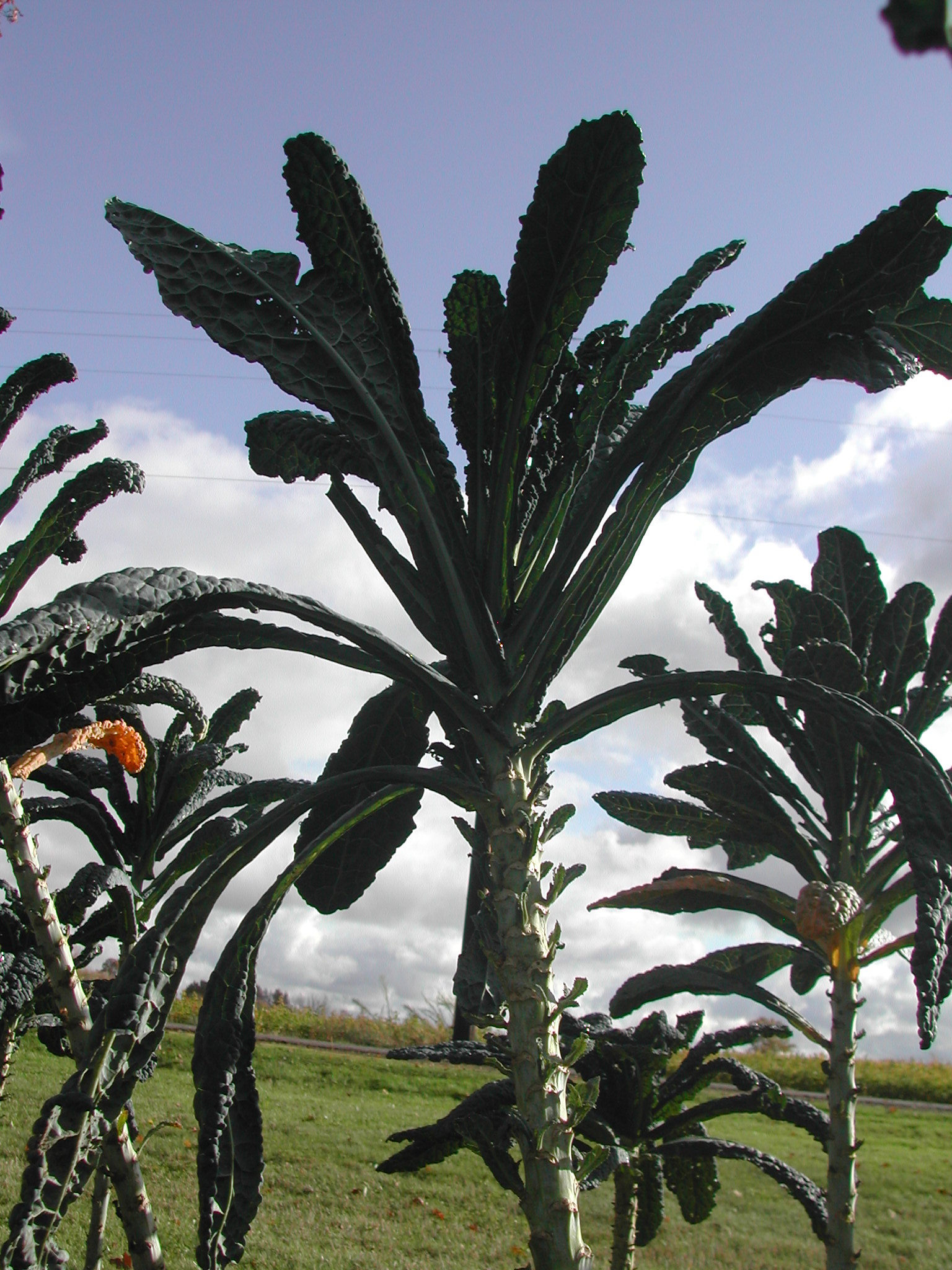
A tropical vacation? Nope, just some of the left over kale.
I figured it up again: all of this and more came from 1/3 acre, which in 2011 was 64% vegetables, 16% fruits, and 20% not producing this year. (In the future, it will be pretty close to half fruits and half vegetables.)
Whew! There is a lot of information in these reports that will help me with planning for 2012, in January.
Until then, I still have a few beds left to cover for winter, now just with leaves or compost. Then it will be mostly inside until February; reading, researching, planning and preparing for next year. I can let the girls out to free range some now. You’d be amazed at how well they can find big earthworms in the wet grass. They love scratching through the leaf and compost covered beds, too, where I am always hoping they will find and eat the slugs and slug eggs. I do have to be careful they don’t scratch up the cover crop that isn’t quite established yet and they don’t get to the left over kale before we do. And, of course, they only get to free range as long as they don’t cross the road!
With the close of the season, I would like to say thank you to all my customers for making 2011 a great season at June’s Corner Garden.
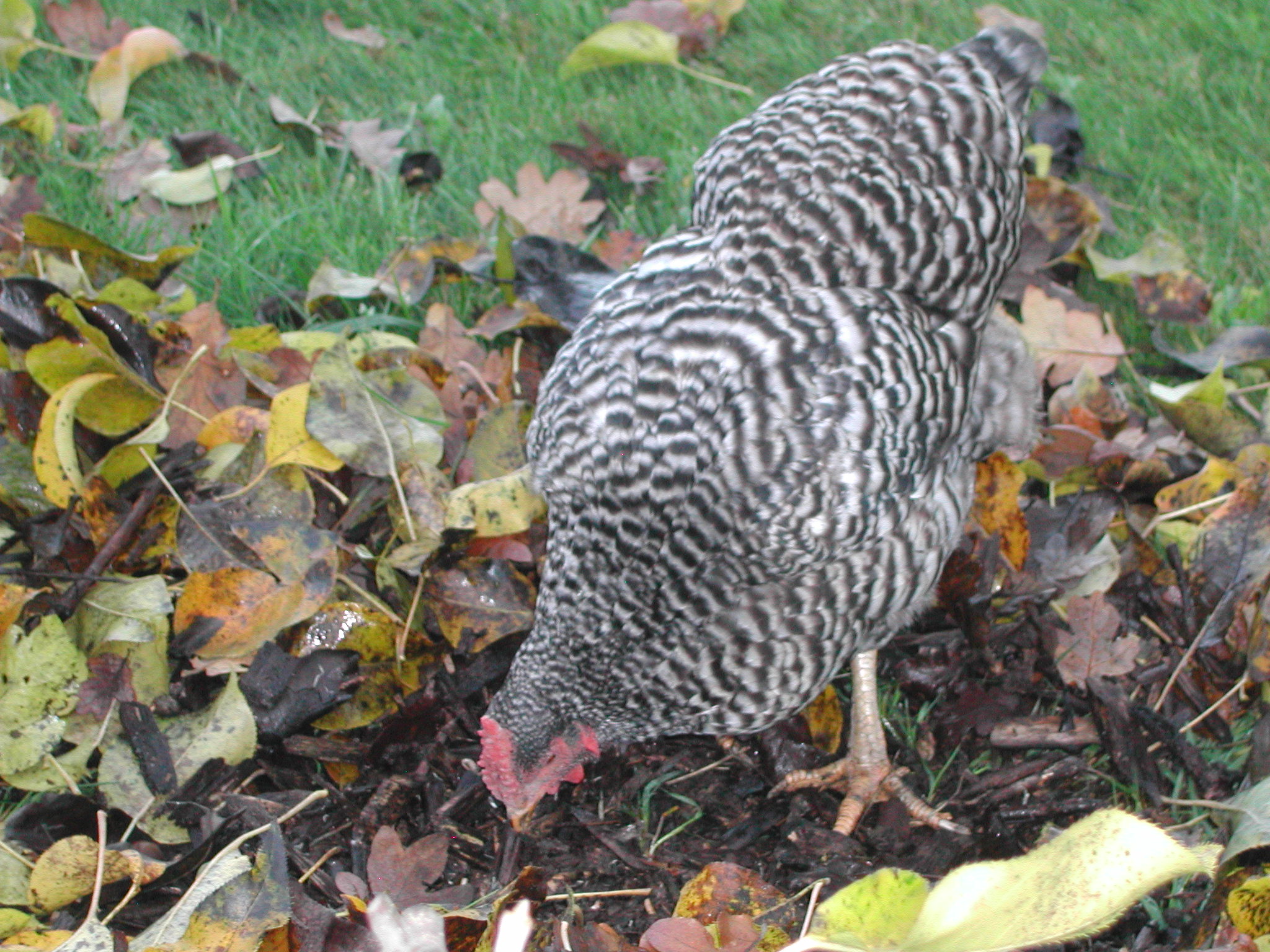
A free ranging Dominique, looking for something good to eat
End of the Season
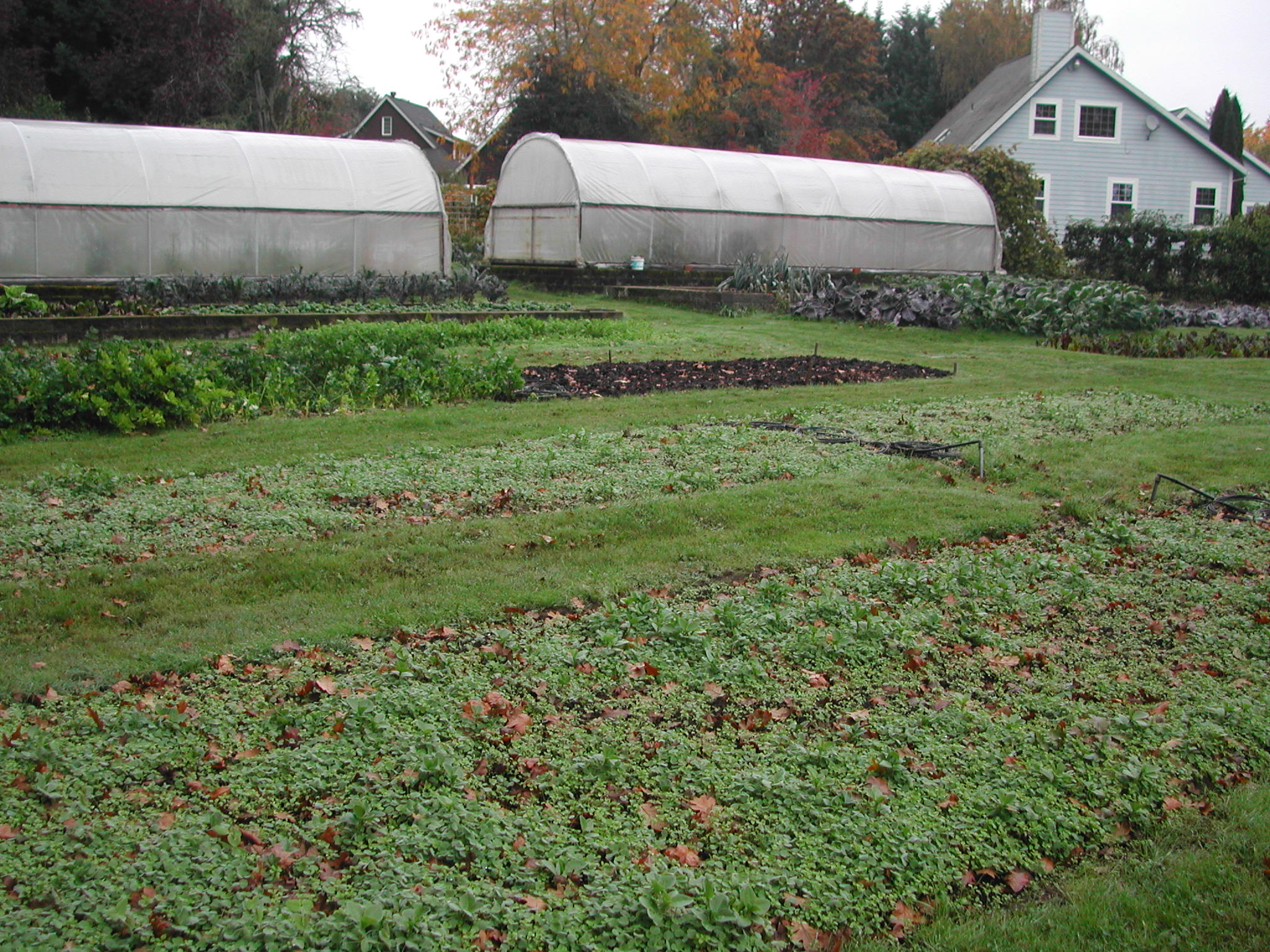
The garden is just about ready for winter; that's cover crop in the first few beds.
The end of the season is here. Yesterday was the last Thursday delivery. Monday will be the very last delivery of the season. It took me a long time to decide when to end the season. I have this romantic notion that our Thanksgiving dinners should be based on our local harvest, with the emphasis on what we are harvesting right now, more than what may have been preserved for winter. So, of course, I would like to deliver the week of Thanksgiving. The reality is, that can be pretty hard to do. There is a reason why many CSA farms and farmers’ markets end this time of year.
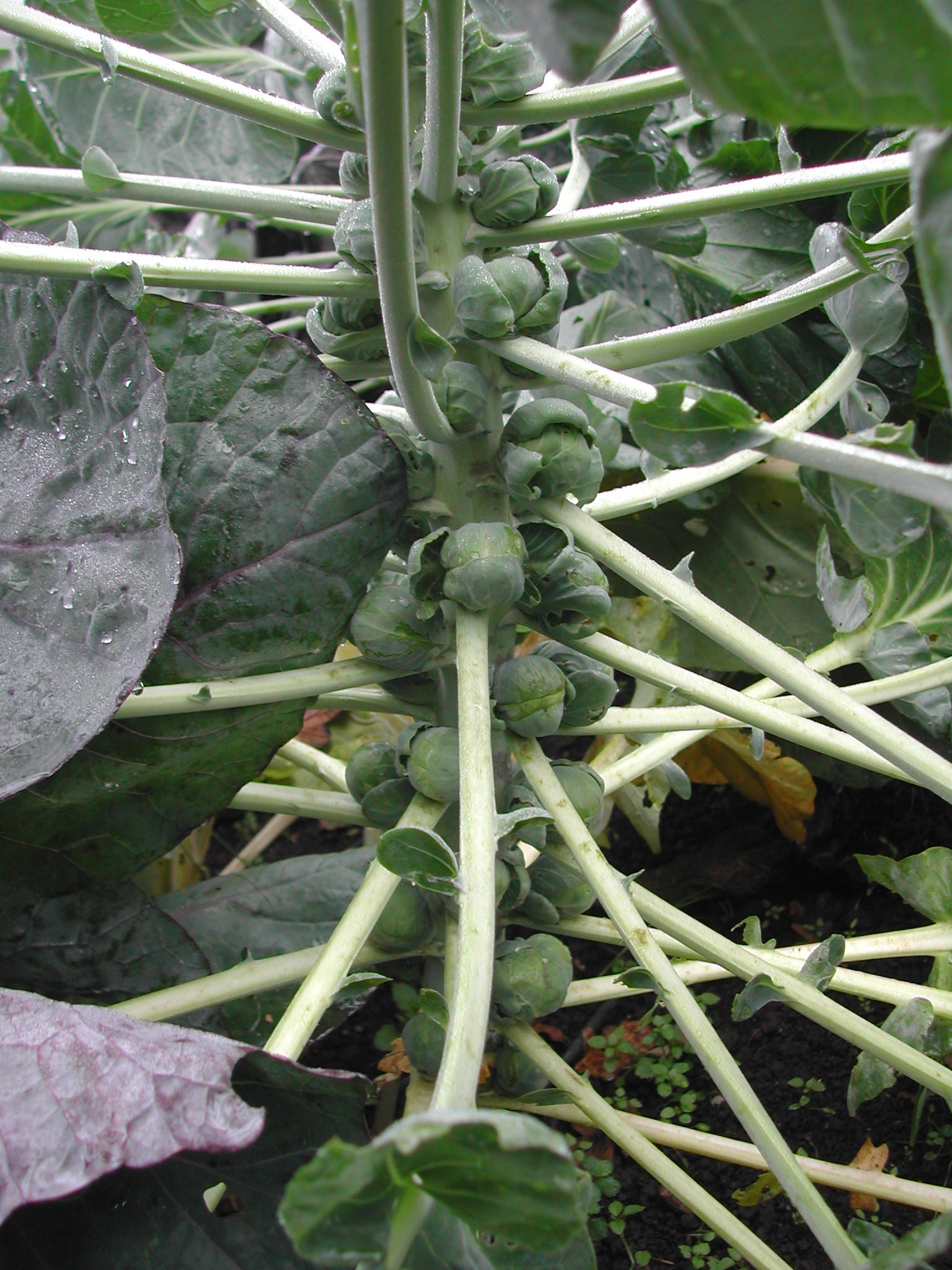
The Brussels' Sprouts still need to be planted earlier; they didn't quite make it to maturity.
As I have mentioned in recent posts, plants stop actively growing when we get down to about 10 hours of daylight. That means, most everything that will be harvested for Thanksgiving has to be ready to go now; but the longer crops sit in the field, the more chance there is for damage to occur. On a large farm, this can be managed. There is enough space to get fall and winter crops in the ground early enough to mature, and enough room to overplant, expecting to cull much more than in the summer months. In a small space, it is harder, though not impossible. I have to get spring and early summer crops out quicker, to use the same space for fall crops. Then, with more pest and weather damage, I don’t have as much to choose from and the quantities to sell are smaller.
After talking about this with a neighboring farmer, I have finally decided to give up on my romantic ideal. Until I have more room to grow, I will plan for the season to end at the end of October.
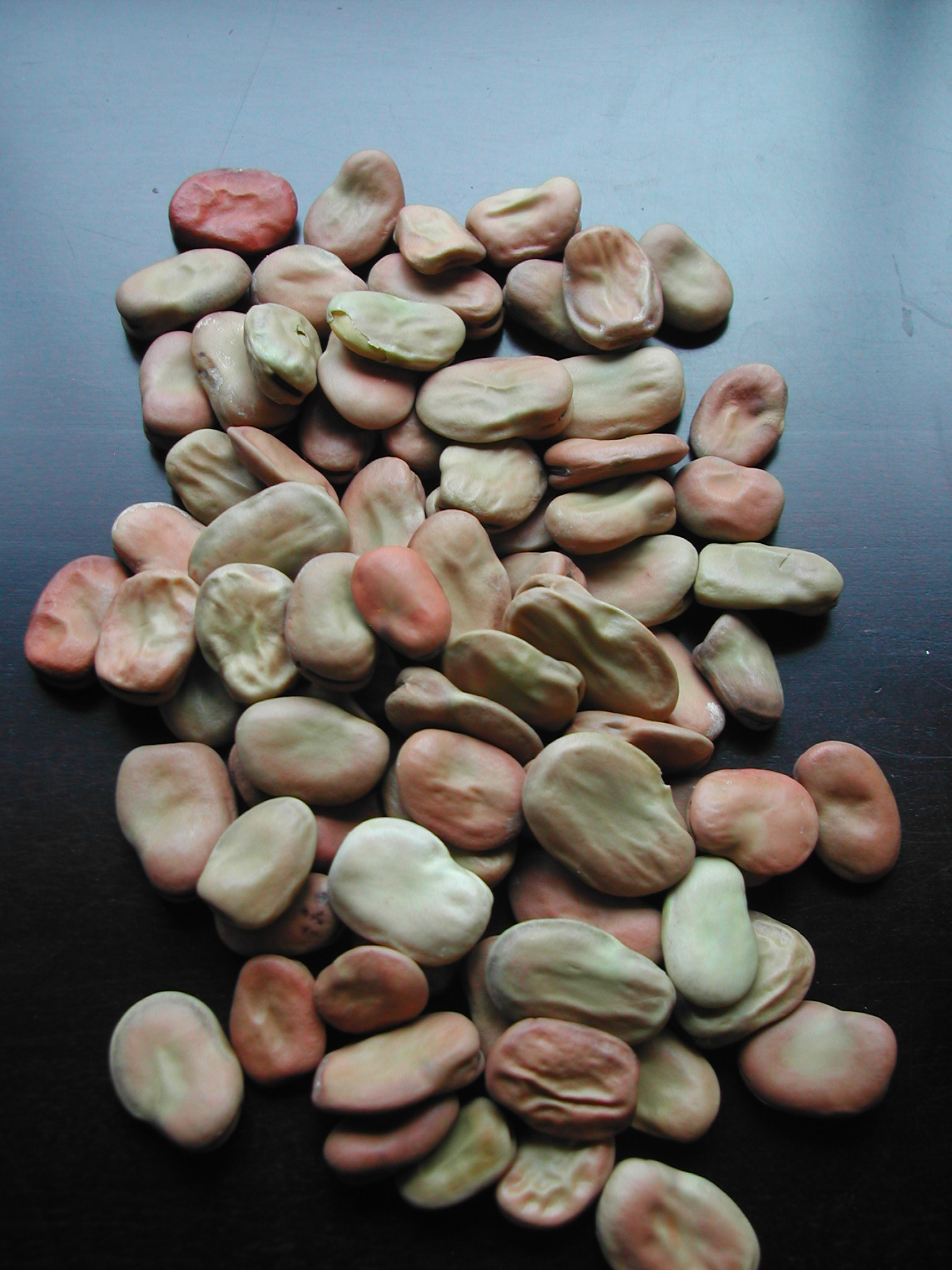
Aquadulce fava bean seed
As for what is happening in the garden this week, we did have a another frost Wednesday morning. This time, it was a good one, maybe enough to start to sweetening up what is left in the beds. I started cleaning out the squash field, to get it ready to be covered by oak leaves for the winter. I am a bit late, but I will try to get the fava beans planted today (I just finished harvesting the lettuce yesterday in the bed where I will plant them). I have a new variety to try out for next year. I will plant the Casine favas I had this year again, but I will also plant Aquadulce. I am already looking forward to trying out the new beans!
First Frost

Can you see the light, spotty frost on the blueberry field?
We had our first frost out here, at least sort of a first frost, on Wednesday morning. It was very, very light and spotty. It didn’t kill the beans, peppers or squash plants that were still growing, but I will still count it. I was actually hoping for a bit more, since I had gotten ready for this one. On Monday night, I cut down most of the hot pepper plants that were still out in the garden and took them in so I could dry the peppers. I didn’t get to the squash until Tuesday, when I brought all the ripe ones in. I was hoping we would get another frost on Thursday morning, but no luck. It was pretty cold, though.

Will the kale sweeten up a bit?
I still would like to see a few frosts soon, not only because I have the garden ready for it, but because I have always heard that crops get sweeter after a frost. I read in Steve Solomon’s book, Growing Vegetables West of the Cascades, that to survive winter weather, plants increase the sugar in their cells with frosts, to act as a sort of anti-freeze. They also pump water out of their cells, when it gets close to freezing, so when they do freeze, they won’t burst their cell walls. So, yes, they do get sweeter, but they also can get drier and tougher. How much sweeter and how much tougher? I don’t know yet. Most years, we’ve eaten everything in the garden before a good frost comes, so I haven’t tasted the difference a frost makes. Maybe this year? It looks like next week there are some clear days with cool nights forecast: a chance for another frost.
Shorter Days
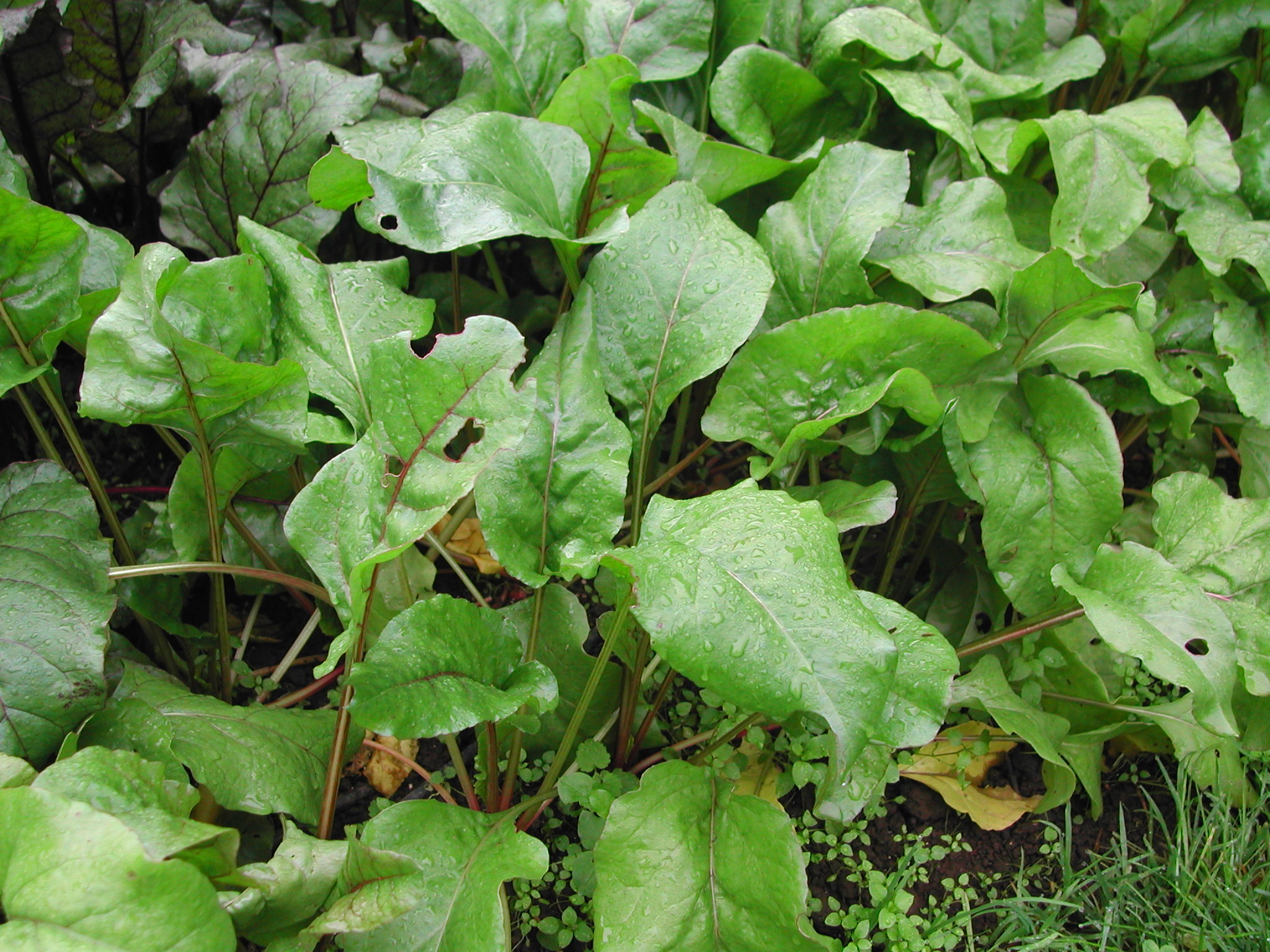
How much more will the beets grow?
My work days are getting a little shorter. Earlier in the summer, I could get up by 5 am, get outside to work right away and stay out working until 7pm or later, even. Not anymore. I really noticed the morning light yesterday, when I wanted to get out to harvest for the day’s deliveries. I did go outside a little after 7 am, but even by 7:30, I didn’t feel like I had enough light to see really well (at least, not to see the things I was looking for, like flaws on the kale). My day is now ending by 6 or 6:30 pm, when the girls are ready to go in.

This baby slug got a free trip to the slug jar
The vegetables notice the shorter days, too. They are getting closer to the day when they will stop growing at all and just hold. I am still trying to figure out where that point is. I read on a seed catalog website that 10 hours of daylight is the magic number for plant growth. At less than 10 hours, vegetables stop their active growth and pretty much just hold steady. I did a little search and found out the first week of November is when we get to about 10 hours of daylight (or at least about 10 hours between sunrise and sunset). However, just because the plants stop growing doesn’t mean the pests stop eating. The slugs and larva are out feeding on the plants and, unfortunately, the plants can no longer outgrow their damage. It is a balancing act for me, to figure out how long I can keep plants in the field to grow a bit more, but not get too much pest damage. The act starts much earlier in the summer, though, since I also have to make sure the plants are out in the field soon enough to be mature by the time we get to 10 hours of daylight. Each year I get a little closer to that sweet spot.
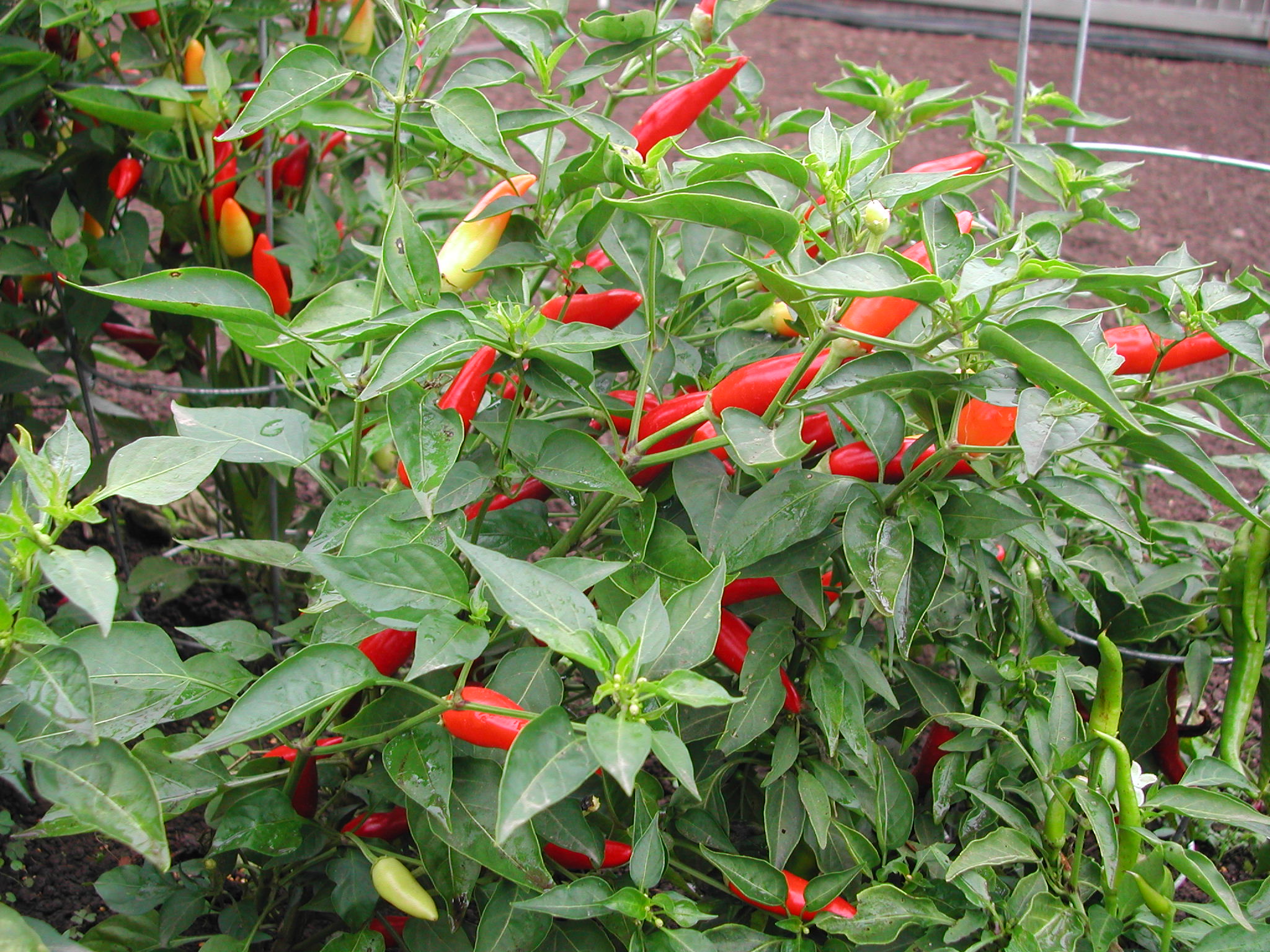
Just the hot peppers are left in the orchard field
In the shorter days this week, we got a little more of the garden ready for winter. We cleared out the orchard field of the tomatoes, peppers and eggplant and Steven planted the cover crop there. I planted the garlic for next year and will finish up tucking in that bed with a layer of compost today. Other activity in the garden had nothing to do with us, but some visitors: deer. I have been noticing more signs of their presence this month: footprints in the beds we have gotten ready for winter and nibbling on the fall crops (chard and kale in particular). I am not sure what it means, but they have been in our garden more this year than ever before.
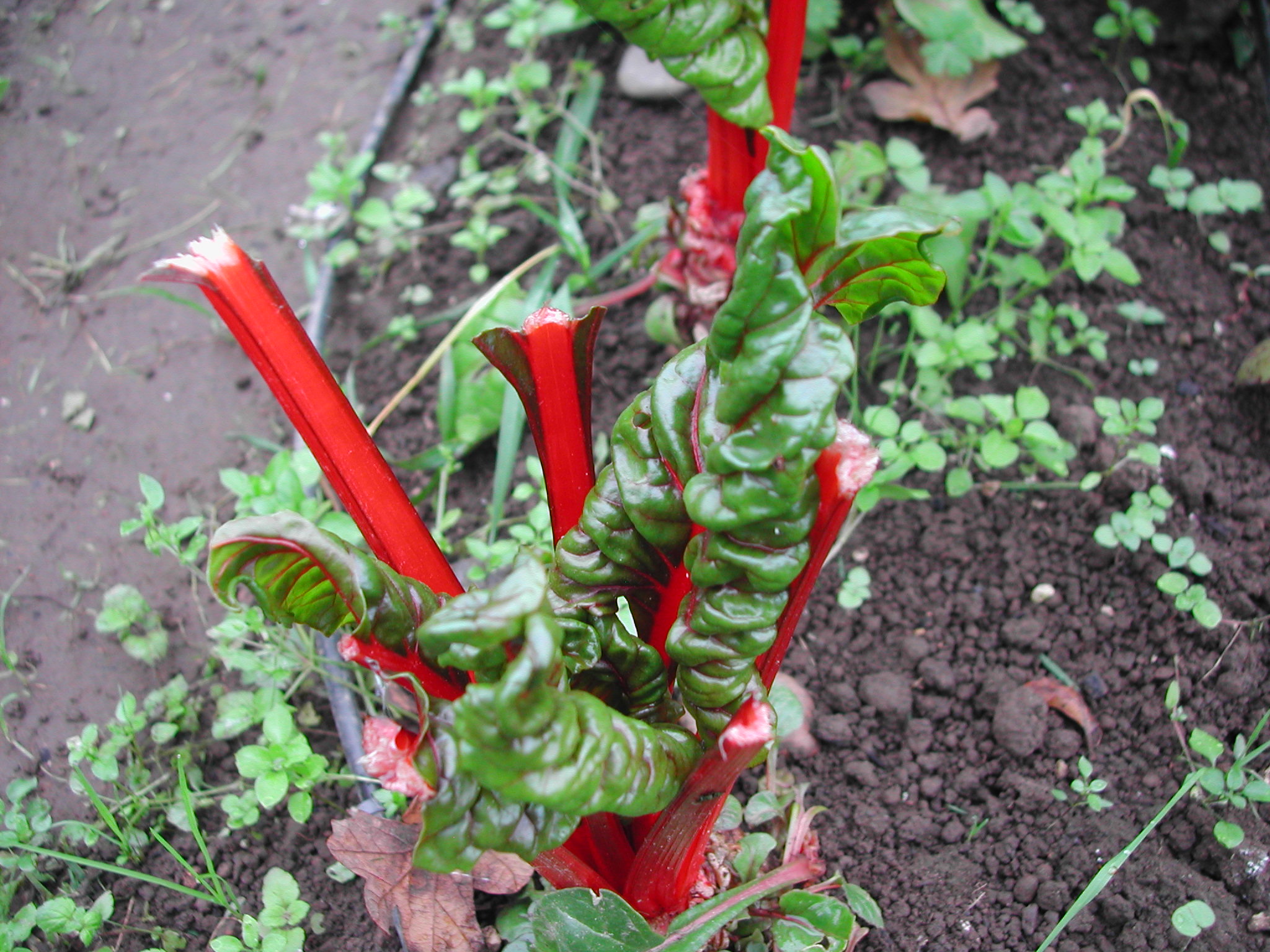
I guess deer like Swiss chard
Borrow a Cup of Sugar?

The Canadice grapes
It is official now. I heard it on OPB earlier and read it in the Oregonian today: grapes are not as sweet this year in Oregon. For the record, I still think the grapes we are harvesting taste good. They are just not as fully sweet as they have been in other years. I will keep the grapes on the vine as long as possible, but I don’t know that there is much more I can do at this point to make them sweeten up. I have to admit, I don’t do a lot with our grapes. I kind of take the hands-off approach. Sure, I prune them in February and sometimes Steven or I will cut them back in the summer so we can get to them, but basically, we let them go and they do pretty well on their own. These last two years are making me think I am going to have to get a little more involved in the process and give those grapes a some direction for how I want them to grow. I have also been thinking about taking out a couple varieties and replacing them with more Canadice and another, yet to be determined, seedless variety. That would be another good project for winter!
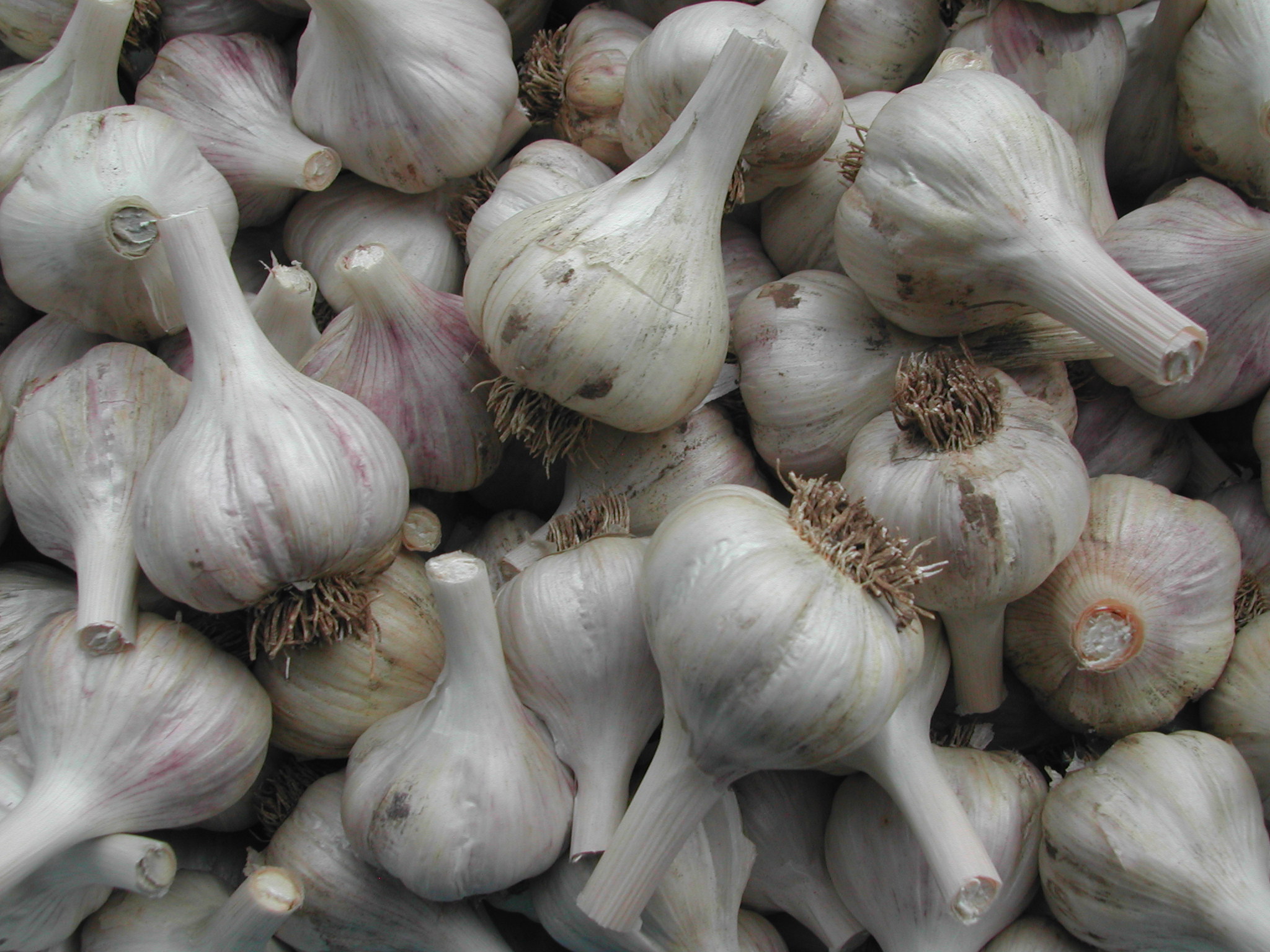
Chesnok Red garlic cleaned up
In other garden news, I used some of the rainy days in the past week or two to trim and clean up the garlic. I’ll pick out the best heads to use for seed and am planing to plant next week, if we get the dry days that are forecast. I am excited to be using my own garlic for seed.
Cleaning up the garlic gave me some table space to start bringing in the winter squash, as it ripens up. I have brought in all the Rogue vif d’Etampes, Galeux d’Eysines and miniature pumpkins. Since we don’t have any forecasts for frost yet and some of the vines are still kicking, I’ll leave the other squash out a bit longer. It is good to know I have a space for them when I need to bring them in.
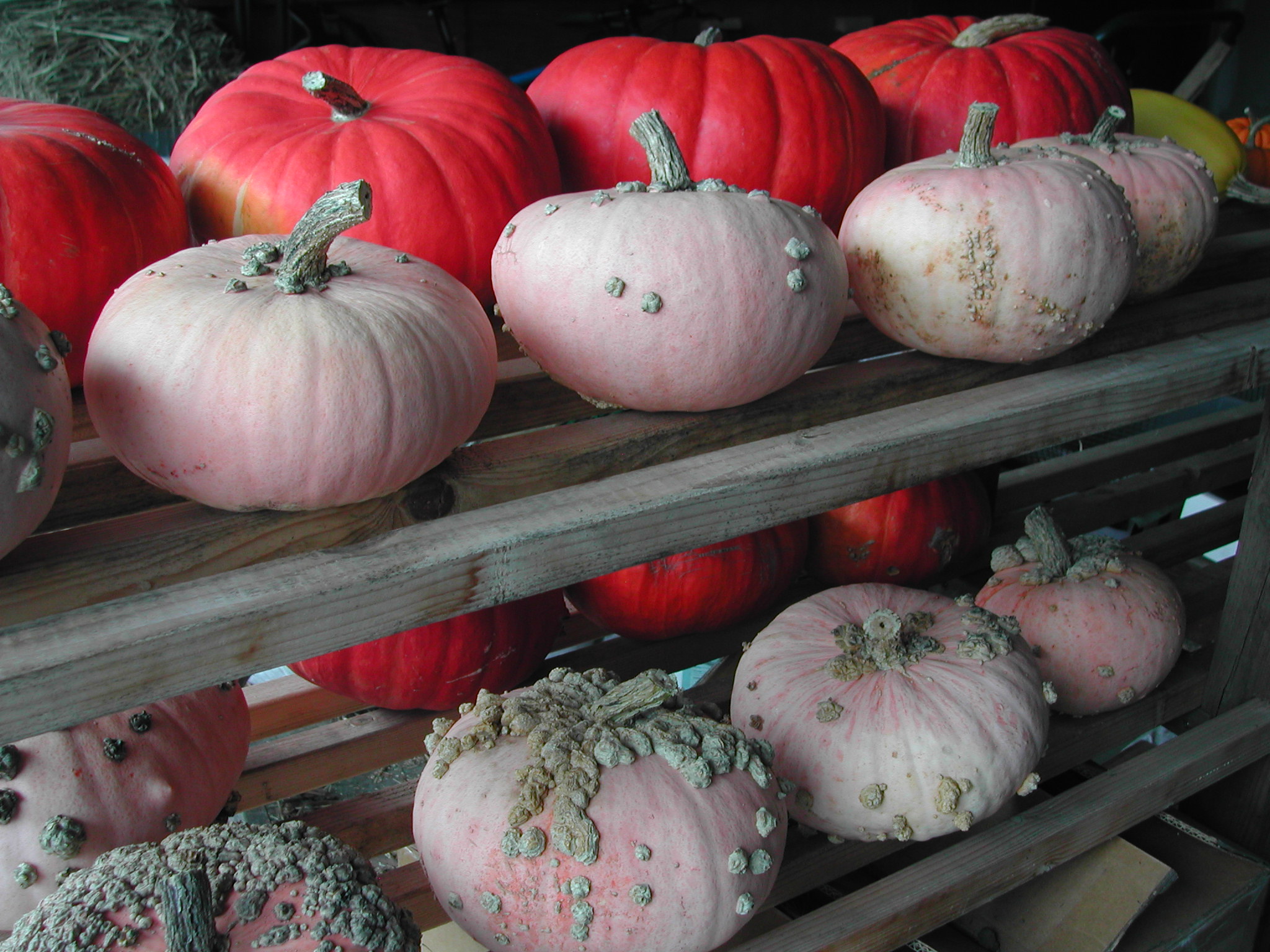
Galeux d'Eysines squash and Rogue vif d'Etampes pumpkins
Finally, the cover crop we planted a few weeks ago is getting a good start. We got it in just before some rain and it has been warm enough for good germination. Steven is taking next week off work, so I may get a little extra help from him to get some more cover crop planted.
Experiencing Technical Difficulties

My Blackberry smartphone
Today, this device saved my life. Or, at least, it saved my e-mail contact list. I have been experiencing technical difficulties the last few days. It started on Wednesday, when my Outlook would no longer send out e-mails. Invoices and statements from Monday orders did not get sent. I put off working on it until Thursday afternoon, when through the process of trying to solve the problem and talking with tech support at my internet service provider (Qwest now CenturyLink), I deleted my e-mail account from Outlook. I lost EVERYTHING. Well, I shouldn’t say EVERYTHING, because I did get my incoming e-mails back, but mostly I lost all my contacts and e-mail distribution lists. I knew I could build back my address book by hand, at least partially, through the incoming e-mails, but that could take a very long time. First, I called my own personal tech support, my dad, as he was driving to California with my sister and brother-in-law. (He is part of the support team for my sister’s Furnace Creek 508 bicycle endurance race this weekend.) We talked over the problem and tried what we could to recover the lost data with intermittent phone service, but no luck. Next, I spent a few hours with Microsoft tech support (a 138 minute call) and even a conference call between the Microsoft support guy and the CenturyLink support gal. In the end, they told me it was not possible to recover any data, because of the type of e-mail account it was (not stored on my hard drive) and CenturyLink’s lack of support for that type of account. On top of that, CenturyLink web mail has no way to export an address book (that’s what they said).
This morning, I was afraid to try too much of anything else, since I didn’t want to lose what little I had left to work with. My Blackberry smartphone was my last option. I had been occasionally synching the Blackberry with Outlook. The last time I did was about the middle of August, so I tried to synch again, to restore as much data as I could to Outlook. After a few failed attempts, reading some support forums, removing and reinstalling the Blackberry software on my computer, IT WORKED! My smartphone data transferred to Outlook. I had my address book back up, as of the middle of August. To put a cherry on top, it even synched the music I had been putting on iTunes, that I couldn’t get to synch before. Wow. Even though I have a lot (really a lot) of clean-up work to do in Outlook, I feel relief.
The Blackberry smart phone saved my life.
I still have to rebuild my e-mail distribution lists by memory, which will likely be short a few addresses. So, if you, or someone you know used to be on the distribution list and would like to keep getting the weekly e-mails, let me know if you are not receiving them.
It looks like I will have a new project this winter: making sure all the technology in my life to plays well together.
A Week in Early Fall

Some of the crops for fall
Fall is definitely here. My hands got pretty cold yesterday, when I was out early harvesting for the day’s deliveries. It turned out to be a very nice, warm day, though. I hope we get a few more of those kinds of days. Today is looking pretty good and possibly this weekend (I am optimistic), but then maybe not until the last half of October. I just checked the 15 day forecast on Accuweather and it looks like two weeks of rain coming up. Fall is here and winter is coming.
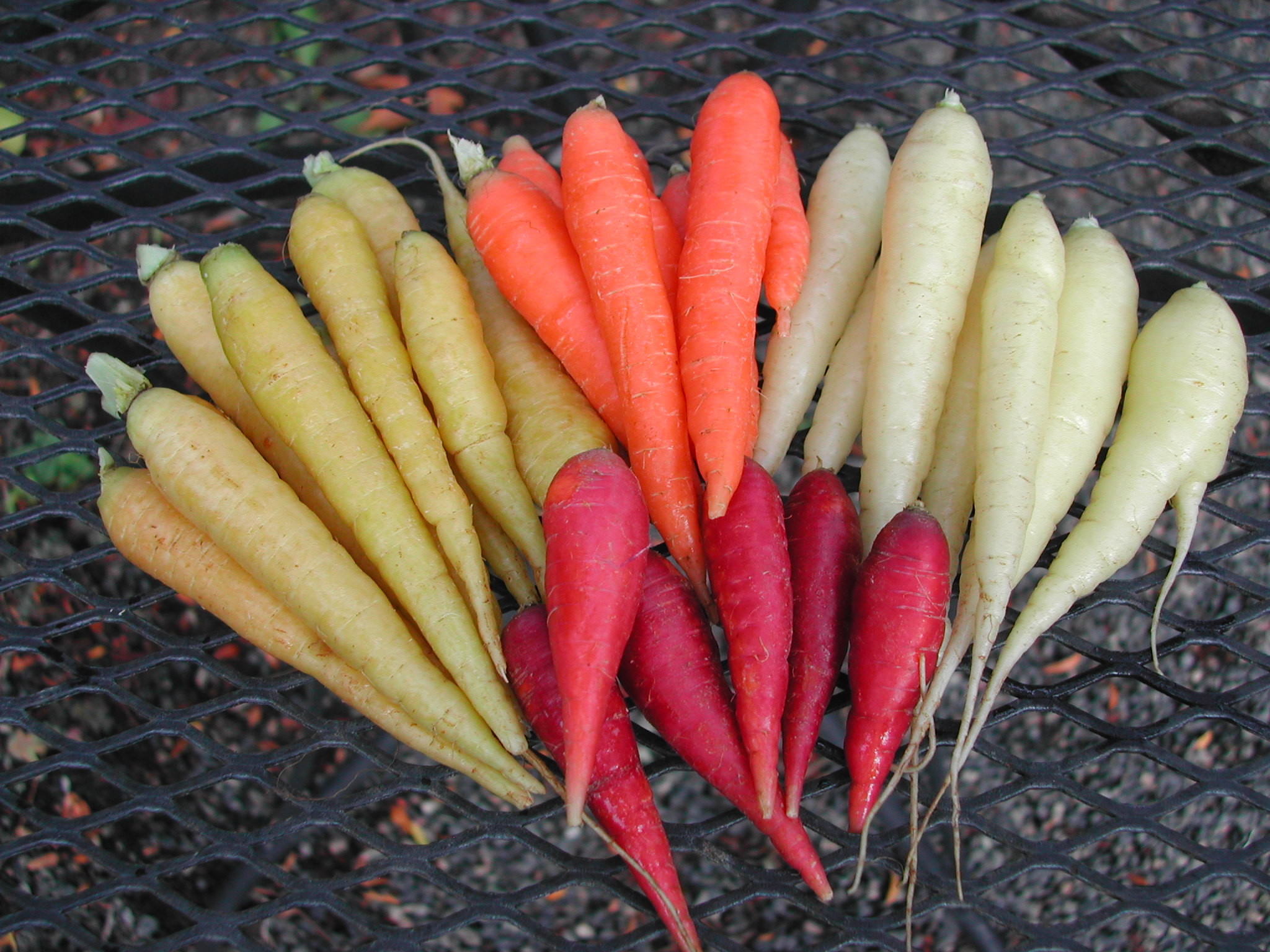
A rainbow of carrots to come
I did more work on the carrots this week. Once the weeding was finished, by last Saturday, I started in on the thinning. I am pretty happy with what came out. The carrots I pulled weren’t big enough to sell, but some were big enough for us to eat. With a bit more room, the rest might still have time to grow to a decent size. This time, I planted some yellow, purple and white carrots, along with the usual orange ones.
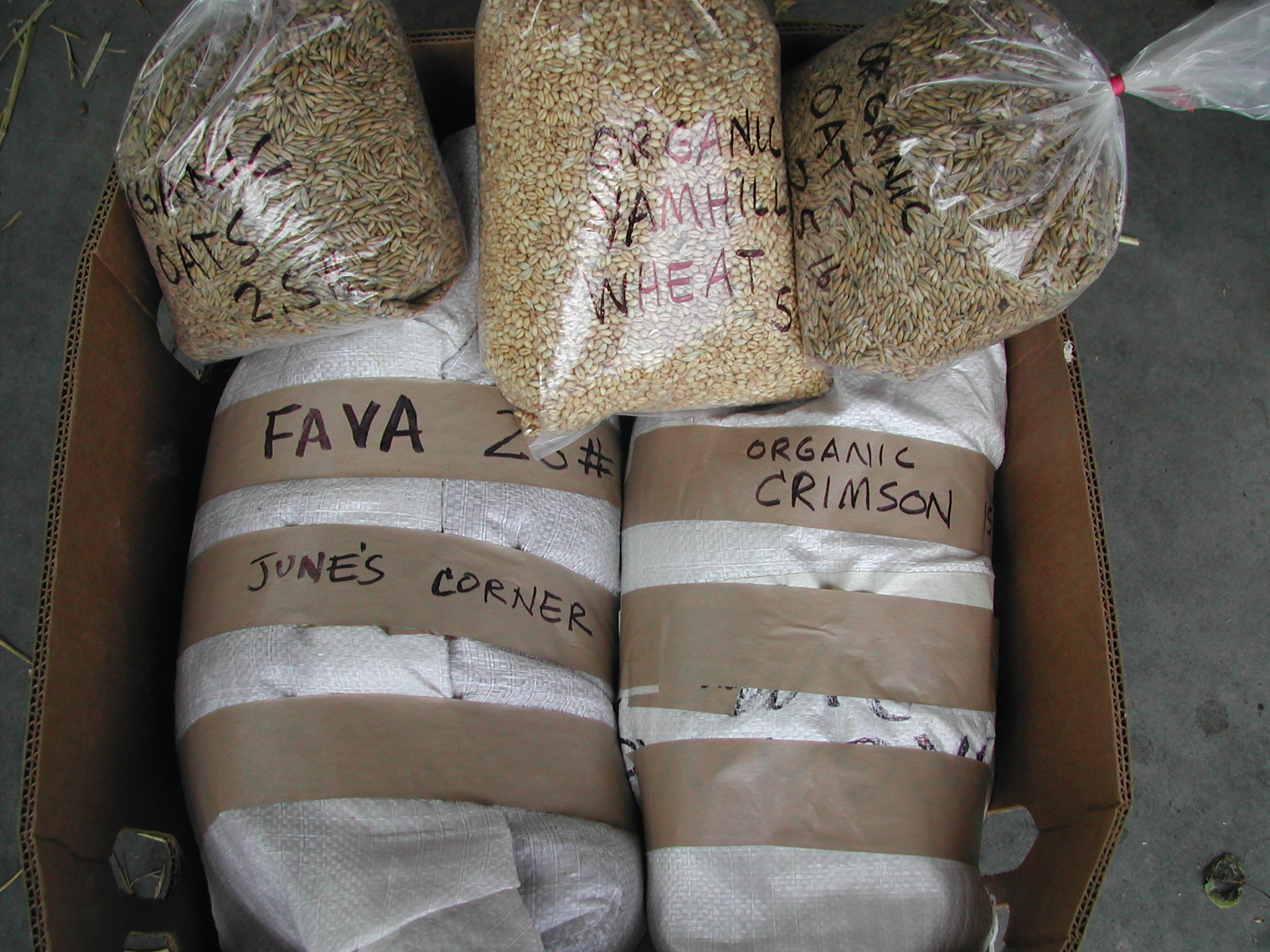
50 pounds of cover crop seed
Cover crop is next up on the agenda. On Wednesday, I picked up some cover crop seed from Naomi’s Organic Farm Supply, at their mobile site at People’s Co-op Farmer’s Market. Fava beans and crimson clover will go into most of the beds. I hope to get as many beds as I can seeded with cover crop before the rain starts.
Carrots and the Flame Thrower
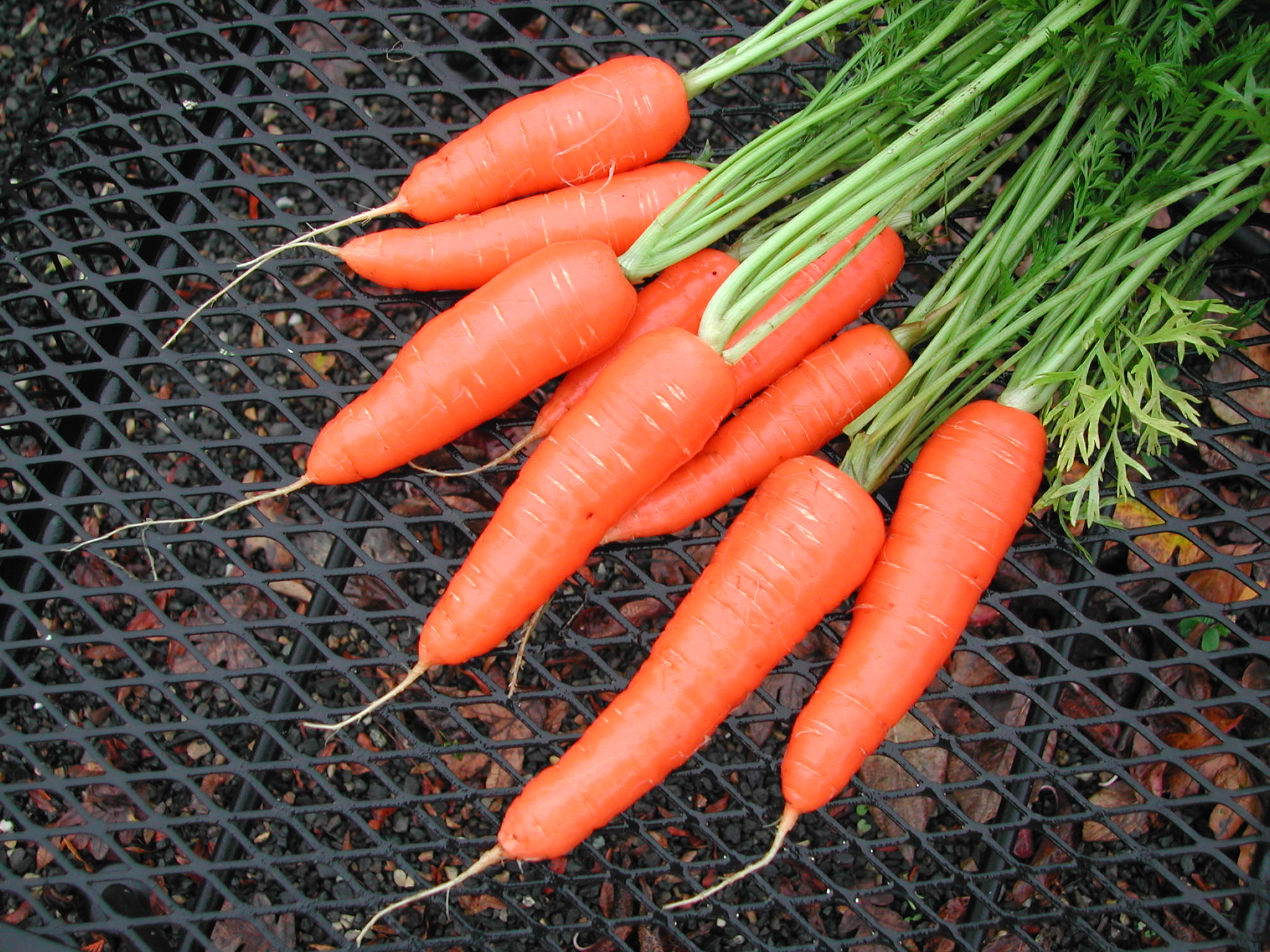
Carrots
Just like the lettuce I wrote about in early July, I planned for a continuous supply of carrots this season. The winter planning worked the same for carrots as for lettuce: figure out how often and how much I need to plant at a time, determined by how long each planting will last, both in terms of maturity of the vegetable and how fast it will sell. Then, implement the plan. Since carrots ran short last year, I increased the carrot plan this year. Again, like the lettuce, the one part of the plan I never quite finished was where each planting would go. The first six plantings had their place, but the rest had to wait and see what space became available.
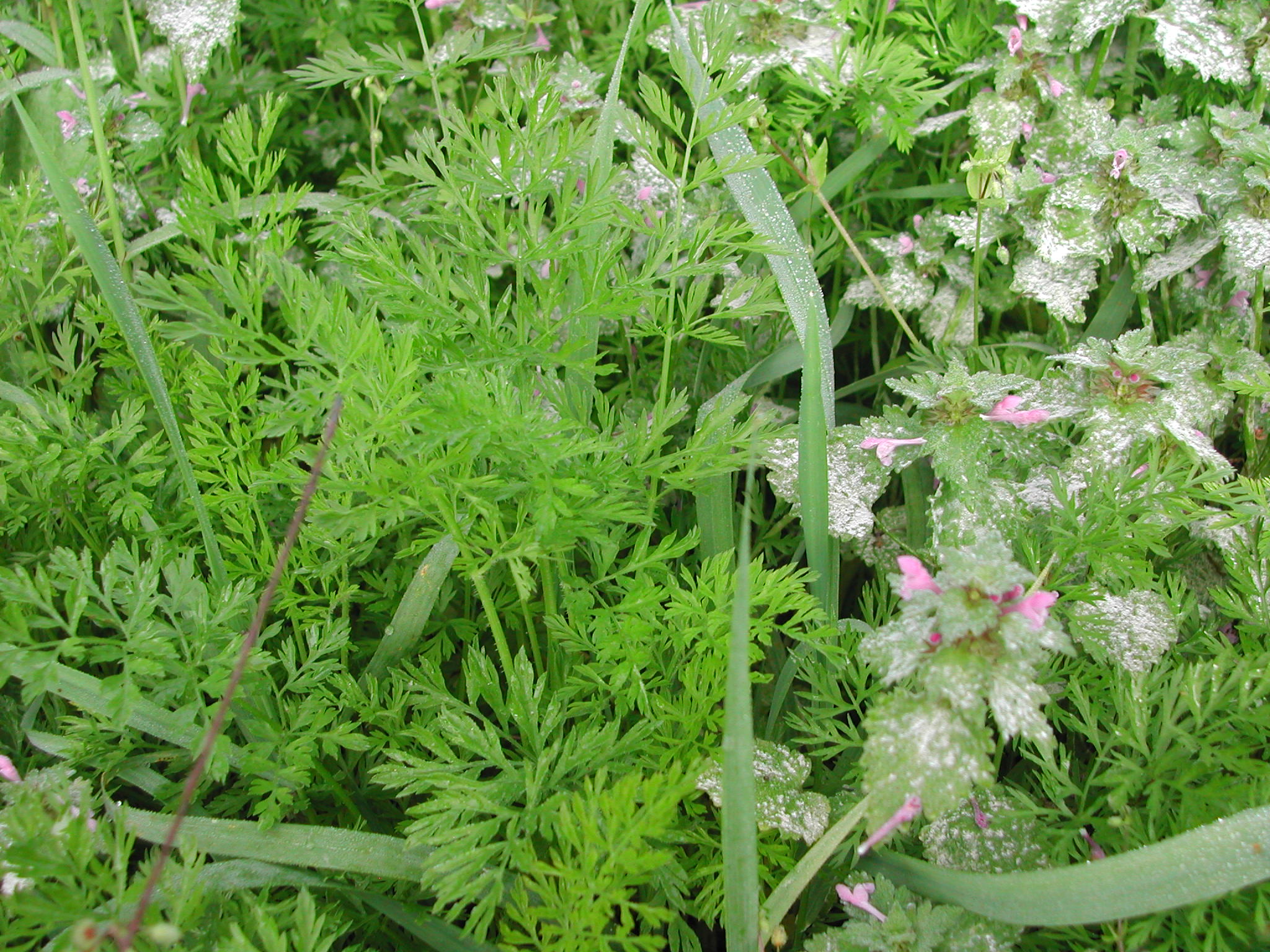
Carrots among the weeds
The carrots got off to a great start. The first two batches in the hoop house did really well. They grew to a good size and were relatively pest free. The second and third batches have done okay, but not great. I ended up planting them both at the same time. They seemed to grow super slowly ( and I still haven’t pulled them all) and suffered more from pest damage. A few weeks ago, some of you bought “B” quality carrots, ones that have more flaws than they should. Most of those flaws were pest damage; the carrot rust fly, I think. The way to control carrot rust fly organically is to put up a barrier; a floating row cover. I did that on the fifth and sixth plantings, but unfortunately, for some reason, the carrots did not germinate well at all. Either that, or the slugs got to them under the row cover before I realized what was going on. I scrapped those plantings.
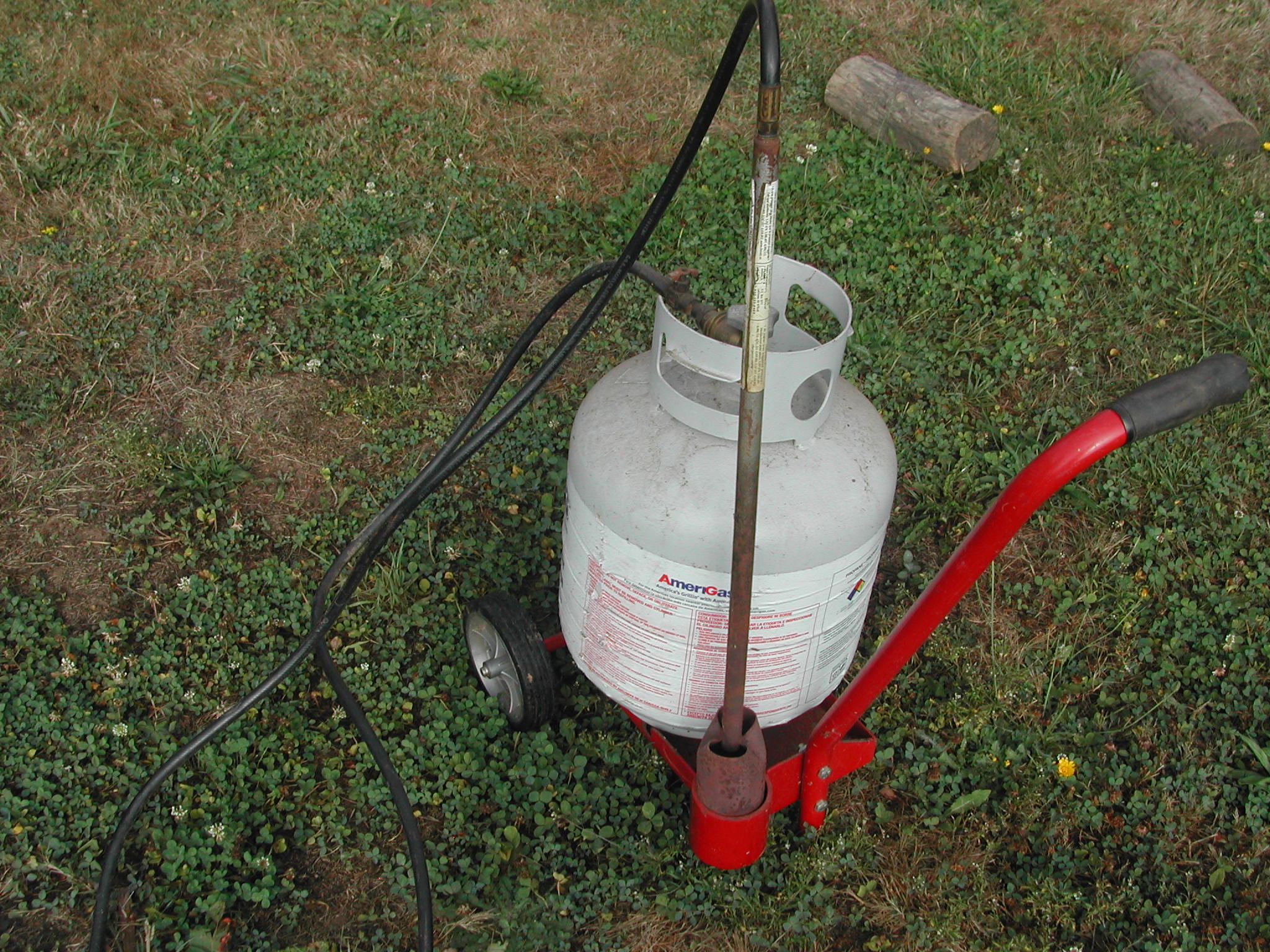
The flame thrower, I mean, weeder
I skipped two of the planned plantings and the last four plantings went in all at once the third week of July, when I had scheduled to plant the last batch. I tried out a weed control trick on these carrots: flame weeding the newly germinating weeds before the carrots germinate, to give the carrots a head start against the weeds. Our house came with a flame weeder. The one we have is a torch hooked up to a propane tank. You light it up and heat the weeds just enough to cause their cells to burst. At the moment, they look wilted, but in a short time, they die. I have wanted to try this before, but the timing is somewhat difficult. You wait as long as possible, until just before the carrots come up. I once heard a farmer say, you wait until 15 minutes before the carrots germinate and then flame the weeds. With most of my attempts, I waited too long, and the carrots were up before I could use the flamer on the weeds. On this last planting, I think I timed it about right. I flamed the weeds and a day or two later, the carrots germinated. Unfortunately, that was the end of my weeding in the carrots until this week. The carrots did get a good head start, but the weeds have taken over and I am working to set the carrots free. They don’t look too bad, though, and if I do some good thinning after I finish weeding, I should have some more carrots before the end of the season.
Recipes
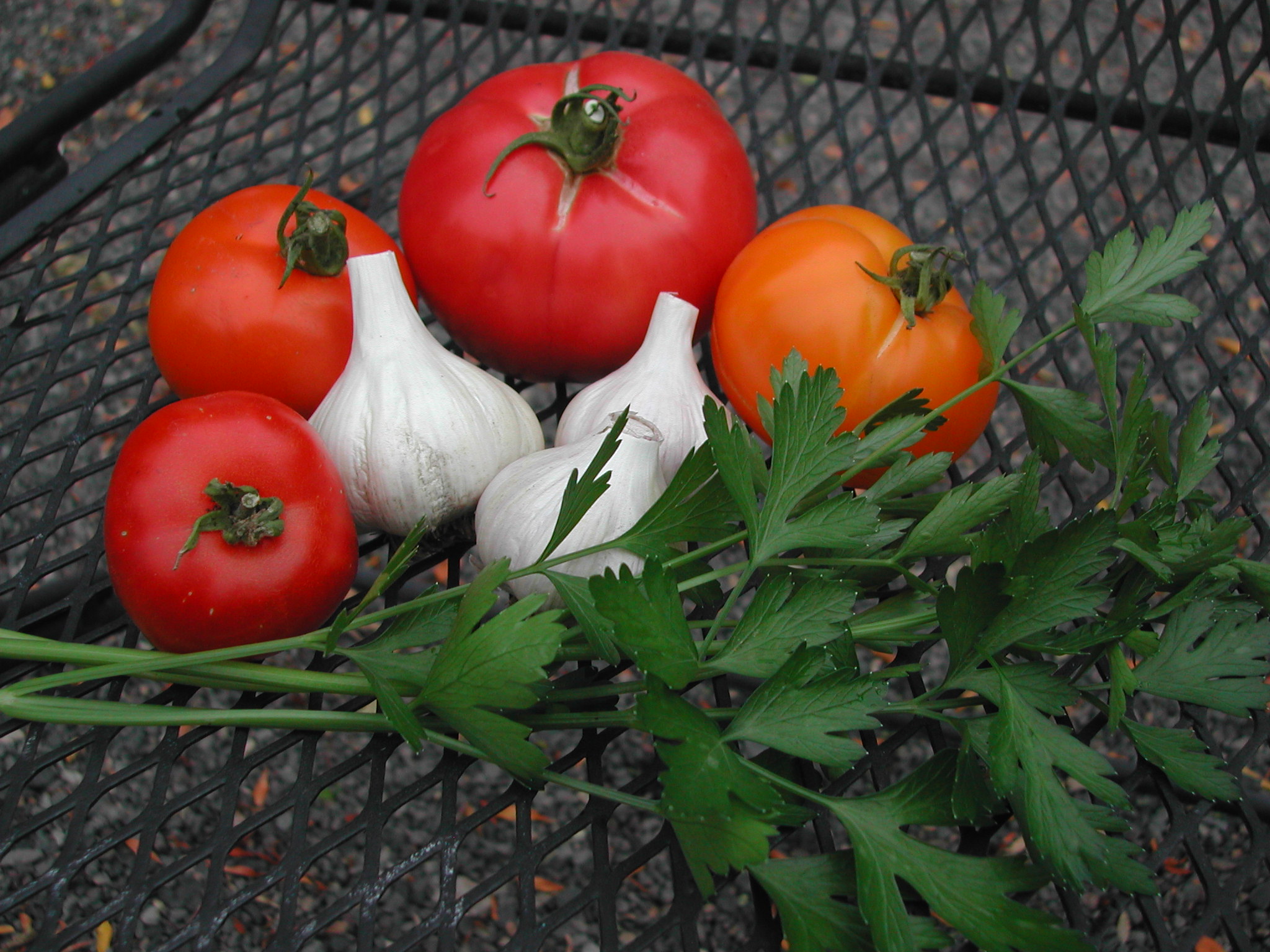
Tomatoes, garlic and parsley
If I were to tell you what I did in the garden this week, it wouldn’t seem like much: I picked beans and tomatoes. At least, that is what it felt like. Really, though, I didn’t too much in the garden this past week, because I did do a lot of picking, canning and freezing.
So instead of talking about the garden, I am going to share a few recipes that are perfect for this time of year. The first is a bit late, but you may get a chance to try it before local watermelons are gone. The rest are based on late summer crops. Maybe you can give one or two a try. And now I need to get back out and pull some weeds.

Basil
Watermelon and Basil Salad
I got this recipe from Bethany, a customer. I took it to a neighborhood potluck, where everyone loved the combination of flavors.
Toss the following ingredients together:
- Watermelon, cut up into bite size pieces (about 1/2 watermelon)
- Basil, chopped (a handful or two)
- 1/4 cup EVOO
- Juice from one lime (or to taste)
- Fresh ground sea salt, to taste
- Fresh ground peppercorns, to taste
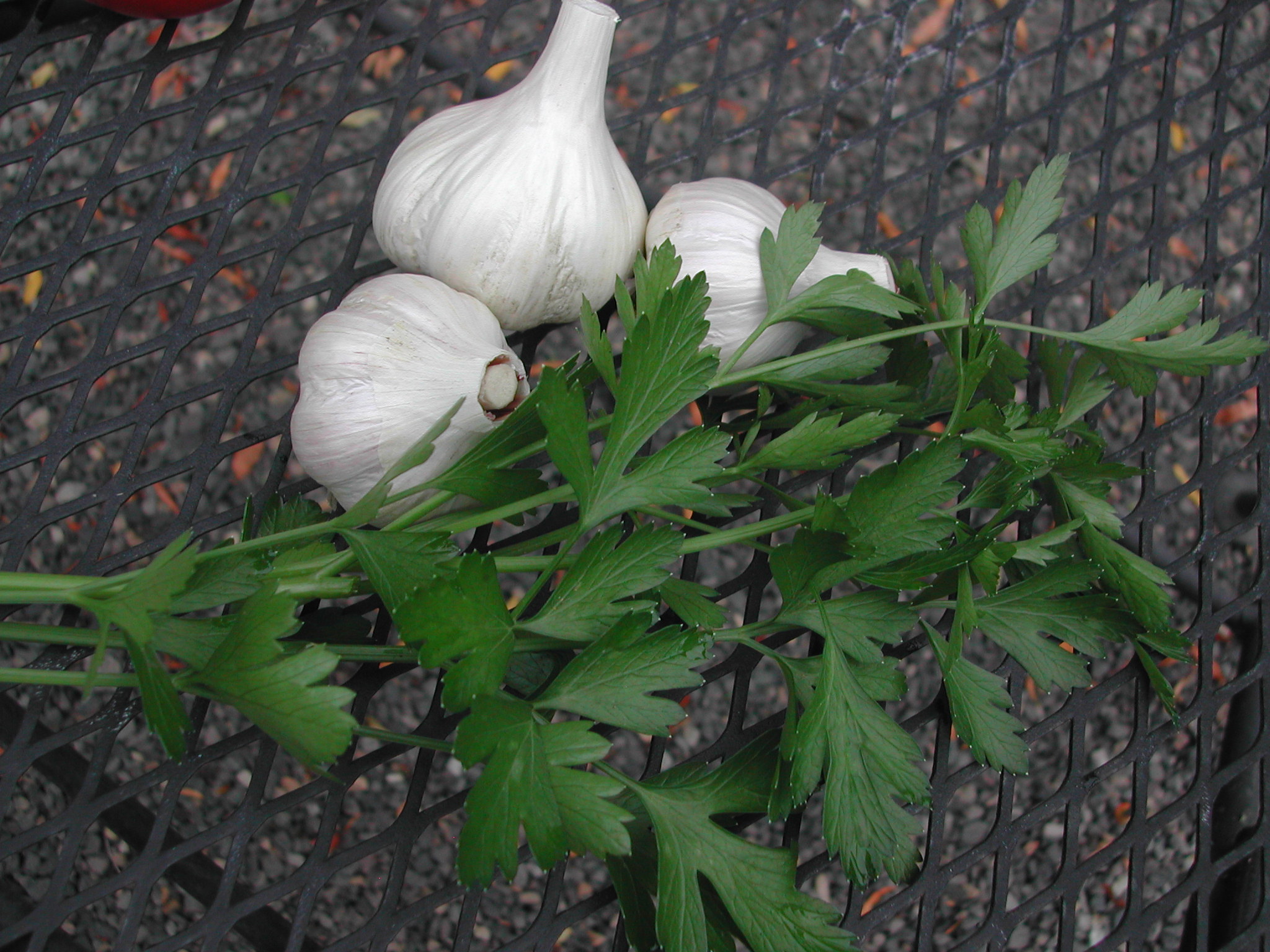
Garlic and parsley
Tomatem Mikhalela (Pickled tomatoes)
Steven and I discovered this in Egypt, hence the name, transliterated from Arabic.
- 4 medium or 8 small tomatoes
- 5-7 cloves of garlic
- 1/2 t cumin
- 1 T vinegar
- 2 T parsley
- 2 T olive oil
Crush the garlic with salt, add cumin, vinegar, parsley and oil. Slice the tomatoes about 1/2 thick. Dip in the garlic mixture and arrange in a serving dish. Or make a vertical cross-incision in small tomatoes, leaving the base intact, stuff with the garlic mixture and arrange in a serving dish. Or you can do what we usually do and just chop the tomatoes into chunks and mix with the garlic mixture. This is vibrant!
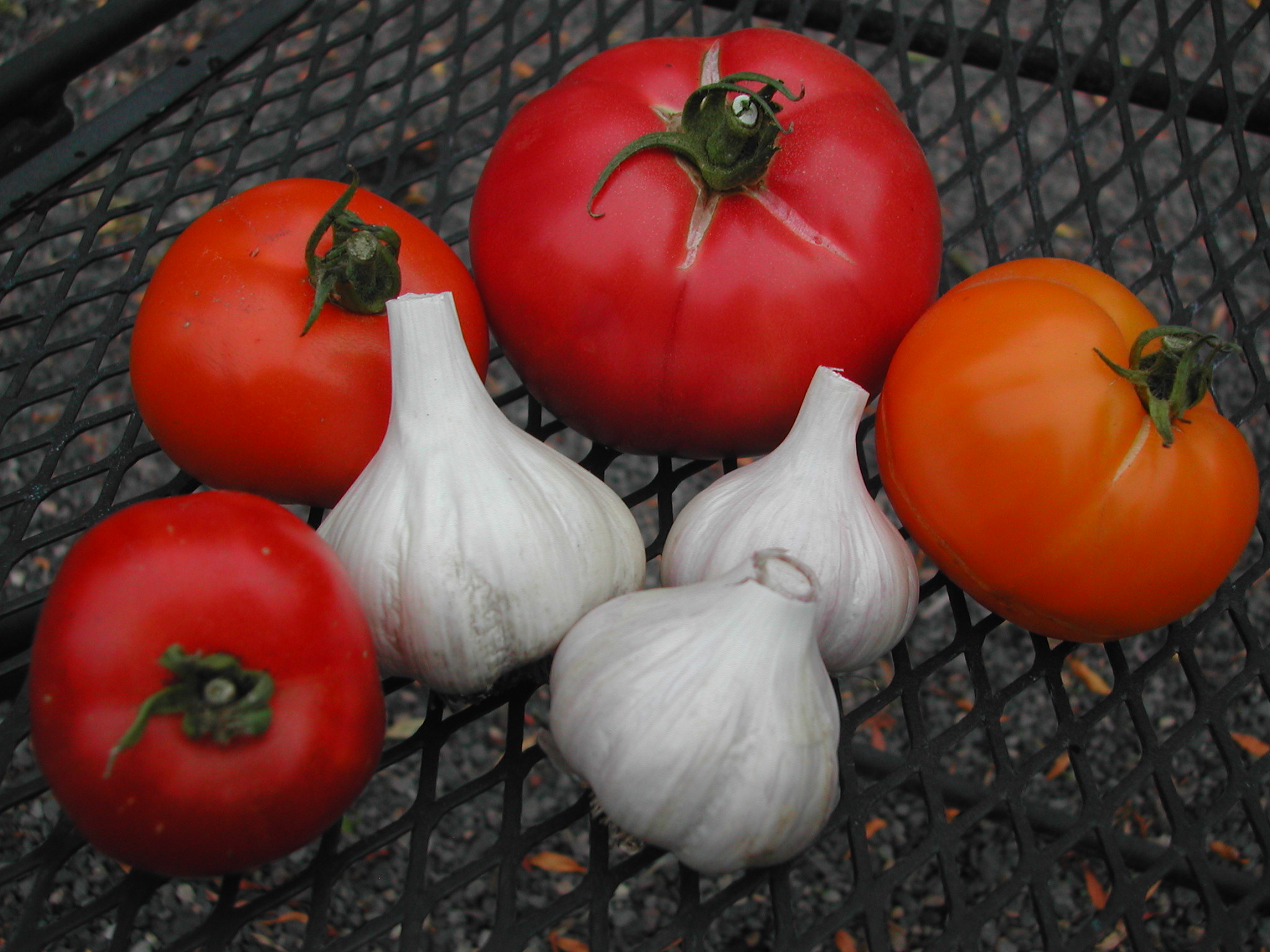
Tomatoes and garlic
Fresh Tomato Sauce
adapted from the Weight Watchers New Complete Cookbook
We just had this for dinner last night. I didn’t let it stand for 4 hours…I didn’t start making it until about 6:30 pm. It was still good and the leftovers will be even better. I put a range on the vinegar, because Steven doesn’t like too much vinegar. I would use the full 1/4 cup.
Makes 6 servings
- 6 cups of chopped tomatoes (about 5-6 medium sized tomatoes)
- 1 onion, chopped
- 1/2 c chopped basil
- 2 T to 1/4 c red-wine vinegar
- 2 T olive oil
- 3 cloves of garlic, minced
- 1 t sugar
In a large, non-reactive bowl, combine the tomatoes, onion, basil, vinegar, oil, garlic and sugar. Let stand, covered, at least 4 hours. Serve with pasta or spaghetti squash.
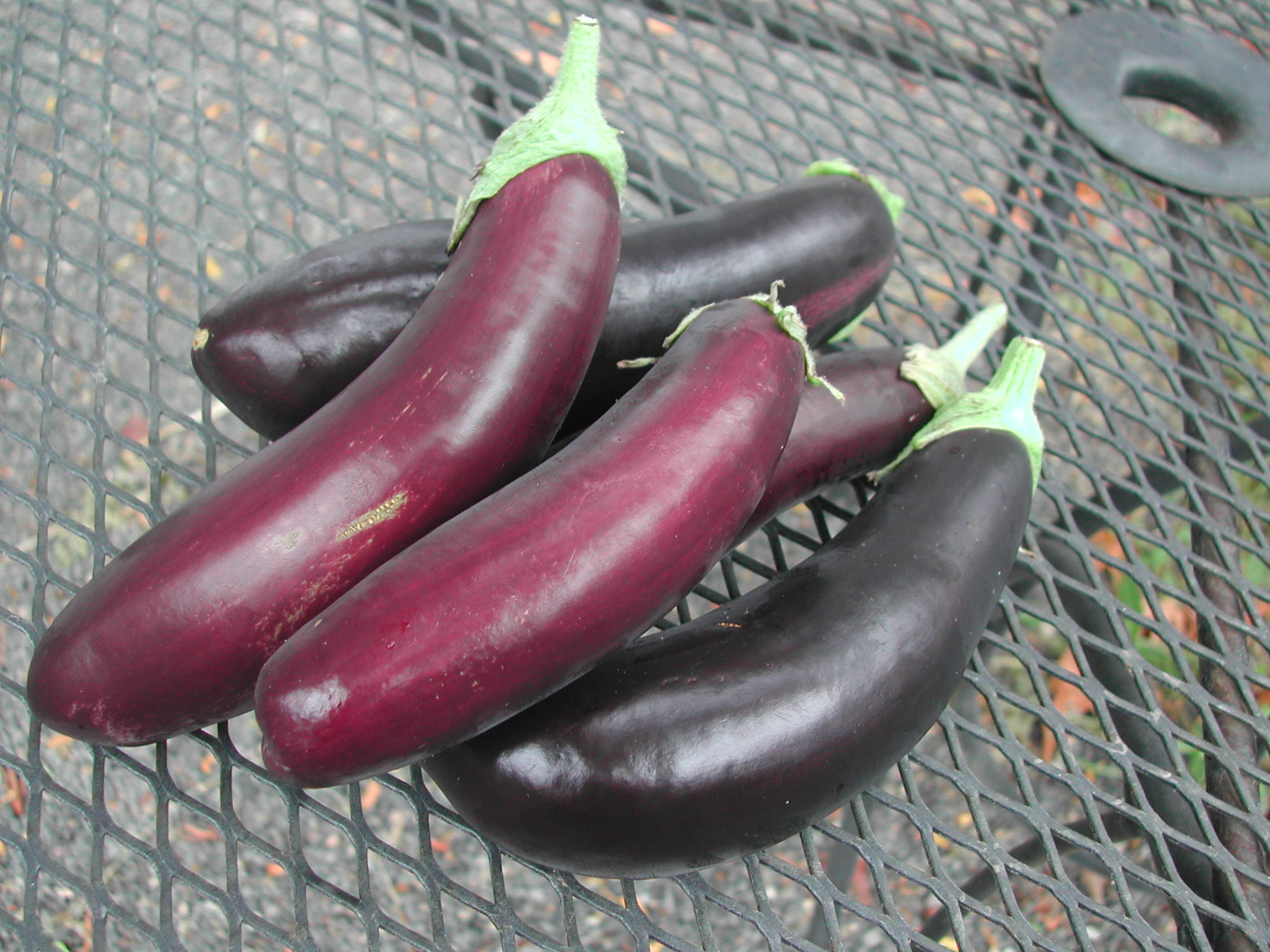
Asian type eggplant
This last recipe is from Aimee, another customer, who has lots and lots of great cooking ideas. Her comments are included.
Ratatouille with Penne
Ratatouille, the classic vegetable stew of Provence, is featured in all the small restaurants along its coast. Vegetables for ratatouille are usually prepared separately and not combined until the end. Here everything is cooked together. I don’t bother to peel the eggplant, but do so if you wish. I recommend Japanese eggplants for this dish. Long and thin, they are firmer and have fewer seeds than regular eggplants.
Ratatouille is generally served on its own, at room temperature, sprinkled with the best-quality olive oil, olives, and parsley. I use it as a pasta sauce, tossing it with cooked penne before garnishing it with olive oil, olives, grated Parmesan cheese, and parsley or basil.
4 Servings
Ratatouille
- 1 long Japanese eggplant or small regular eggplant (about 10 ounces), cut into 1-inch pieces
- 2 small firm zucchini (about 1/2 pound total), cut into 3/4-inch cubes
- 2 cubanelle or long Italian peppers (about 1/2 pound total), seeded and cut into 1-inch pieces
- 2 cups cubed (3/4-inch) onions
- 2 tablespoons coarsely chopped garlic
- 1 can (14.5 ounces) diced tomatoes in sauce
- 2 teaspoons salt
- 1/4 cup olive oil
Penne
- Salt
- 3/4 pound penne (I use small penne mezzanine)
- 3/4 teaspoon freshly ground black pepper
- 3 tablespoons olive oil
- 1/2 cup small pitted oil-cured black olives
- 1/4 cup grated Parmesan cheese, plus more for the table
- A few fresh basil or parsley leaves, for garnish
For the ratatouille: Put all the ingredients in a large saucepan and bring to a boil over high heat. Mix well, reduce the heat to low, cover, and cook gently for 30 minutes. If the mixture still has a lot of liquid, reduce it by boiling, uncovered, for 3 to 4 minutes. Cool to room temperature. You will have about 5 cups.
For the penne: Bring 3 quarts salted water to a boil in a large pot. Add the penne and stir it in well, so it doesn’t stick together. Return to a boil, stirring occasionally, and cook for 10 to 12 minutes, or until it is cooked to your liking.
Meanwhile, combine the ratatouille, 3/4 teaspoon salt, pepper, and olive oil in a large glass bowl and microwave for a couple of minutes to warm it through. Drain the pasta and add it to the ratatouille in the bowl. Sprinkle on the olives and the cheese and mix well. Divide among four hot plates and garnish with the basil and grated cheese. Pass more at the table.
Note: To serve the ratatouille on its own, spoon it into a serving dish, drizzle on a little extra-virgin olive oil, sprinkle with 1/4 cup pitted oil-cured black olives or kalamata olives, and garnish with 2 tablespoons coarsely chopped fresh basil or parsley.


