Diversity

Just a few snap beans this year
As I have mentioned in several posts this summer, my green beans (or snap beans) are not doing well this year. The last planting germinated as poorly (or even worse) than the rest. It is just not my year for snap beans. On the other hand, it was a great year for fava beans and it looks like it could be a very good year for my first attempt at fresh shelling beans (and maybe dry beans, with good fall weather). Which brings me to the title of this post: Diversity.

Etna shelling beans are looking good
It is a good thing I have a diversity of fruits and vegetables, for several reasons. A major one is demonstrated by the beans. If you have a monocrop and your crop fails, you are up a creek without a paddle (or however you want to phrase that saying). What if beans were my only crop? I cannot say their absence has not affected the bottom line; it has. They were my third best seller last year, at just about 6% of my total sales. But there you go: a 6% loss is much better than 25% or 50% or 100%. And, with a diversity of crops, I might be able to make up for that loss (or at least some of it) with another crop that does well this year.
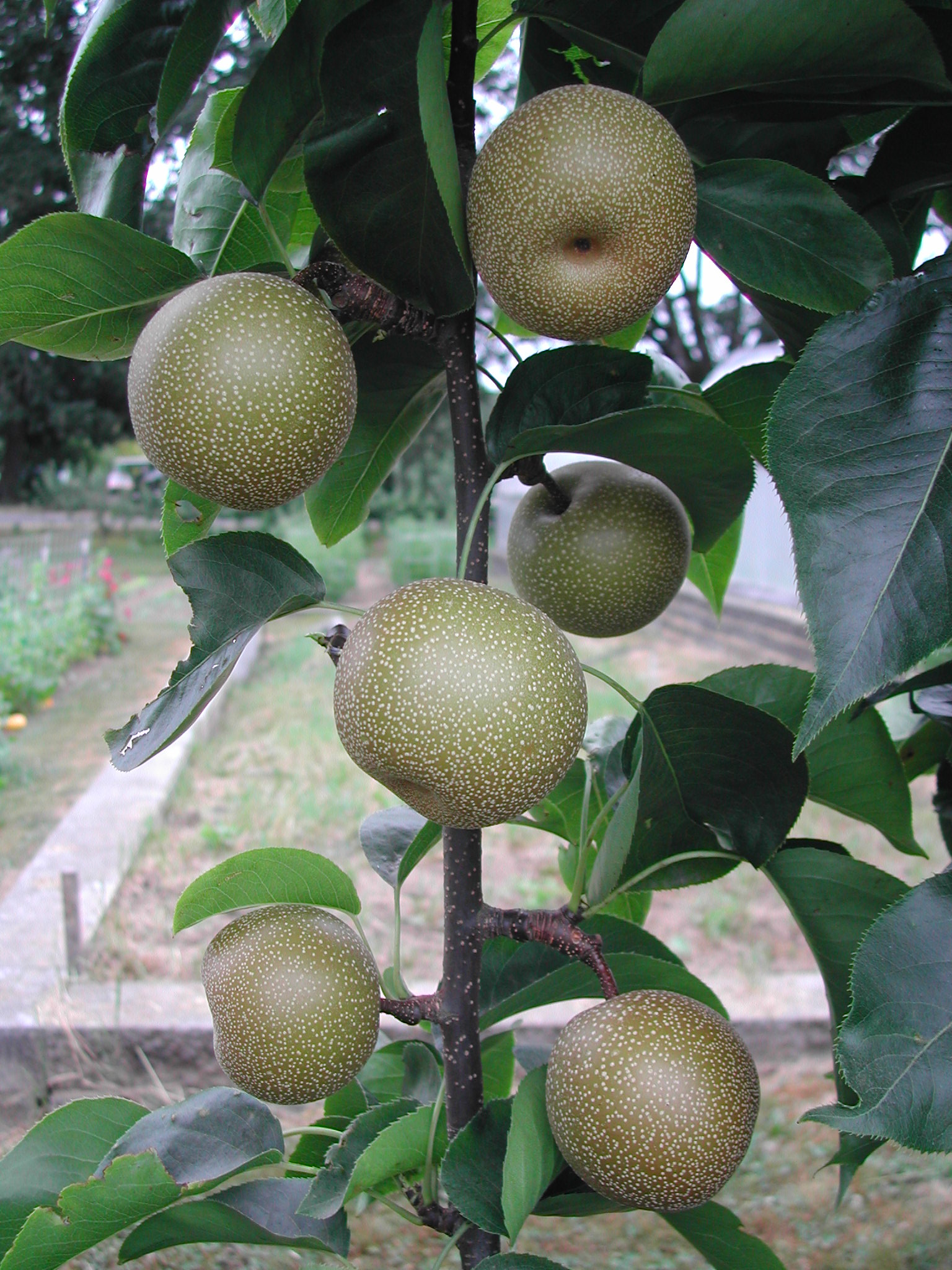
From Asain pears...
Another reason I am glad to have a diversity of crops is for pest management. With a diversity of plant life, you bring a diversity of animal/insect life into the scene. And it seems to be pretty clear, that a diversity of life is the best way to keep a balance of the good and the bad pests in the garden. Here is a quote from John Jeavons in his book How to Grow More Vegetables:
“Paying attention to the soil and to plant health, planning a varied environment, and leaving a few wild spaces for unexpected benefactors minimize pest losses more effectively than the use of poison. Also, in order to have beneficial insects in your food-producing area, you must provide food for them–which may be some of the harmful insects! If there are no harmful insects to feed them, then there will be few, if any, beneficial insects around to act as friendly guardians for your garden. This seeming paradox–the need for both kinds of insects for the most healthy garden–is symbolic of nature’s balances.”

...to zucchini
As an example, I think about a new pest in Oregon, the Spotted Wing Drosophila. I have not yet seen evidence of it in my garden, though a neighbor not too far away has seen evidence of it in her blueberries. Why? I can’t be sure, but I can’t help but think the diversity helps: possible pest preditors? a mix of crops not being as much of an attractant as just one crop? luck? maybe it is still coming?
Finally, diversity just makes gardening more interesting. I like to eat different things and I like to grow as much of my food as I can. Growing one or two things might be easier, but it is not as much fun.
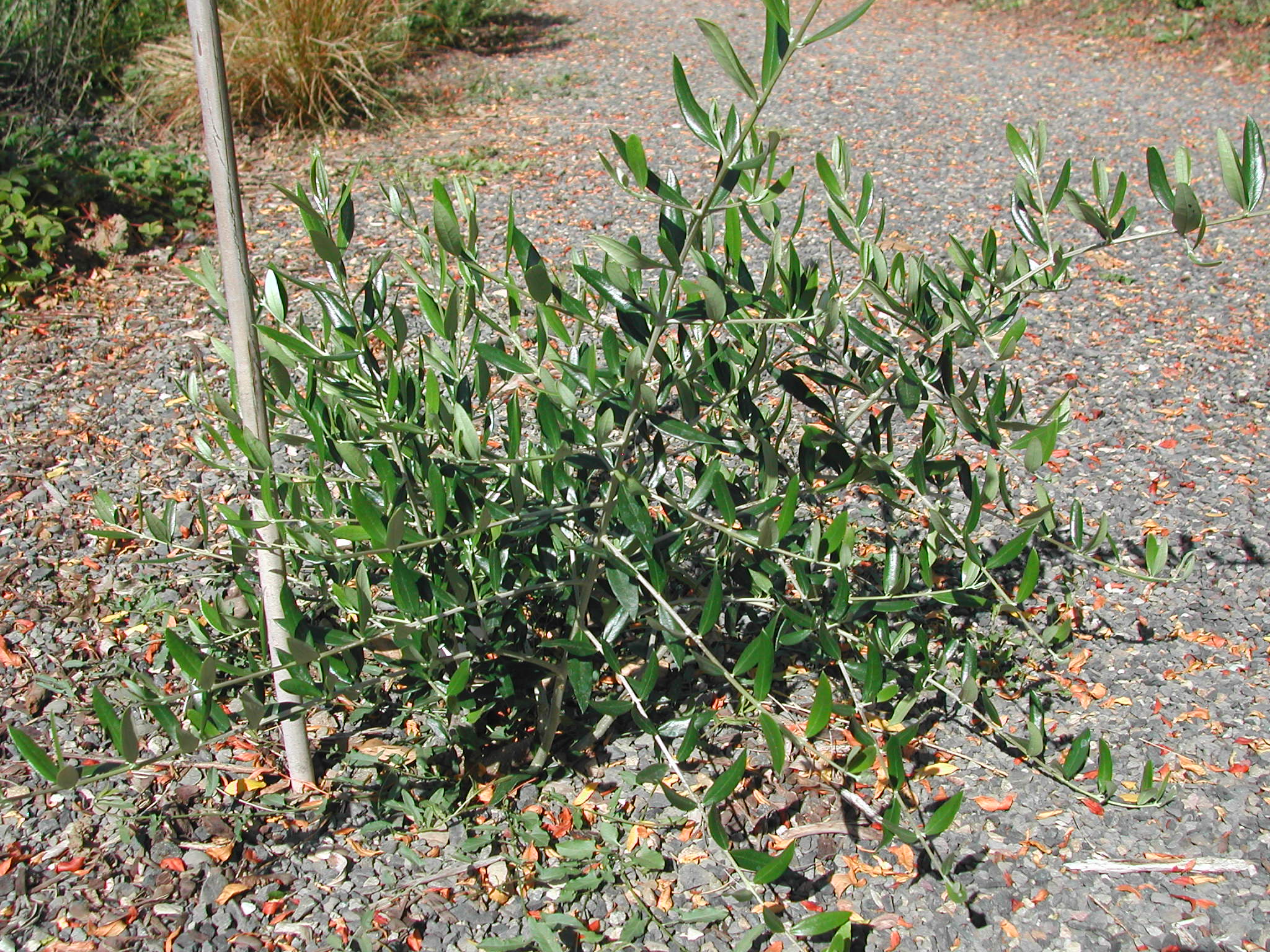
An olive tree? It may not be practical, but it is fun to try
Things to Come
July, that shoulder month in between the cool and warm season crops, is extending into August this year. The temperatures are still a little below average this summer, even though we have had a few 90+ degree days. Having just a few warm days has caused confusion for some vegetables. Going back and forth from the 90’s to upper 60s/low 70s and back again is enough to make us wonder what happened to summer. The onions sure couldn’t figure it out. They decided summer must have come and gone and come back again, and many (most?) of them decided to bolt. Thus, the discounted price on onions right now, though they are still good to eat. And the beans, the poor green beans. I am more convinced I just got a bad batch of seed this year. My third planting of Nickel beans had the same results as the first two: pretty much no germination. Even though it is really too late, I will replant with another variety later this week. Maybe we’ll have a long summer, if not a particularly hot one and still get a few green beans.
So, we are waiting a bit longer on warm season vegetables. Here are some pictures of what is coming:

Cucumbers should be up next
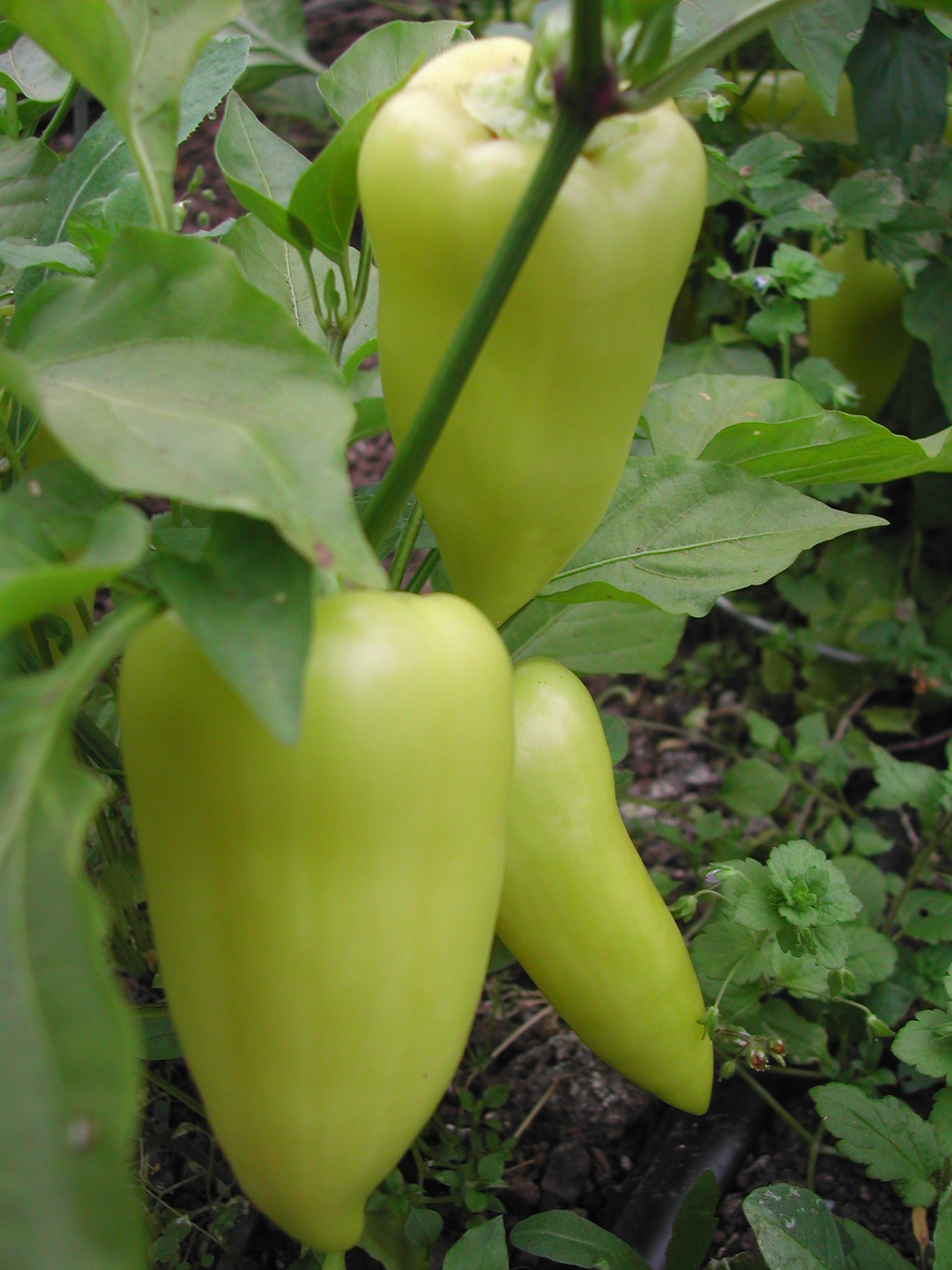
Sweet peppers are liking the warmth of the hoop house

There are a few eggplant are on the way

Tomatoes are ripening slowly

Lots of celeriac, too, for the fall

I planted lots of leeks this year
Just the Two of Us
We are back to a quiet household of two. After a two week visit (three weeks for Jonas), we took our nephews to the airport to fly back home to Colorado Springs. We enjoyed our time with Cameron and Jonas, getting to know them better and finding out what they think about the world. It was good to have a few extra hands to pull weeds and do a few other odds and ends, but they made it clear farming (or market gardening) was not going to be in their future. The search for an heir goes on…
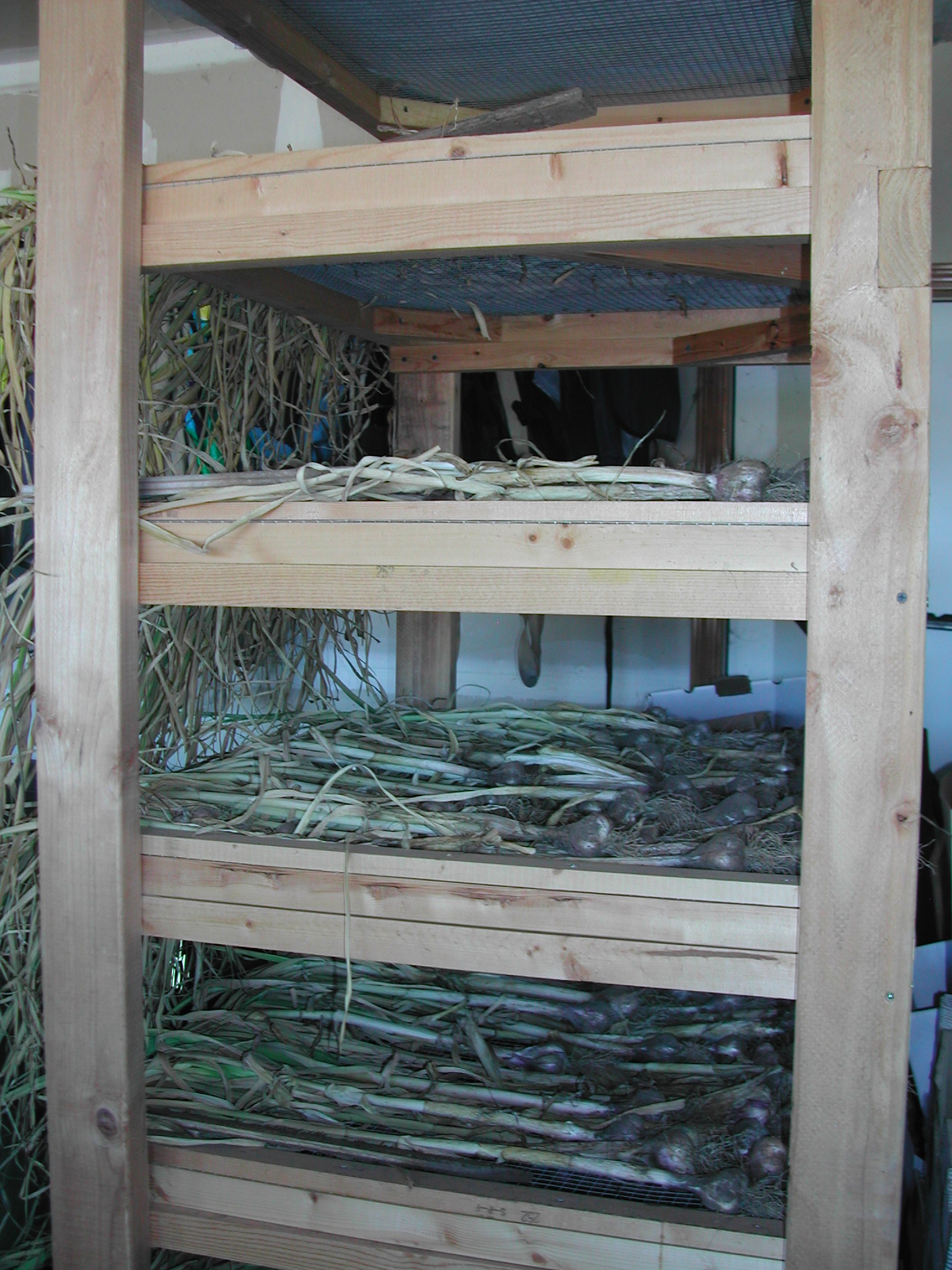
Garlic curing on the beautiful drying rack
Weeding has been the major task of late, along with clearing out some beds for a second round of planting. All the peas and fava beans are out now (other things that finished earlier have been out for some time, those beds already replanted). I harvested the garlic last week. It is now in the garage, curing (drying) on a great rack Steven built several years ago. It will take a few weeks for the garlic to dry, so the wrappers around the cloves may feel a bit thicker, until they finish drying and become papery.
July is that in between month: the cool season crops come to an end and we wait for the warmer, long season crops to come into production. Looking at the harvest schedule, most things are pretty well on track.

I am going to pick a tomato today
Zucchini and summer squash are producing well, I found the first ripe tomato, and I can see little cucumbers forming on the vines. There has been one huge disappointment, though: green beans. First, I began my planting almost three weeks late, because of the timing of spring rains. Then, my first planting had very poor germination. I planted three varieties: Nickel and Tavera, both French filet/haricots verts varieties, and Dragon Tongue, a purple striped yellow snap bean. The Dragon Tongue did pretty well, though I didn’t plant much of it. The other two did not. I replanted about three weeks ago. This round was better, at least for Tavera, but still not Nickel. I am wondering if I just got a bad batch of seed. I’ll try one more time this week, but there just may not be many snap beans this year.

Shelling beans are doing great
Luckily, the shelling/dry beans I planted three weeks ago are doing great, so there will be other types of beans.
Next up, more weeding (of course), filling up those empty beds with fall and continuous crops (lettuce and carrots), and more family!
Girls!?
Jonas has been making a series of comics called The Adventures of Jonas, that are “some excerpts from my life through my slanted viewpoint” (You can view Jonas’ other art as well, through the link). I was looking at his sketch book the other day, and saw a new one he was making, about his arrival to our place. I asked if he could fill it out, so I could put it here, on the blog. He willingly obliged. Here’s a link to Girls!
Three Weeks
Time goes by so fast. Three weeks have passed and so much has happened: rain, sun, family, chickens…Here is the update.

Peppers are forming, though the plants are still small
Finally! The rains of late May and early June have ended! I thought it was never going to happen. I heard we had about 20 straight days of rain. Of course we had a few more off and on before there was a good dry stretch. People have asked how the weather has been affecting the crops. Earlier, I would have said, not too much, but now I would say it has had more of an effect. When the sun finally came out and the ground dried out enough, the green beans went in. Unfortunately, it was three weeks late and they didn’t all germinate well. Beans will be late this year. Other warm weather crops got in the ground on time, but not all have had the usual early season growth, so will also probably be late. I am still harvesting cool weather crops, but as those finish up, there may be a gap before the warm weather crops are ready.
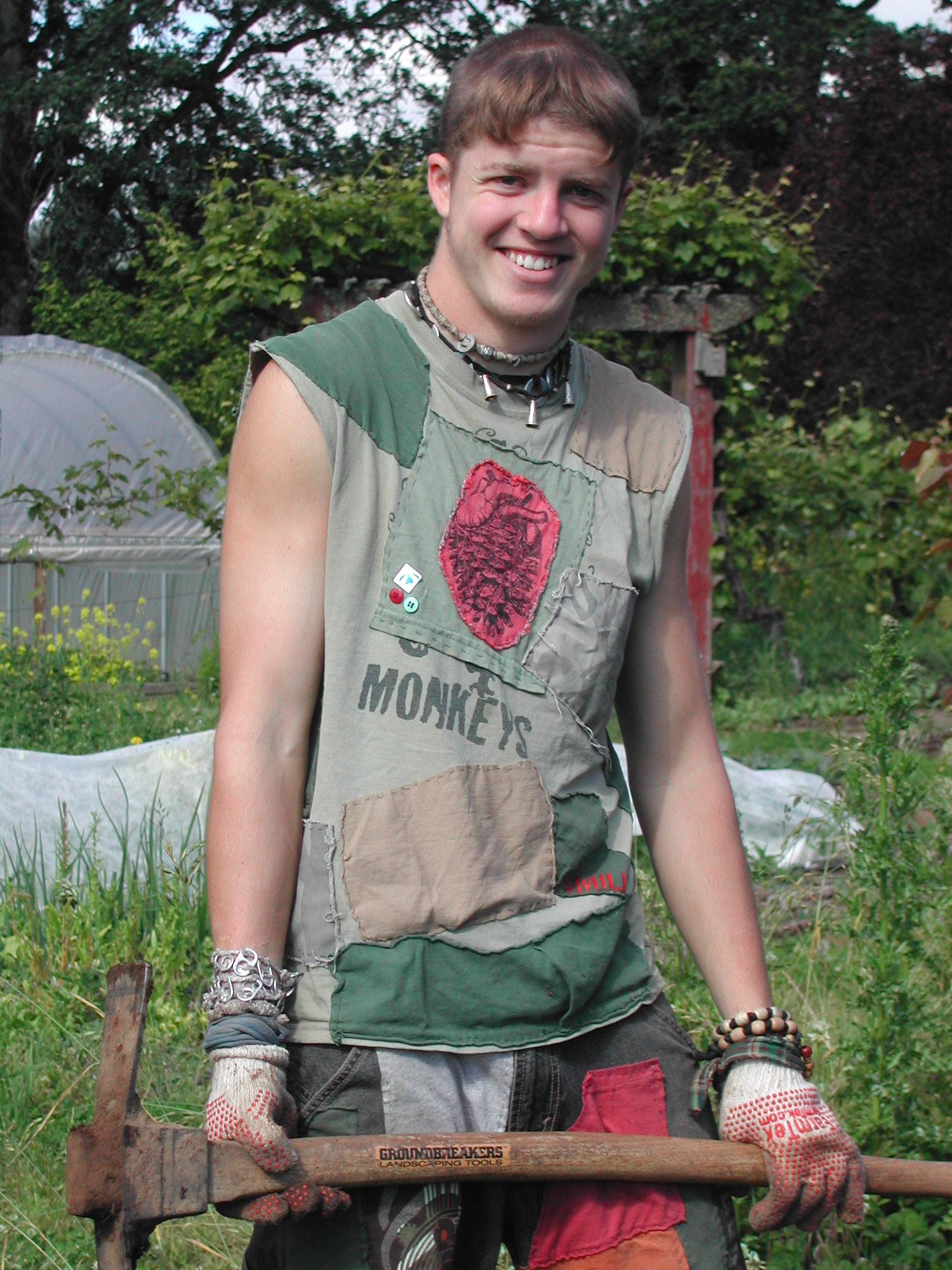
Our nephew, Jonas
Just about three weeks ago, we got a call from our nephew, Jonas, who was doing some hitchhiking around the western states. He was in Portland and wondering if he could take us up on our offer to visit and help out. Jonas is an artist, and since he arrived while it was still raining, he made some killer name tags for the new delivery bags. Of course, once the rain stopped, we put him to work outside. Steven’s dad offered to spade our front lawn, turning over the grass so we could till it up for a new blueberry bed. No reason to turn that offer down. Jonas helped out by digging out some shrubs around the old lawn.

Our nephew, Cameron, washing pots: a good job for a 95+ degree day.
Meanwhile, we were making plans with another nephew, Cameron, to come and help out for a few weeks. Cameron arrived last Sunday and will stay for two weeks. We put him to work right away planting some shelling beans out where the orchard used to be. (These are new beans I am trying this year. One is a fresh shelling bean, that is also good as a dried bean, the other is a dry shelling bean.) Next up was weeds. He is helping us clear the weeds out of the grapes. Both of these nephews are brothers to Paige, our niece who stayed with us last summer (Jonas older, Cameron younger).
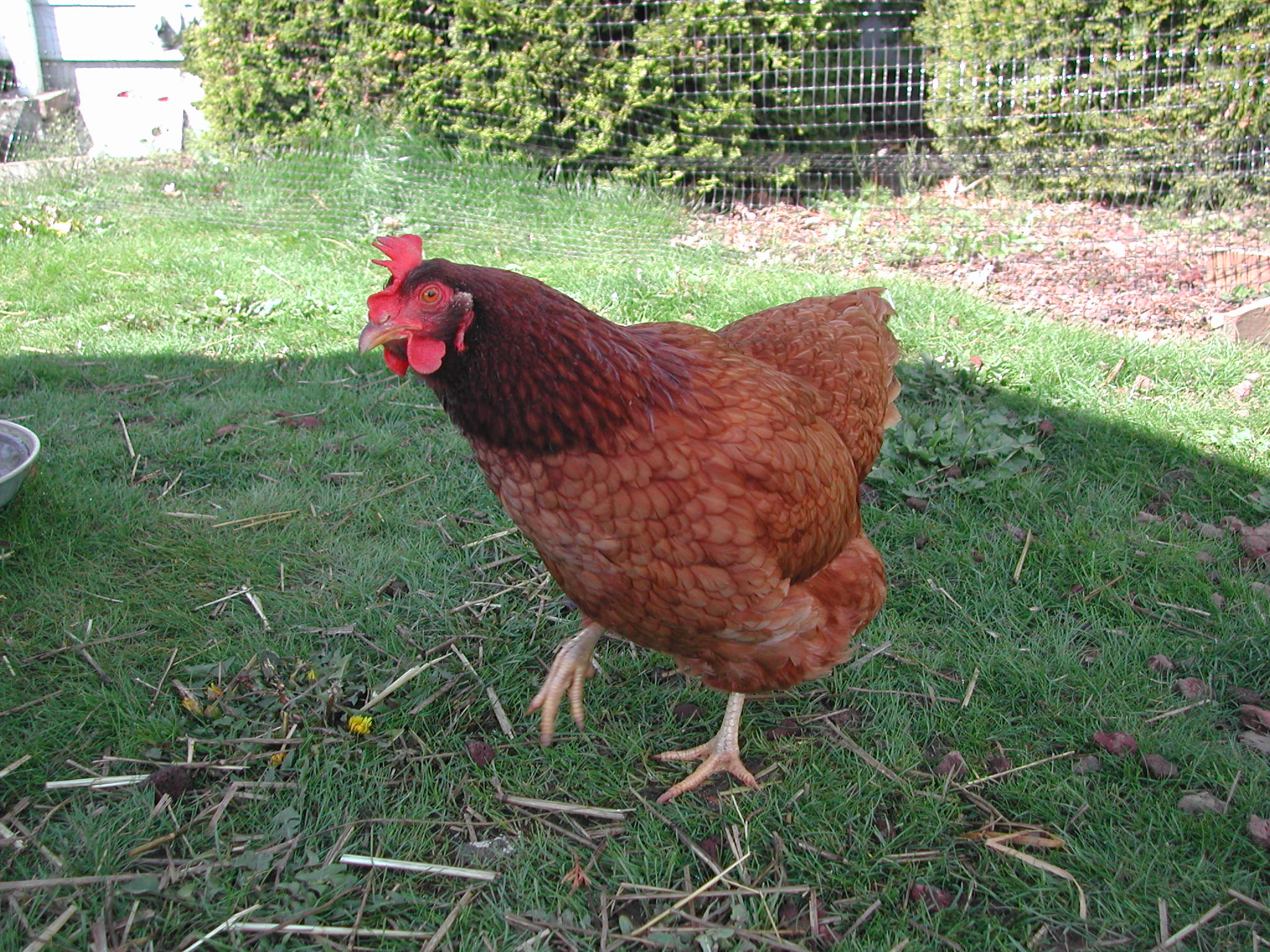
The first sick Rhode Island Red
The day after Jonas arrived, our sick chicken passed away. Really, we were surprised she made it as long as she did. Her abdomen filled up with fluid again, not long after her last visit to the vet, and she stayed full. I am sure it wasn’t very comfortable for her, but she was a trooper. The same day she died, we discovered another Rhode Island Red was sitting all day in a nest box. At first, we thought she was broody, but then that just didn’t seem to fit. She didn’t act well. I decided to take her to the vet, as I was already planning to go to take the deceased body of the first sick girl for the vet to study (other chickens had similar problems and she wanted to find out more about it). Turns out, the first sick girl had cancer throughout her internal organs. She was one tough girl. The second sick red had an egg collapse inside her and it became infected. Even though the vet cleaned her up and gave her a good prognosis, she died the next day. Sigh. Now there are ten girls.
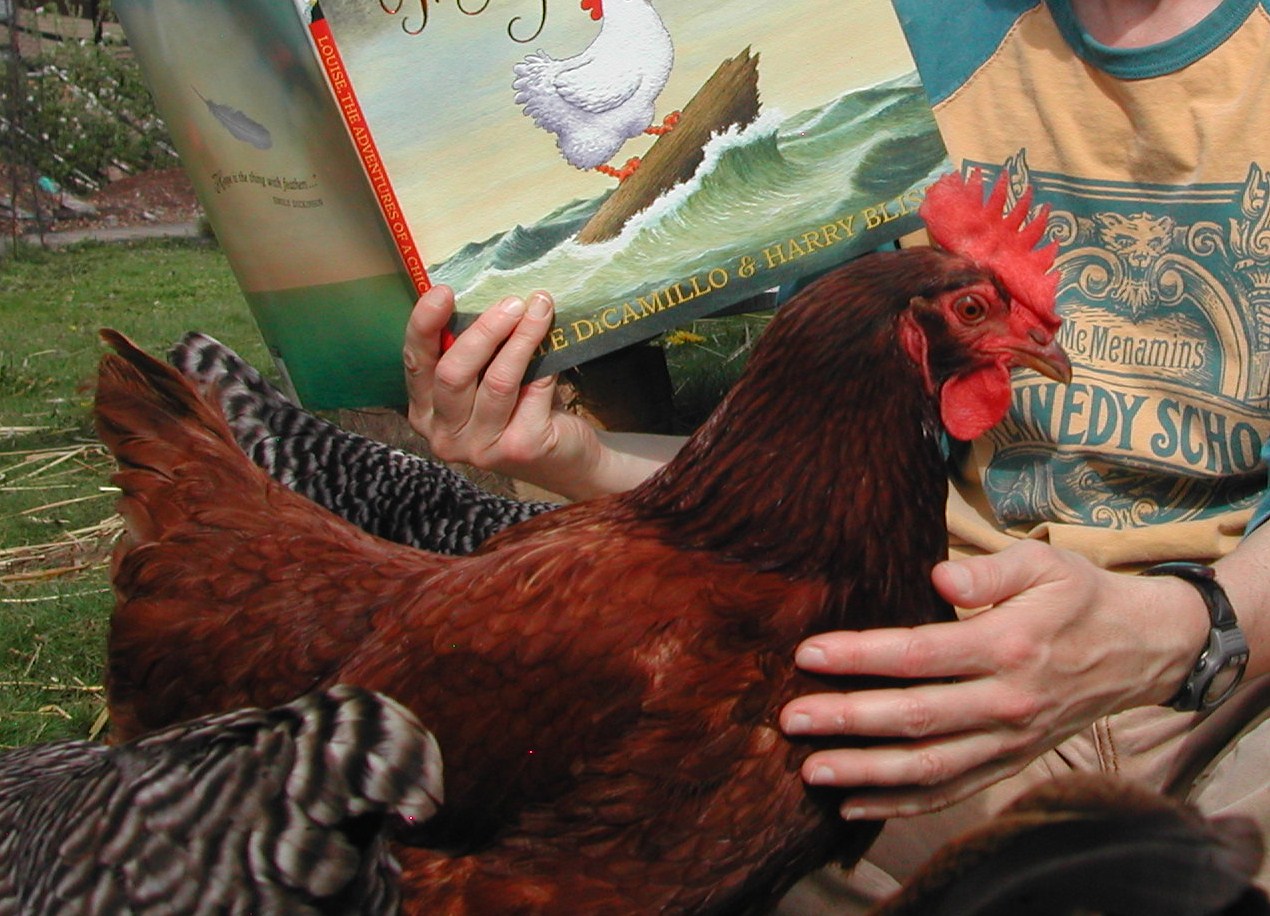
Our big girl, the second sick Rhode Island Red
Reduce, Reuse, Recycle
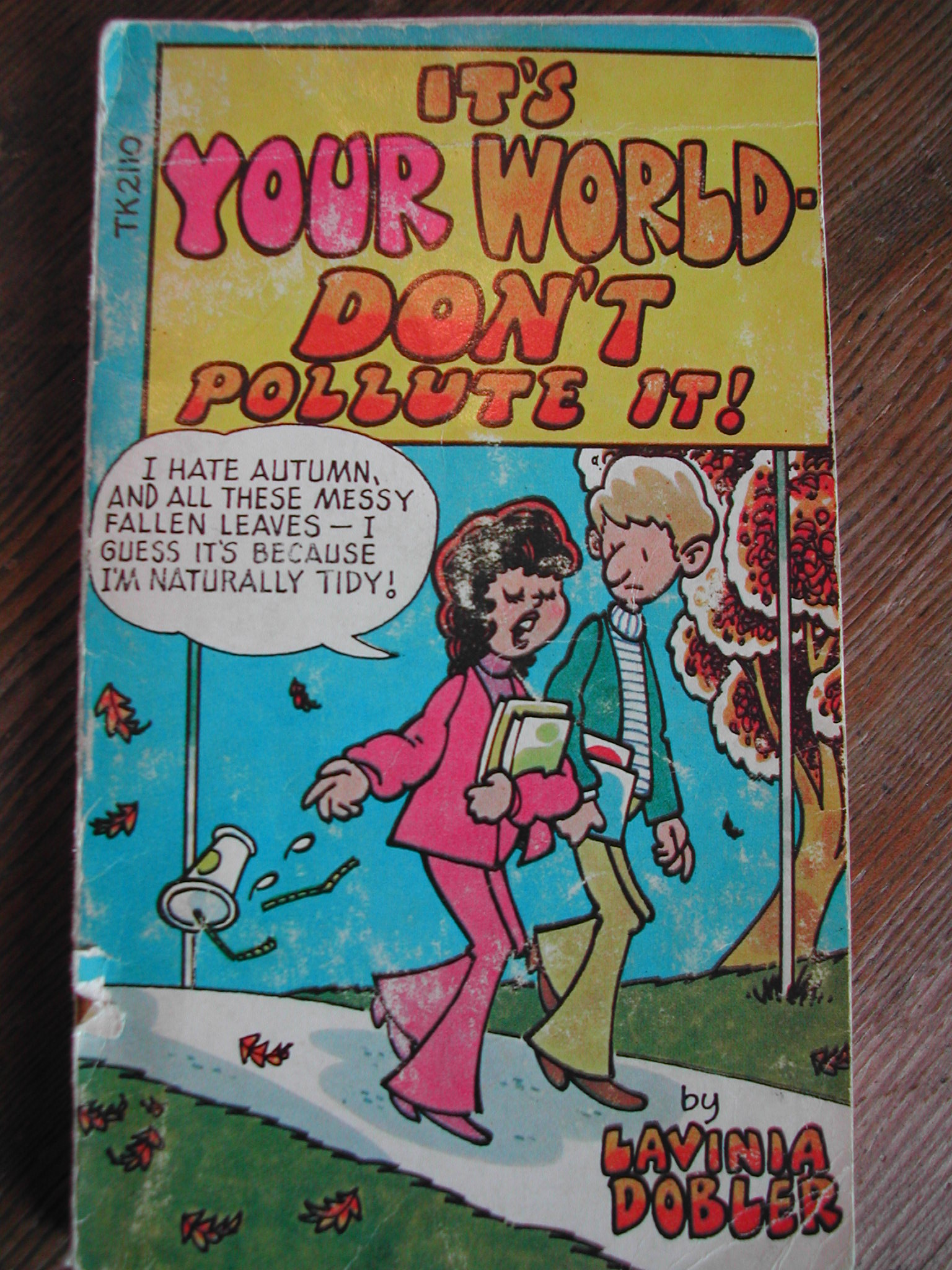
I still have the book!
It all started when I was in the 6th grade. I bought a book called It’s Your World-Don’t Pollute It! A bunch of my friends and I were inspired to start a recycling drive at school, recycling the aluminum hot lunch trays. I don’t remember how successful we were, but my awareness of the environment and my part to preserve it was formed.
Because I follow the slogan: reduce, reuse, recycle, it came naturally to me to reuse paper and plastic bags when packaging produce for June’s Corner Garden orders. Customers seemed to feel the same way about reusing bags and often saved them for me. The system has been working great. Except for one thing: food safety.
Food safety has been in the news lately, with the federal government working on a food safety bill (the Food Safety and Modernization Act) after recent events involving food borne illnesses and even some deaths. This news coincides with recent information I learned at the OSU Extension Growing Farms class on food safety. Is reusing bags safe? Unfortunately, the answer is no. Though I don’t feel the risk is great (I will continue to reuse bags at home), it is a risk I can no longer take for others. This week, the packaging of your orders from June’s Corner Garden will change.
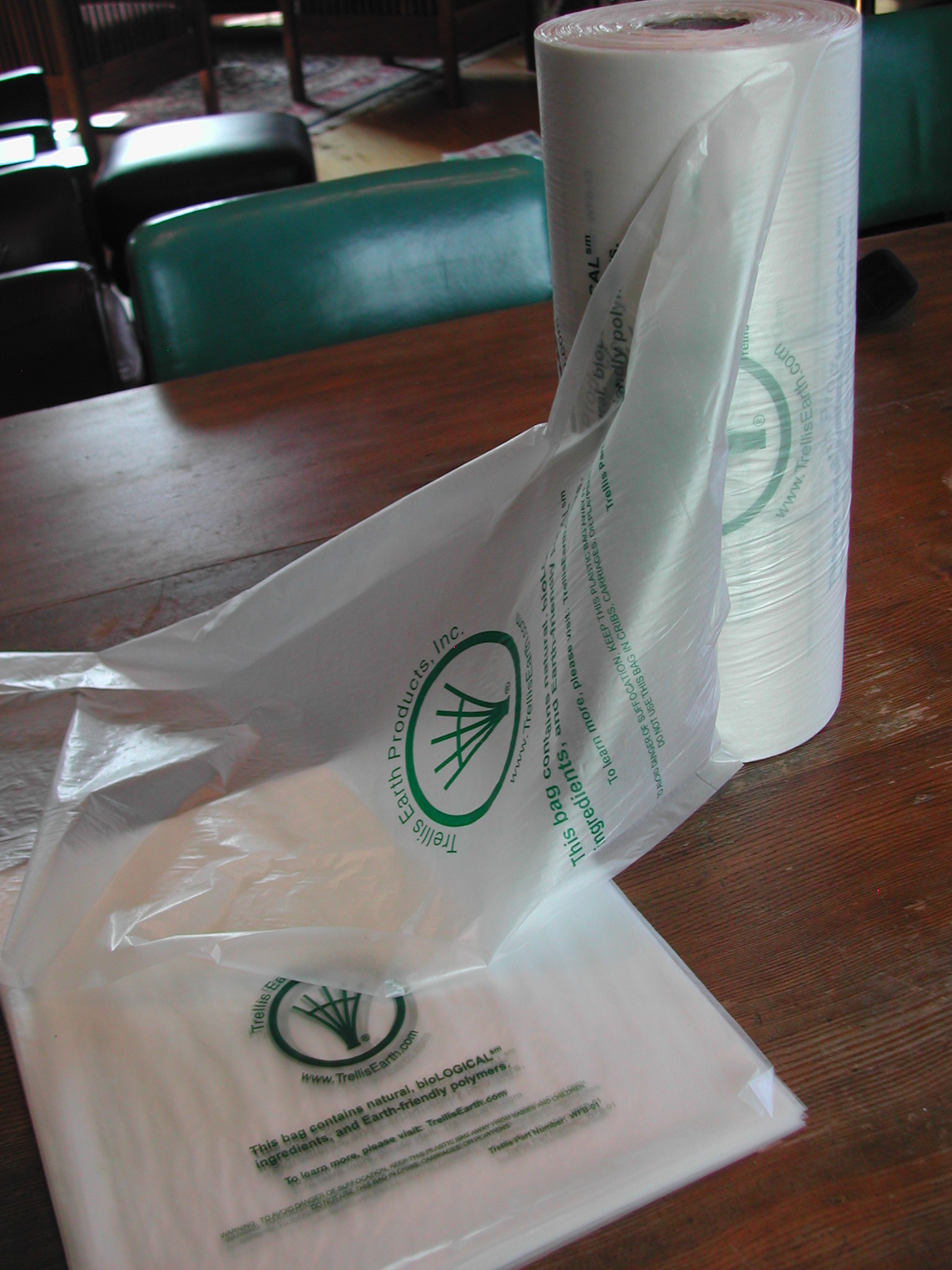
Biodegradable produce bags
First, instead of reusing plastic bags, I have purchased biodegradable bags made by Trellis Earth. The bags are made with plant materials (biomass), along with other ingredients, to reduce the amount of petroleum in the bags. The bags will decompose in the landfill, but are not recyclable (not pure plastic) and not compostable (takes longer to decompose than acceptable in a composting facility). The FAQs on the Trellis Earth webpage give more details. I will reduce the number of bags used in your orders by combining different vegetables in one bag and only using them when I feel it is necessary for the protection of the produce. I encourage you to reuse these bags at home. But, instead of being recycled, the bags should be thrown away, to degrade in the landfill.
The second change to your packaging is the replacement of paper bags with organic cotton bags. I will deliver your order in the cotton bag. You can either transfer the contents to your own bag, or take the bag home and return it with your next order, to be reused. In between uses, I will wash the bags. I have also purchased new paper grocery bags, that may be used on some occasions, such as the last delivery of the season or for people who order only once or twice a season. This method will greatly reduce the number of paper bags I use. The cotton bags will be washed and reused many times (and can be used by you, between orders). Again, I encourage you to reuse any paper bags that you receive and recycle them when their useful life is over.
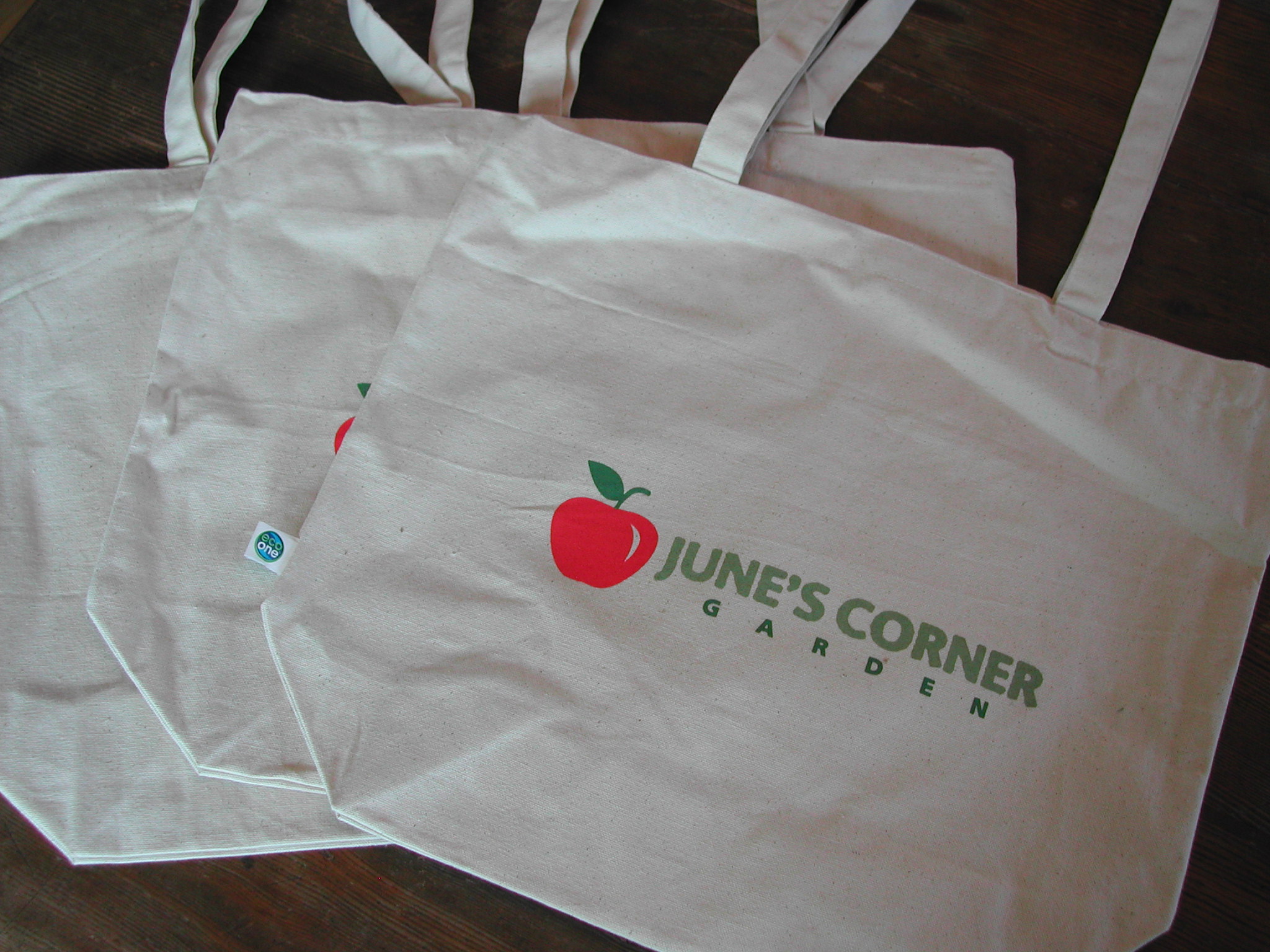
The June's Corner Garden shopping bag
It is a bit ironic, that in the last few weeks I have received a few e-mails from Environment Oregon about their campaign to ban plastic grocery bags. Normally, I would be ready to sign on, but now I am thinking, does that mean produce bags, too? How then can I package produce that needs protection to keep it fresh and reduce damage? And of course, I still have questions about the packaging I have chosen to use. Is it really the most environmentally responsible option? Where does the scale balance between the effort involved (mine and yours), the desire to protect the produce, and our responsibility to the environment? I am still looking for better, more complete answers. For now, I will go with the new system I have set up for packaging your orders. It may change in the future, if I find better options. What do you think about all this? I would value your response to the new packaging and any ideas you have for other packaging options.
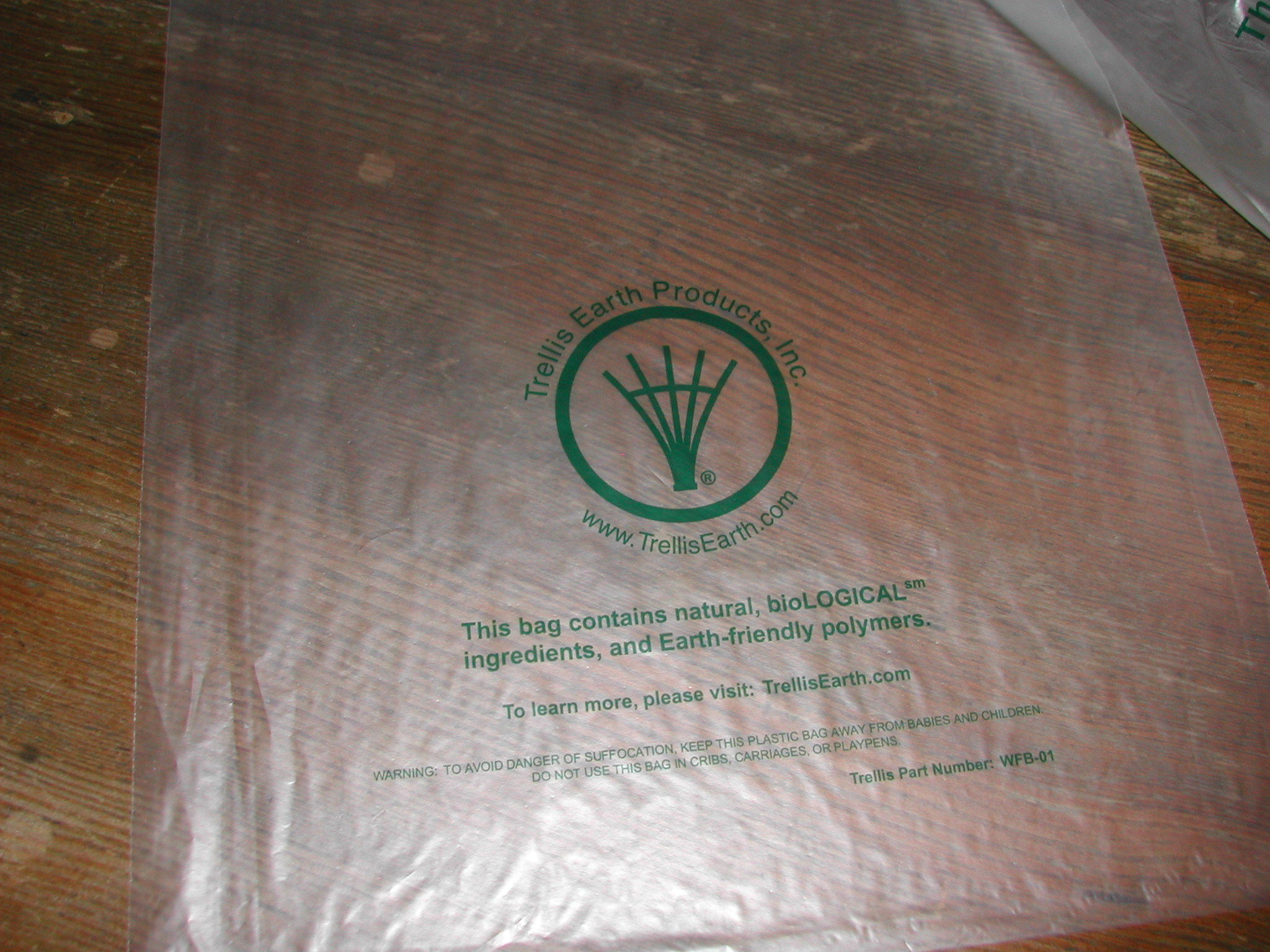
Is this the best option at the moment?
Almost on Schedule

Will the tomatoes be ready by August?
I took a risk this year and put a harvest plan in writing. That may not seem risky to you, when you just want to know what will be available when. But for me, I am putting my ability to grow vegetables on the line. Will I produce what I said I would? Can I live up to this plan? Using general information about growing vegetables, my past experience, and an elaborate spread sheet I got from the Crop Planning for Diverse Plantings workshop, I put together a crop plan. The crop plan guides me on what to seed and plant out each week, so there will be vegetables to sell…according to the harvest plan.

Fizz is coming soon.
If you looked at the harvest plan, you may have noticed it hasn’t been perfectly accurate so far this season. There are a lot of factors that go into growing a crop that the harvest plan does not account for; like, am I following the crop plan’s schedule? So far, I am doing pretty well on that account. I have seeded almost everything on time and planted most things out into the garden on time. One of the most notable differences from last year is lettuce. Last year, I seeded lettuce about once a month, a total of five times over the season. This year, to have a continuous supply of lettuce, I planned to seed every two weeks. So far, so good. I have already seeded lettuce seven times (the eighth will come next week). With kale, I planted out the Red Russian and White Russian on time, but not the Lacinato and Fizz. Kale came on the list early, but that is why the latter two haven’t been on the list yet.

The second planting of lettuce is just about ready.
Another factor in the plan is the weather or other things that affect plant growth. I planned for the first planing of peas to be done this week and the second planting ready to take their place. Peas don’t like it hot, but they grow more at 70 degrees than 60. So, now it may be a week or two longer, before the second planting is ready. Even though all the lettuce was seeded on time, there were other problems. Germination in the first batch was poor and it just hasn’t grown well since I planted it out. The second planting is doing great; it will be ready before the first planting is. That is why the harvest plan says there should be lettuce, but there isn’t…yet. It will come soon.
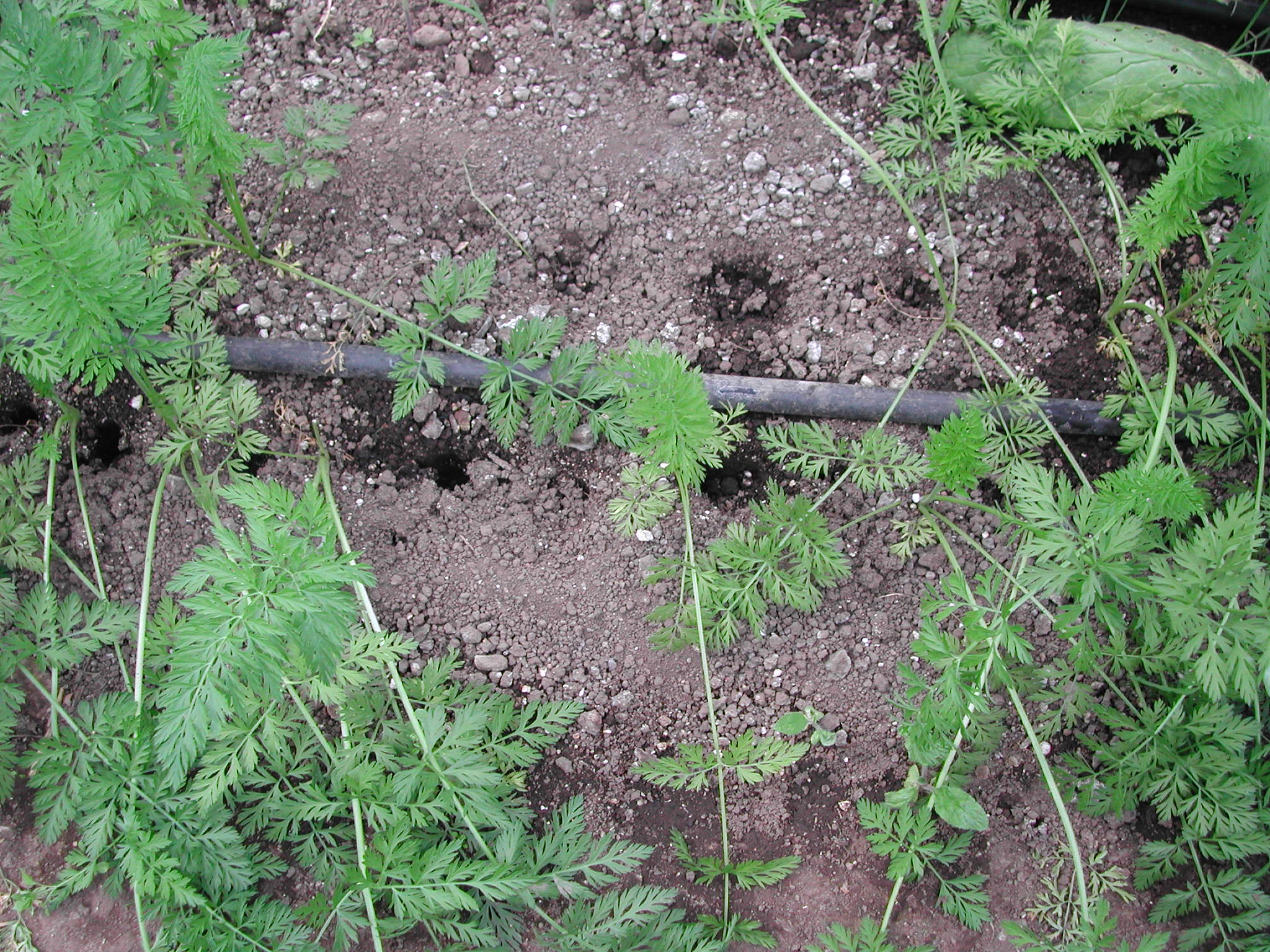
I pulled a lot of carrots from this row.
How much I plant and how fast it sells also affects the harvest plan. I planned to plant carrots once a month, somewhere between 60 and 80 row feet at a time. Again, so far, so good. But, when I put carrots on the list last Thursday, I sold much more than I expected. I had hoped to have carrots continually on the list, but that will not happen. There will be gaps in the carrot harvest. I am working to adjust the plan to plant more, trying to figure out where I can squeeze in extra carrots. Some of you may think Swiss chard hasn’t been on the list yet, but it has– just not on Thursday. There wasn’t enough for both the Monday and Thursday groups.
If you want to know what is coming, take a look at the harvest plan. I’m still planning for tomatoes in August.
The Food Movement
I just read an article this morning, The Food Movement, Rising, by Michael Pollan, in The New York Review of Books. I thought this article was quite interesting and so wanted to pass the link on to you. I have found Michael Pollan to be an interesting and convincing author, since reading The Omnivore’s Dilemma several years ago. That book became a turning point for me, in my thoughts on the politics of food. This article makes me want to read a few other authors as well. I hope you enjoy it.
Pest Control?
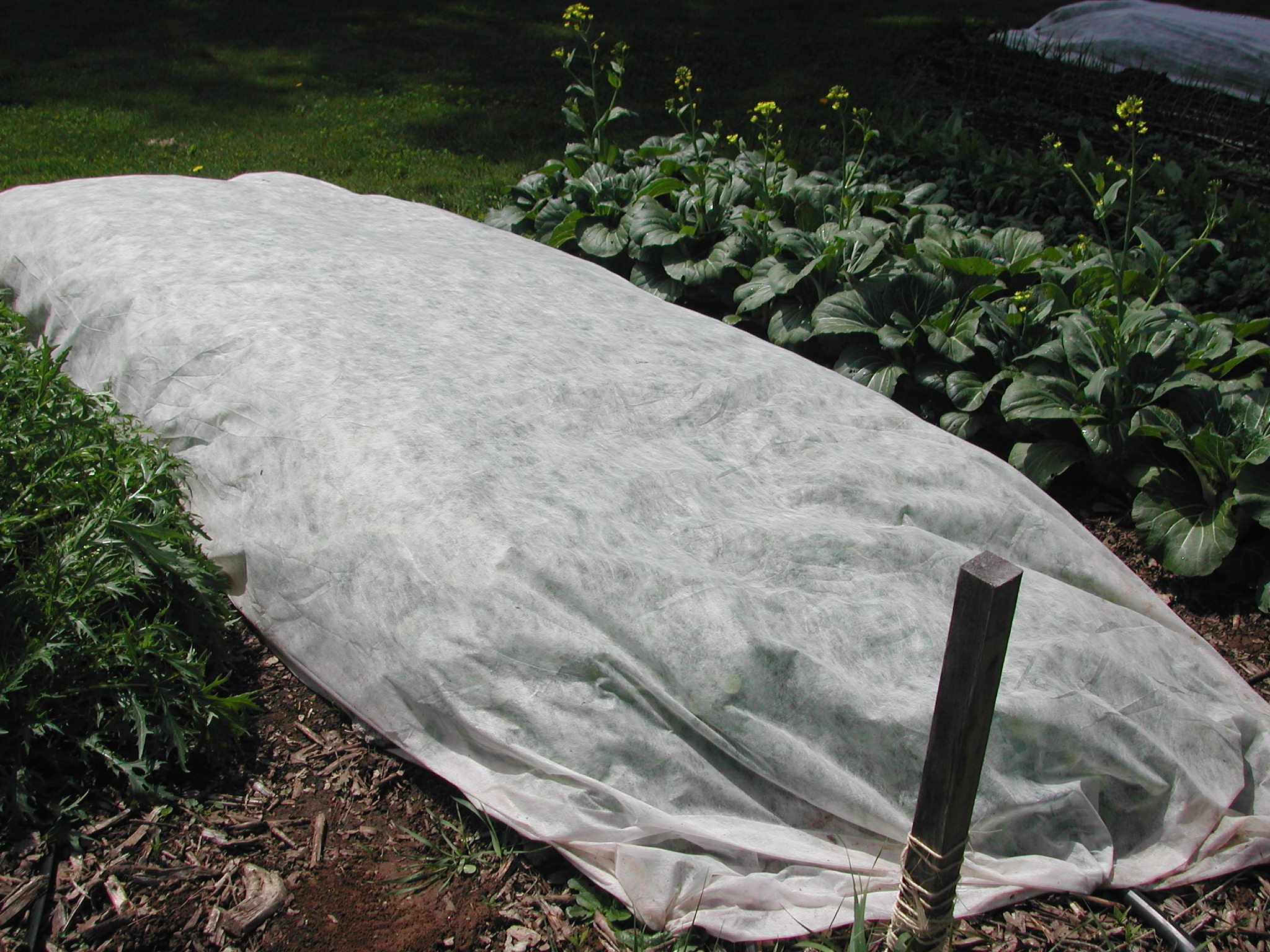
Arugula under row cover
Sometimes, organic methods of pest control can be frustrating. The best thing to do is to have a healthy, diverse ecosystem in which the plants grow. Weak plants attract pests, while healthy plants may intimidate some creatures. Beneficial insects help control detrimental ones, so keeping a variety of them around is a good thing. But despite having the ideal growing conditions, there are still going to be problems with pests.
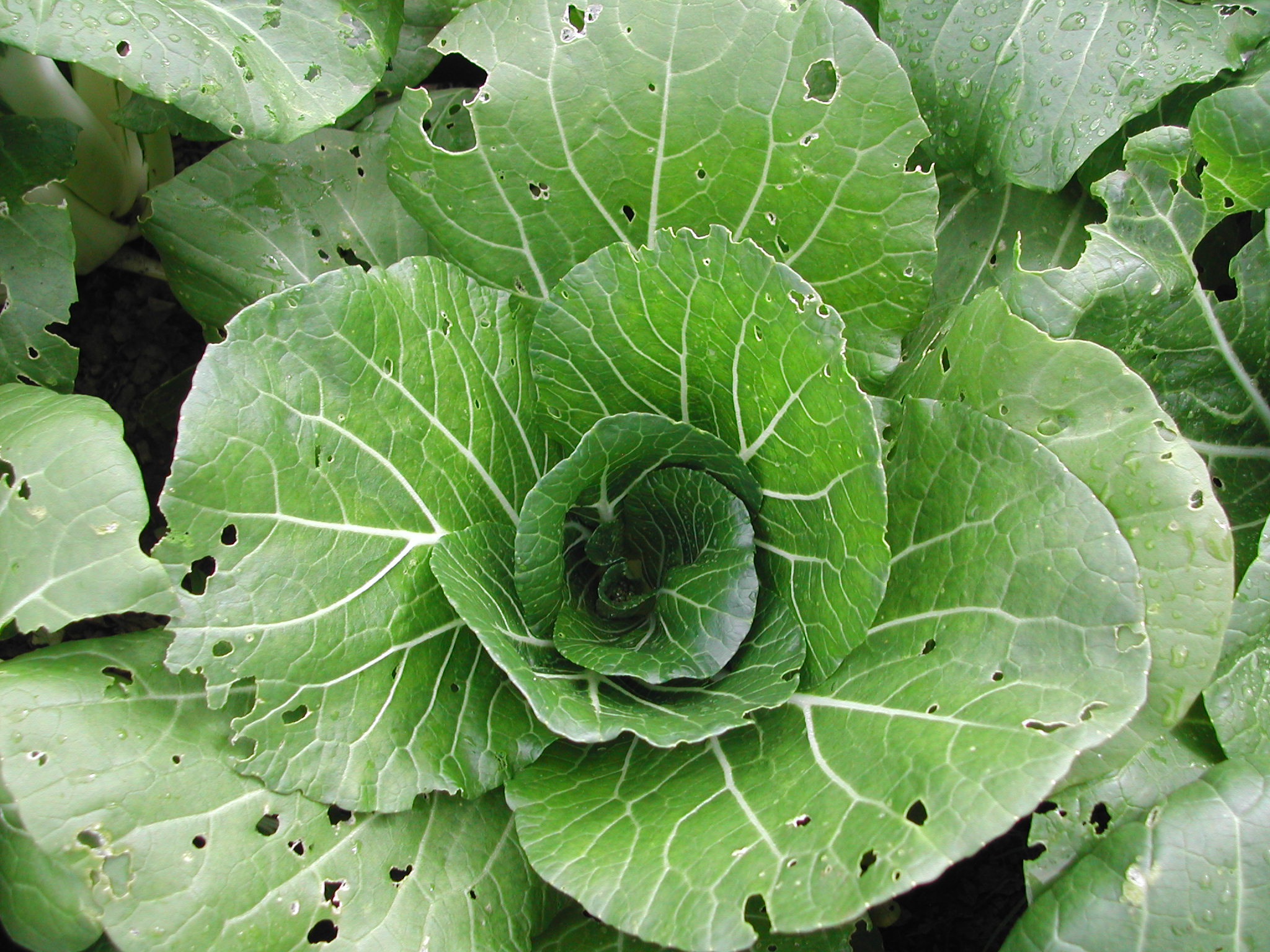
This bok choi has slug damage
One spring pest I have been working on is the flea beetle. It is a tiny black beetle, about the size of a pinhead. They love to eat young spring greens, putting tiny holes in the leaves. One of the most effective and least destructive ways to prevent flea beetle damage, is to cover the plants with a floating row cover (a lightweight agricultural fabric) before the flea beetles find them. The only problem is, the row cover creates a nice environment for slugs. Thinking the bed where I planted the greens wouldn’t have too big of a slug problem, I went ahead and covered them up. Yeah right, where did all the slugs decide to go? When I took the row cover off, there was no flea beetle damage, but there was evidence of slugs.
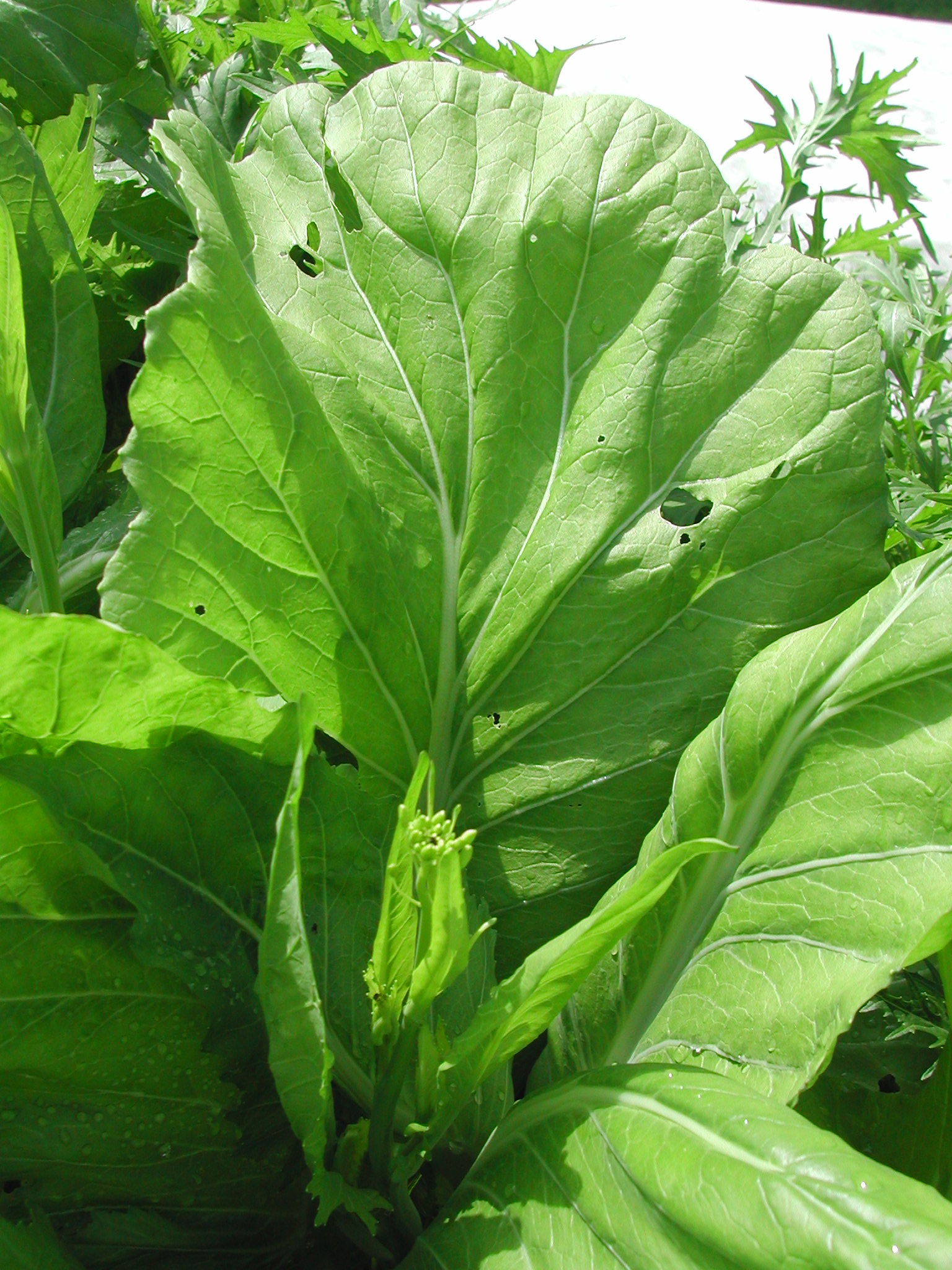
Slug damage on the Bau Sin mustard, too
This morning, since it was wet and warm, I hunted slugs. It started accidentally, when I saw, from a pretty good distance, slugs crawling on the hoop houses. I always have an eye out for slugs and I can’t ever let one go. I keep a jar of soapy water to drop them in on the patio. I started with the few on the hoop houses, then I checked on all the lettuce, then in the clover around the lettuce beds, and then I went over to the greens bed. Were there ever some slugs. Altogether this morning, I found around 275 slugs. (Yep, I kept count, but they were mostly the really tiny baby ones, just hatched this spring.) You would think that would put a little dent in the population…but, I’m not sure I really want to know how many slugs are out there.
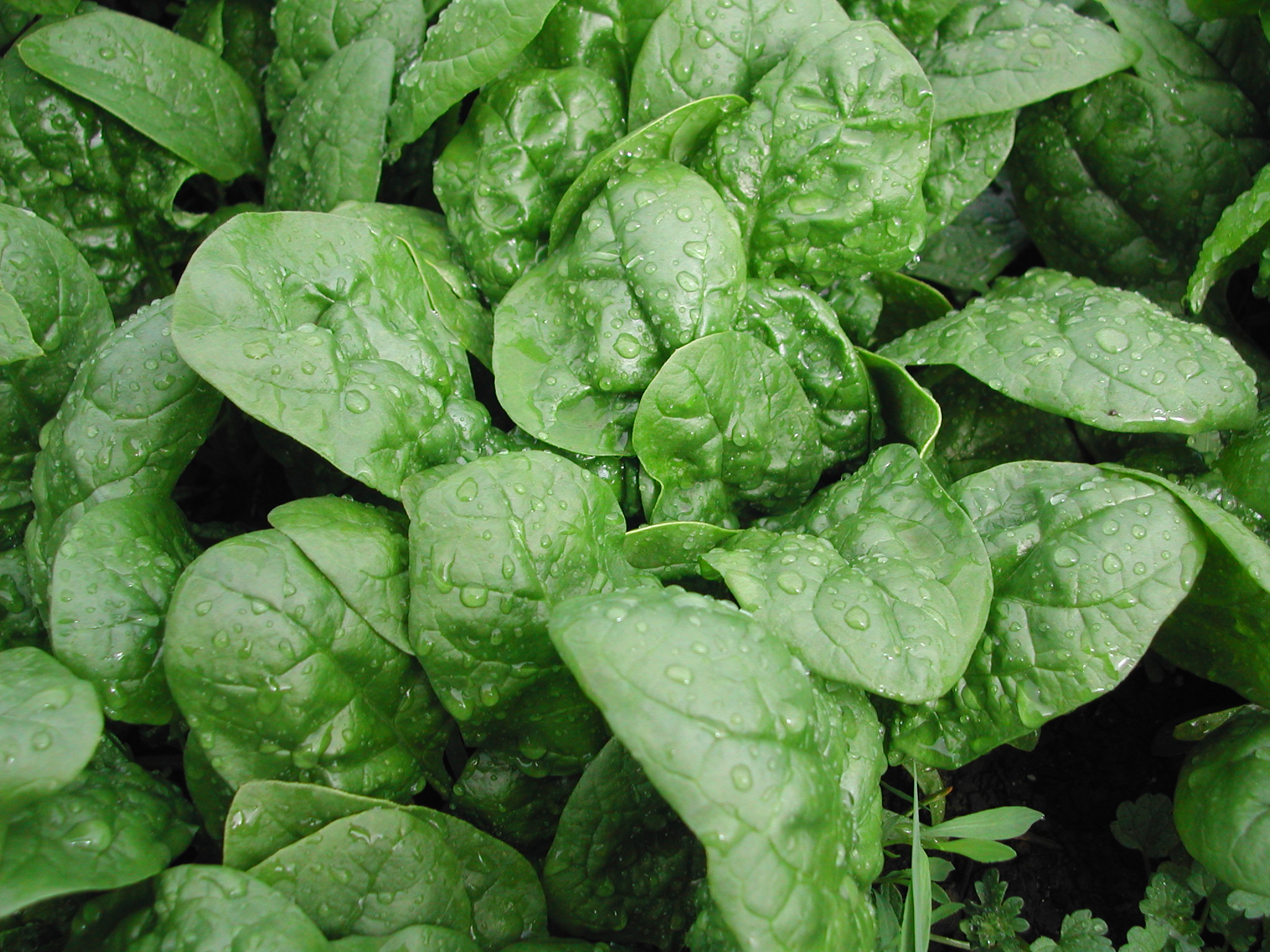
Sometimes, the slugs just don't go for some things...here is some pretty perfect spinach
Needless to say, a little pest damage might show up in your greens. I pick the best I have for you all, but once in a while it will be there. Honestly, this is a hard judgement call…how much damage is okay? I try to think of what I would be looking for, for myself. Someone once said to me, that when living or traveling abroad, she looked for imperfect fruit and vegetables in the markets. That way, she knew the produce was grown without chemicals (or at least less likely). A good point, I think. I don’t enjoy taking a slug out of the sink when I wash lettuce for a salad, but neither do I want to add chemicals to my diet (or the environment).
Deliveries start this Thursday. I want you to be happy with your produce, so let me know if there are any problems. Refunds or replacements are available.
What Will I Do Without Apples?

The apple orchard (before)

The orchard is gone (after)
For the past nine years, we have had more apples than we knew what to do with. When we bought our house, it came with 200+ very small apple trees, almost all grown as a cordons. We ate all the apples we could, often three or four a day each, five months of the year. We gave apples away. We made cider, applesauce, apple maple jam, apple chutney, cranberry apple relish and dried apples. Then, after three or four years, we started selling apples, but we still had more than we knew what to do with. This year, however, will be different.
You might remember one of my big projects for this past winter was to decide what to do with our apple orchard. The support system needed to be replaced and I knew the trees had a disease problem (anthracnose), though I wasn’t quite sure how bad it really was. I wanted to do some research, find some apple experts, and make a plan for the orchard. It took a while, but I finally came to a decision: the orchard had to go and we would start all over again.

Three rows gone, two to go
It was not an easy decision. I like to be sure I am doing the right, best thing. To be sure about the orchard, I wanted someone who knew more than I did to help me figure out what was best. That did not happen. Throughout this past winter I was reminded, over and over again, that there is rarely only one solution to a farming problem. Someone else might choose something different, but I could make a plan that would work just fine for us.

Steven gets some help from one of the Reds
Several things helped in the decision making process. The first was to read The Apple Grower by Michael Phillips. What an amazing book! It helped give me the bigger picture of healthy apple orchards and how I can approach the new orchard. The next thing I did was contact the Oregon State University Agricultural Extension Tree Fruit and Nut Crops Working Group, to get confirmation that the trees did have anthracnose and ideas about spacing in a compact/high density orchard. I did a lot of other searching and reading on the internet, though I didn’t come up with any specific answers to my questions.
My final contact was with a neighbor, who is an arborist. I wanted to know how bad he thought the anthracnose was…beyond repair? By the end of the hour or so we spent in the orchard talking about the trees, my decision was made. It was all coming down.
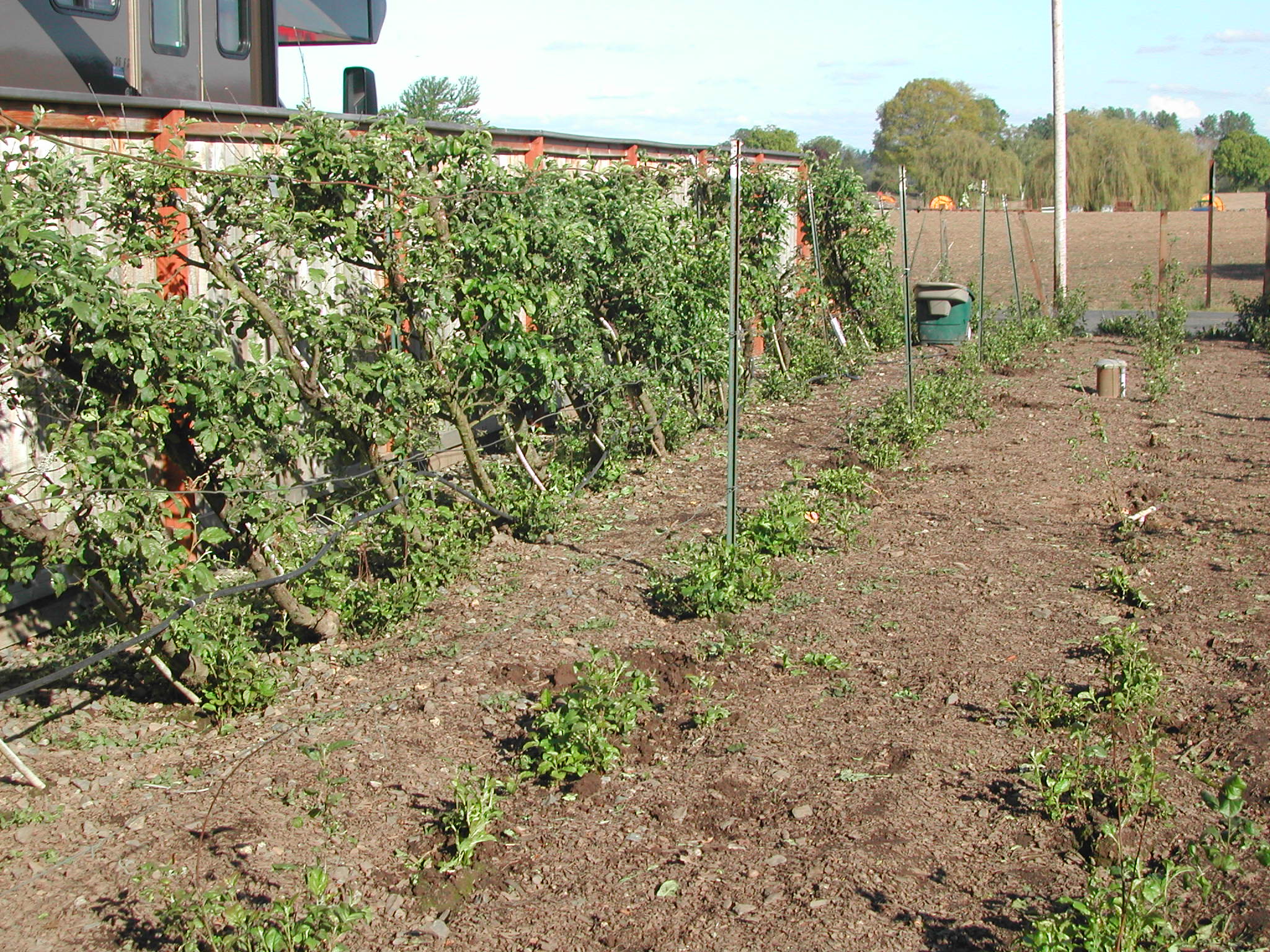
One row left
Last week, Steven took the week off work, to work with me on the orchard. It was not the perfect week we had a year ago. This time it rained quite a bit, but the last few days were nice and warm and we got the job done…at least the main part. The trees are gone and Steven is working on getting the roots out. The plan is to give the space a rest from trees for two years, while using the space for vegetables and at the same time work on building the soil with cover crops. We will plant the new orchard the third year.
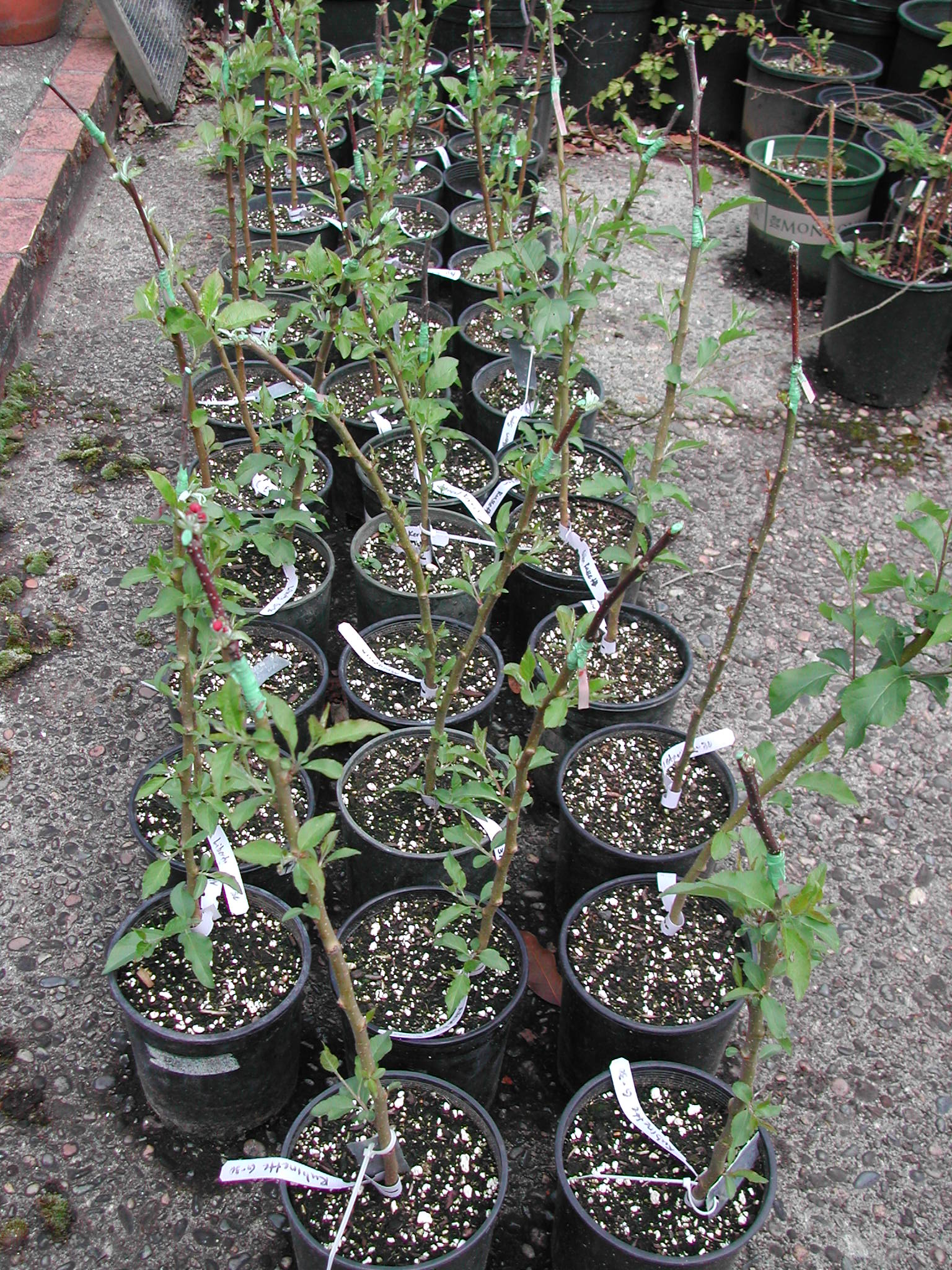
The newly grafted apple trees
We started grafting new apple trees last year, when we thought we would be replacing some trees. This year, we grafted more, knowing we would be replacing the whole thing (we won’t have so many trees though, because we will do things differently). I am excited to experiment with a fairly new rootstock, called Geneva 30, for some of the trees. It is harder to graft successfully, but so far it looks like most of our grafts have taken. We lost a few of last year’s new trees to the cold winter, but we will just graft more as we need them. These trees will give us a head start when we are ready to plant again. The varieties we have so far are: Belle de Boskoop, Winesap, Spitzenberg, Newtown Spitzenberg, Liberty, Cox’s Orange Pippin, Honeycrisp, Hudson Golden Gem, Ashmead Kernel, Golden Russet, Northern Spy, Fuji, Mutsu, Newtown Pippin, Rubinette, and Elstar. I am still looking for an Arkansas Black (and it is still not too late to give us your requests). They are a mix of heirloom and newer varieties, with a mix of harvest seasons and uses.
It will be a bit of a wait, but I am looking forward to our new apple orchard.


