Another Beautiful Week
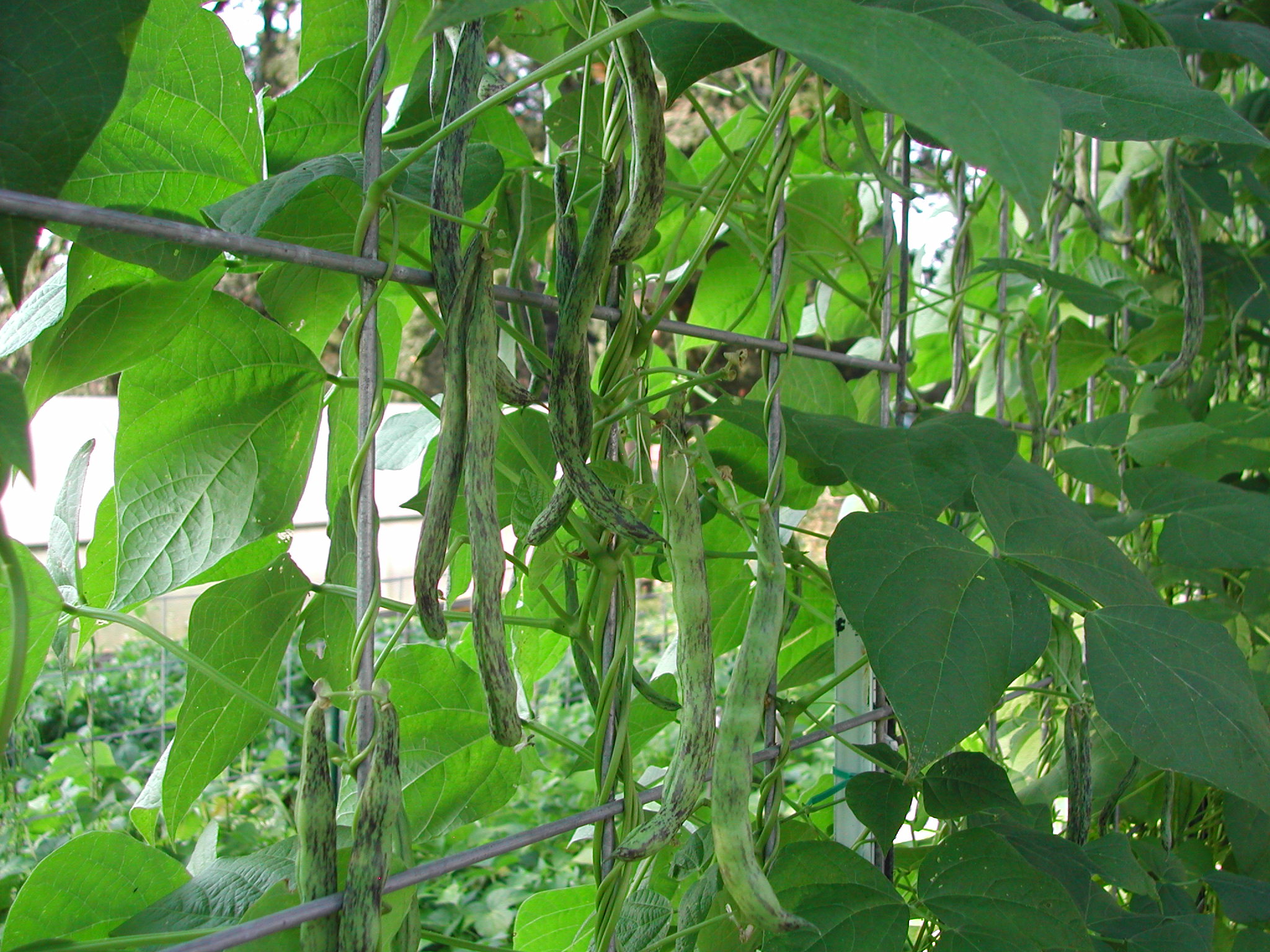
I am loving the Rattlesnake pole beans
Wow, wow, wow! We have had another beautiful week and by the weather forecasts, it looks like there is more to come. I couldn’t be happier for the garden right now. After last year’s dismal bean and tomato harvest, this year is looking very, very good. Since the beans and tomatoes have kicked in, there has been plenty for everyone, including my own to freeze and can. I am glad for the chance to stock up the freezer and pantry for winter.
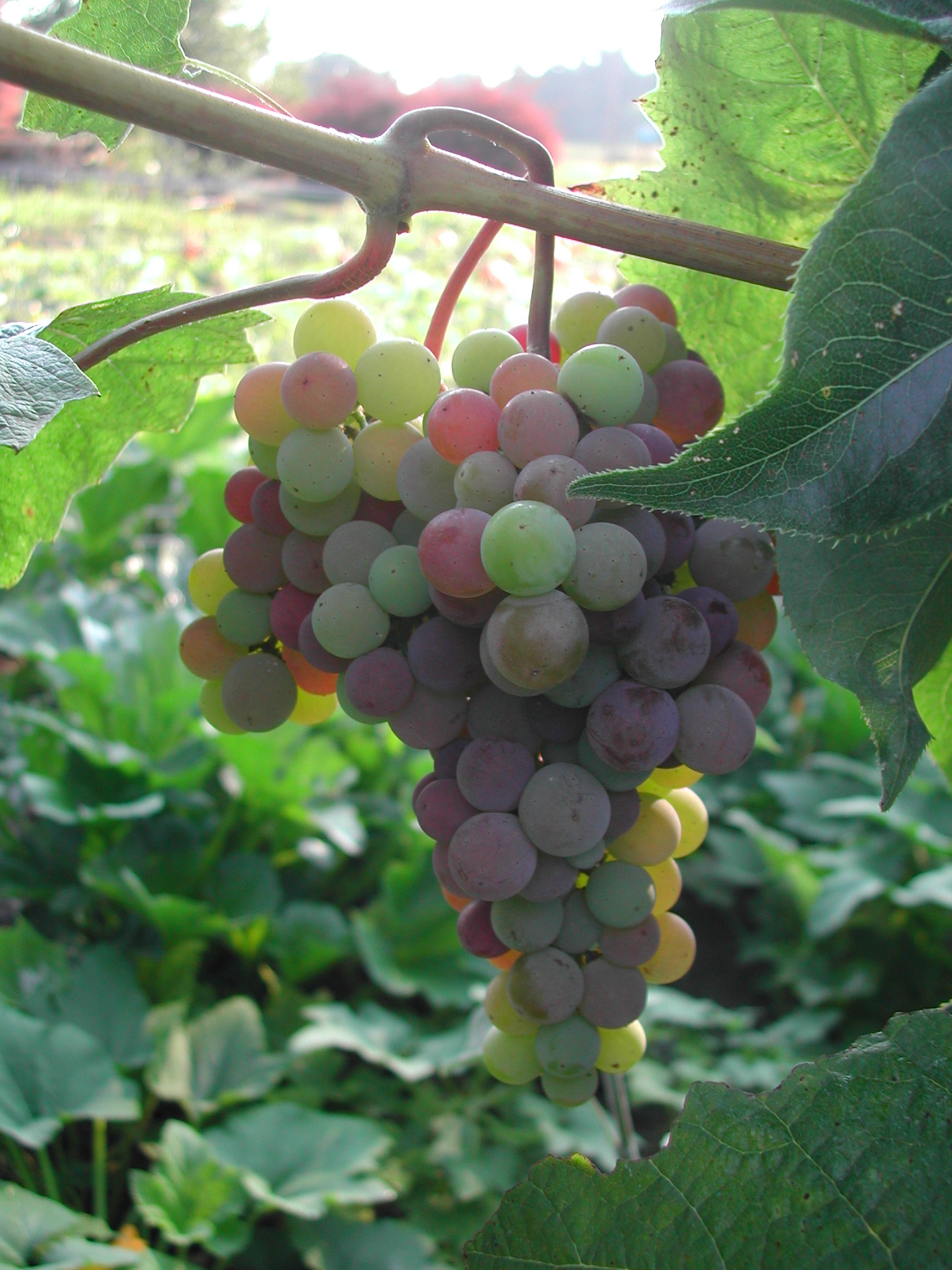
Our favorite Canadice grapes are starting to ripen
Since I got the fall crops planted earlier than in previous years and, again, the weather has been great, they are making good progress and are looking to be sized up and ready to go in October and November. Last weekend, I got a bed of arugula planted and it is already up and growing. Some of the grapes are finally starting to turn color and hopefully, the weather will hold long enough for them to ripen up, too. (In some years, our first grapes have been ready around labor day. This year they still have a good two weeks or more to go.)

The Corinto cucumbers in the hoop house are amazing
And finally, this week, I think I will be able to put cucumbers on the list! I have included a few in “The Bag” orders and Steven and I have been eating them for some time now, but my regular, field cucumbers have had a hard year. Not due to the weather; other people’s cucumbers have done great. I just had some weak starts and they never got over it. The tunneling of the moles and voles in the squash field didn’t help, and some of the cucumbers were among their victims. I did, however, plant more cucumbers in the hoop houses. My original intent was for late fall production, but now it will be the main production. Those plants are looking absolutely gorgeous, healthy and strong and the cucumbers are coming earlier than I expected.
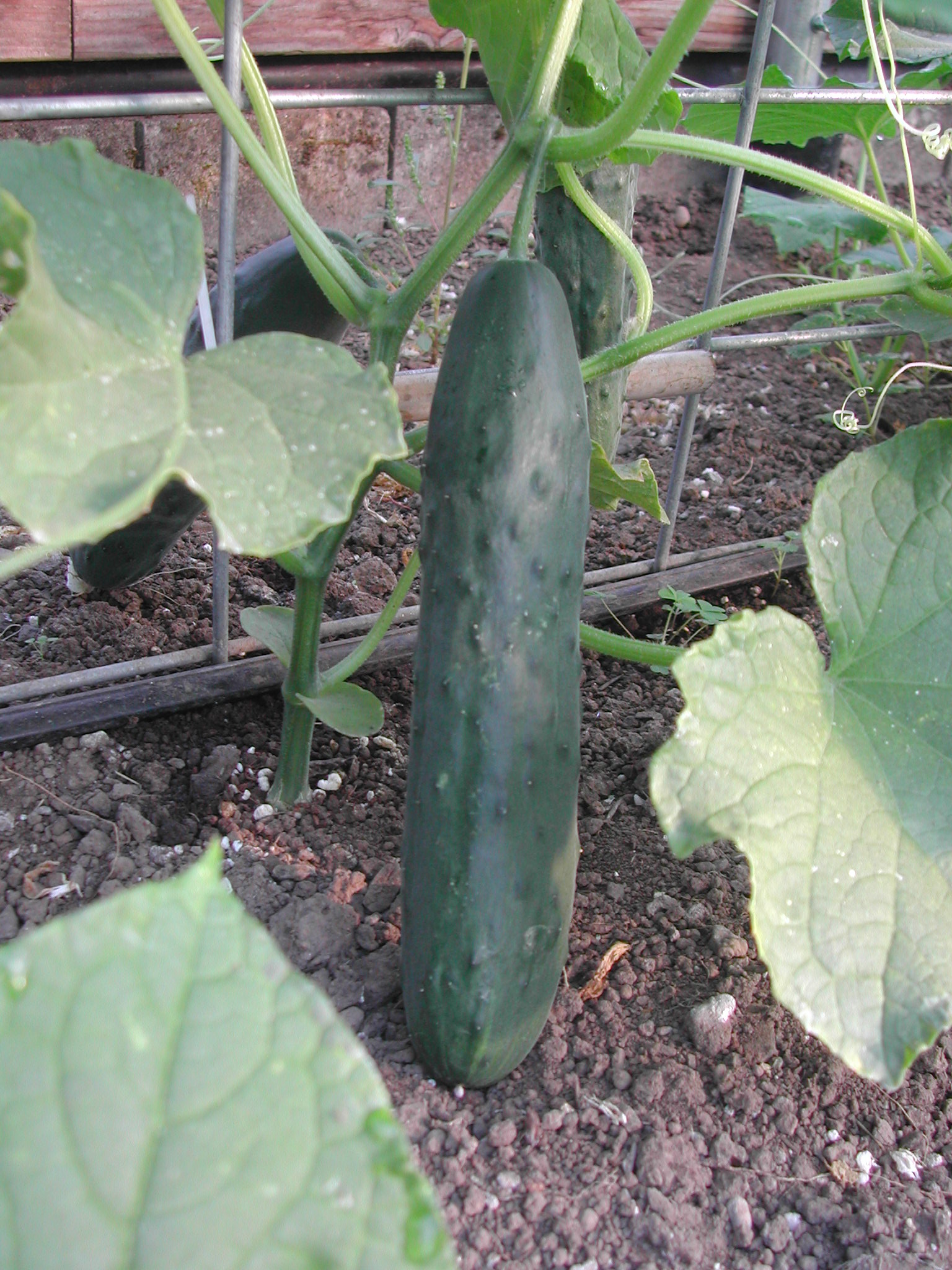
A beautiful Corinto cucumber
The variety I planted is Corinto, an American slicing cucumber. It is a long, dark green cucumber, that was bred for hoop house production: it does not need to be pollinated to set fruit and it does well in both cool and hot weather. I spaced the plants at different intervals in the three beds I planted (16, 20 and 24 inches apart), to see how that affects production and disease. The prospects look good for a long fall cucumber harvest.
This season is certainly turning out a lot better than it looked early on with all the spring rain and cool temperatures. I had hoped that given our less than stellar beginning, we would have a good ending. It sure is looking that way.
Planning for Taste

tomatoes
Though this season is only about halfway over, I am and have been thinking about next year. I pretty much started thinking about next year right away. What will I do the same? Different? What varieties will I plant and how much? This year I had more ground than ever before to cultivate. I used 2/3 of the orchard field for vegetables this year (2500 sq. ft.). I also added a new vegetable field where the blueberries use to be (1120 sq. ft). Adding up the other fields previously in operation, it comes to a total of 7,740 sq. ft., which is between 1/5 and 1/6 of an acre. Really, that is not much space for a whole lot of vegetables. (I am just counting annual vegetables, not berries or fruit or other perennials.) Next year, I will have to cut back. We will be replanting the orchard, so I won’t have that full space for vegetables. I may be able to squeeze in a few vegetables between the trees while they are small, but not for long.

more tomatoes
Decisions need to be made. This is where you, the customers, come in. I would appreciate your feedback on the vegetables and varieties you like the best; which you would like to see back next year. I do have my own criteria, when deciding what to plant, but your feedback is a part of that. Specifically, now, I am going to ask about tomatoes. Which are your favorite ones? I finally posted information on tomatoes on the Fruits and Vegetables page. If you think about it when you are eating them, see if you can tell which ones they are (I can always help at delivery) and then let me know what you like. I usually put in a mix of tomatoes, but you can ask for particular ones and I will oblige you as much as I can. I usually don’t include the really large tomatoes (Brandywine and Pineapple, specifically) unless you ask for them or you order more than two pounds, since they can weigh over one pound each. (I don’t have more than one or two of them at a time right now, anyway. Hopefully, there will be more later!)
I am paying more attention to the flavor of each tomato I eat it this year. I hope you will, too.
Summer and Fall
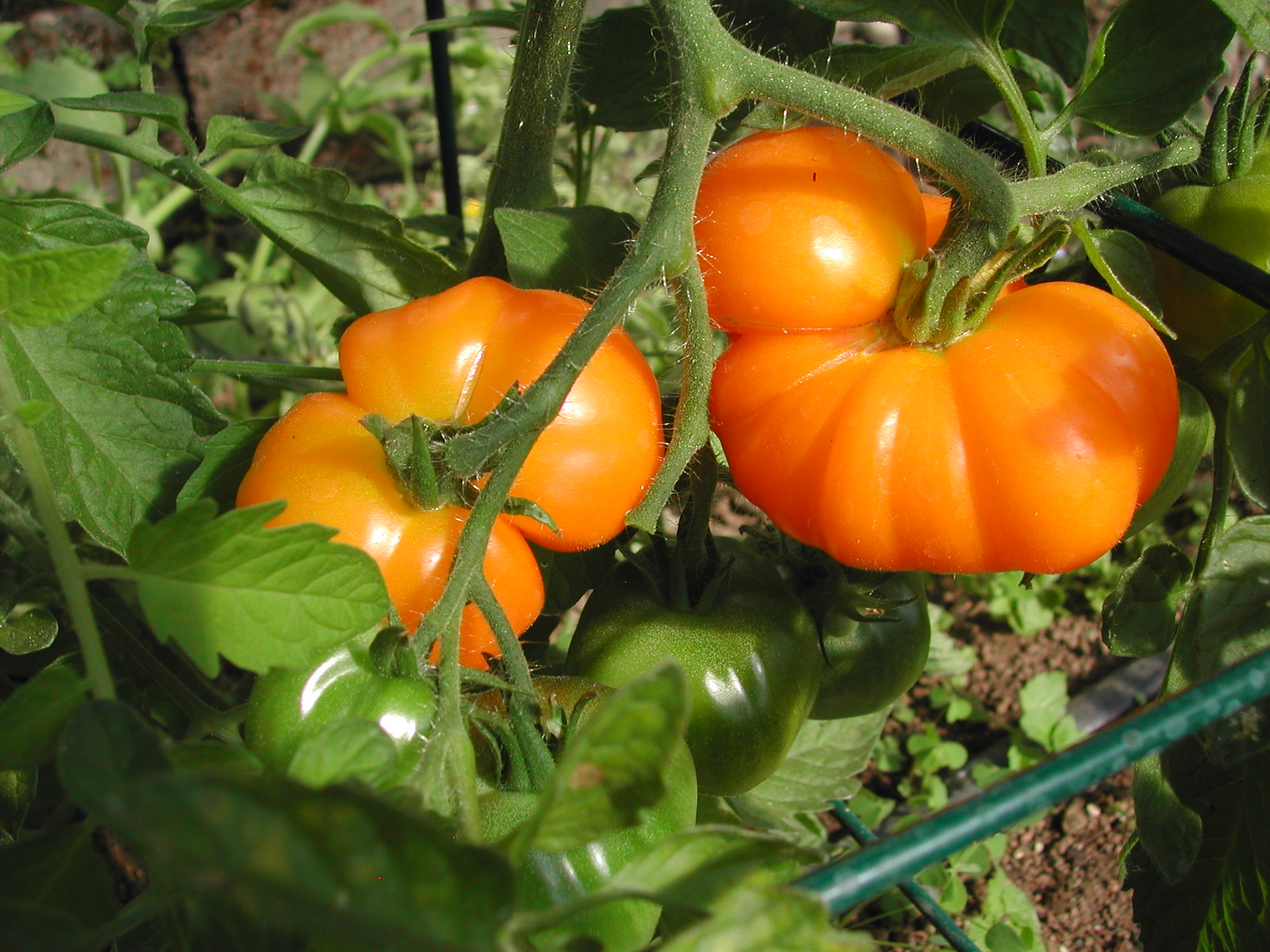
Morden Yellow tomatoes
Wow! What a great week it has been, with our first two days above 90 degrees this summer and a few warm nights. The tomatoes seemed to have popped out. The early varieties are ripening faster and some of the later varieties (though not the latest) are starting to turn. Sometimes, you know something to be true, but it doesn’t hit home until you experience it…that happened to me this week. I know certain plants need not only daytime heat, but also nighttime warmth for good growth (tomatoes, peppers and eggplant in particular, though at varying levels). This week I saw it happen. I picked tomatoes pretty thoroughly on Monday. The day itself wasn’t particularly warm, in the low 80’s, but Monday night was warm…I think it was about 66 degrees on our thermometer Tuesday morning. When I looked at the tomatoes Tuesday, I had a whole new batch ripe and ready to pick. A lot of things may have influenced the ripening, like the warmer temperatures over the weekend or simply the timing of the whole season. I tend to think the warm night had a lot to do with it, too. Pretty amazing.
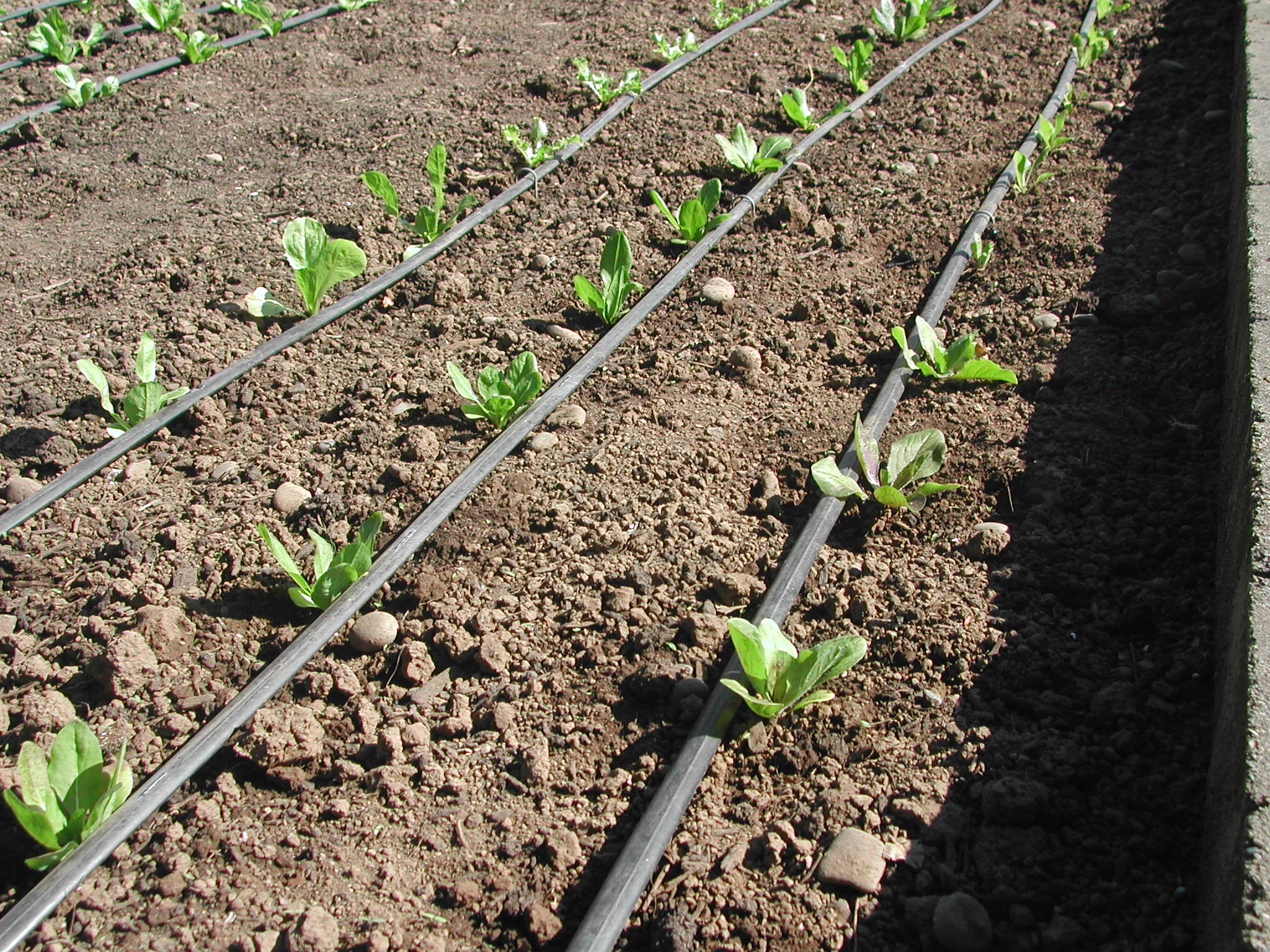
chicories for fall
Even though I keep hoping the summer heat will extend into fall, this week has been full of planting for the cooler days of fall. A few things have been in for a while: Brussels sprouts, cabbage, kale, carrots, and beets. Over the weekend, I planted a variety of chicory and lettuce starts, along with fennel and kohlrabi. I also planted some sprouting broccoli starts, though as I was deciding on spacing, I discovered I may have got them going too late. I seeded spinach directly in a bed and started the last of the lettuce in pots.
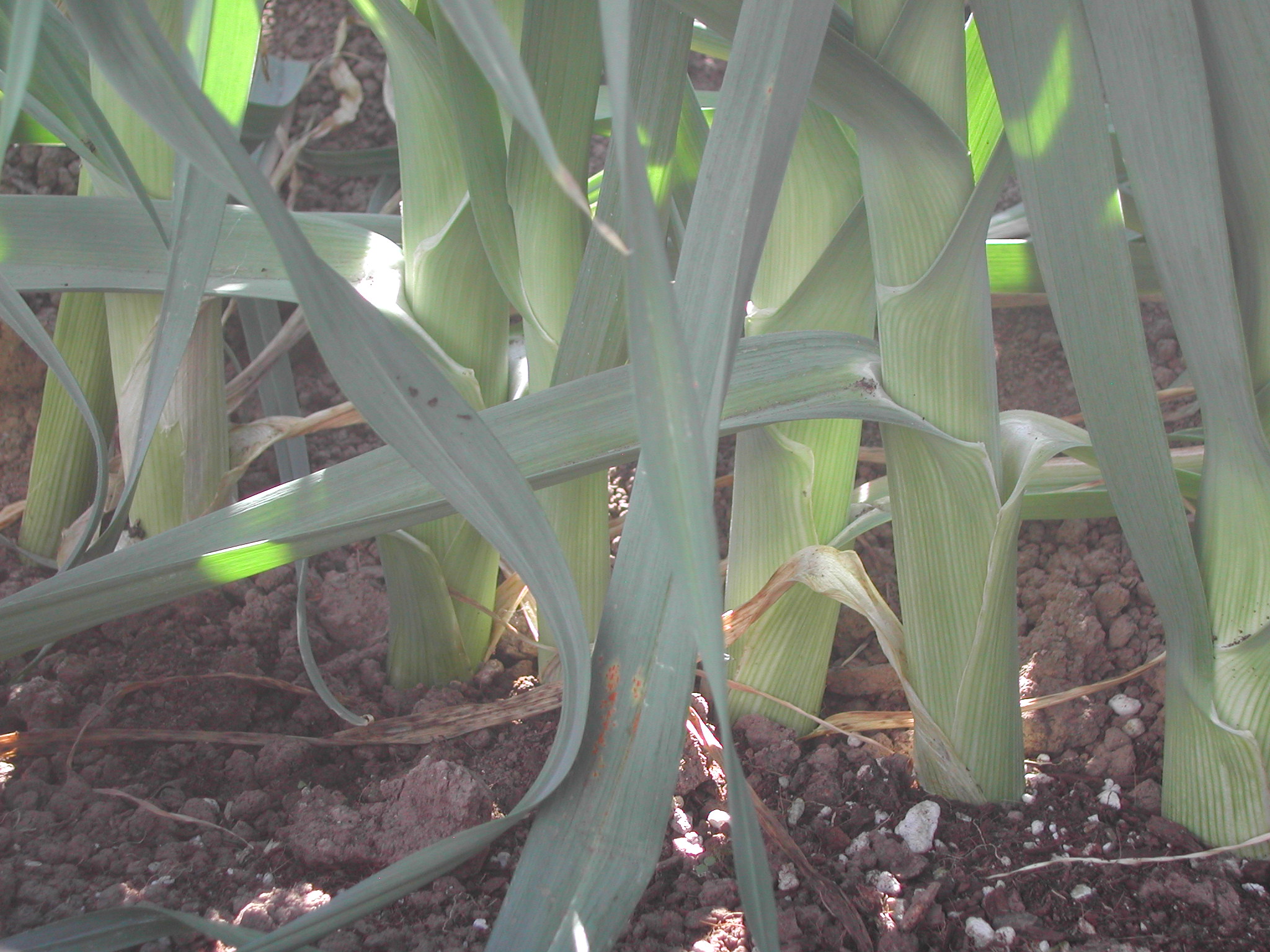
King Richard leeks
There isn’t much left now to plant. Maybe some arugula or other quick greens, if I can find the space and then, later, cover crops and garlic and fava beans for next year. Other fall crops that have been in the ground all season are looking good: lots of winter squash, celery, celeriac and some extremely beautiful leeks.
I am looking forward to the good things to eat in the fall, but am fully enjoying the summer tomatoes now.
Field of Beans
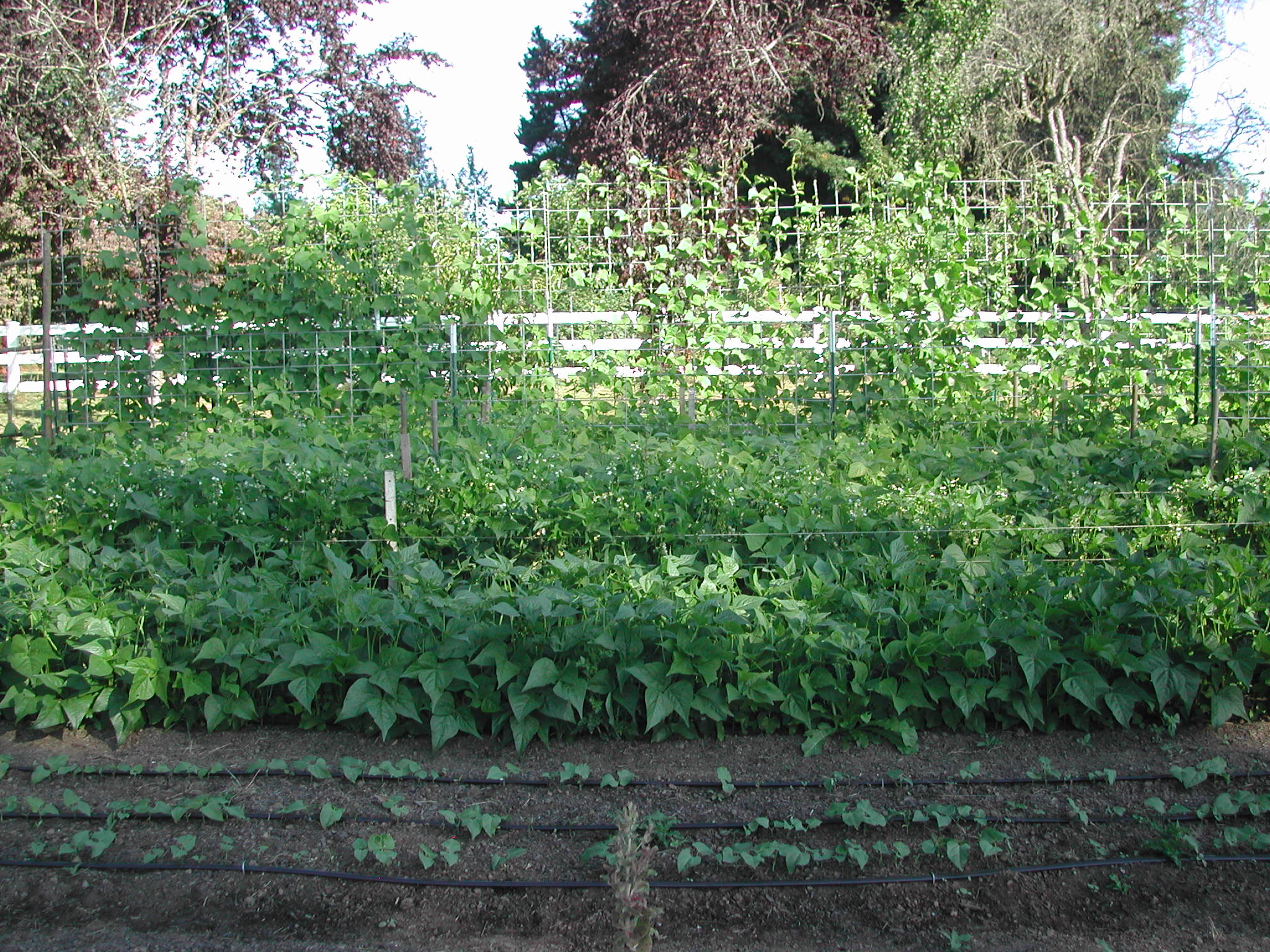
My field of beans
I picked the first green beans this week! Yeah! I spent a few days last week working on the beans: weeding, thinning, and tying things up a bit so I could walk between the beds of beans. While working, I discovered there were some beans just about ready. These first ones are called Provider and they will be the first of many. I planted a lot of beans this year. Here is the run down:

Provider beans
Provider: This is the quintessential green snap bean, that can be planted a bit earlier than other snap beans. I haven’t planted this type since I discovered french filet/haricot vert types, but since it could go out early, I thought it was worth a try. It is the first bean ready and I like it!
Rattlesnake: This heirloom is my first try at pole beans. I hear pole beans have the best flavor, but they don’t produce as much at once, rather more slowly over the whole summer. These are green, with purple streaks. They are good fresh, shelled and dry. We’ll see if there is enough season to try them all three ways this year.
Dragon Langerie: I planted this Dutch heirloom last year, under the name Dragon Tongue. It is a yellow flat bean (wax or Romano), with purple streaks. It is usually eaten fresh, though can also be shelled or kept for dry beans.
Rockwell: This dry bean is an heirloom from Coupeville, Washington, on Whidby Island, where it has been grown since the late 1800’s. I thought it would be fun to try a locally adapted variety of dry bean this year, while I have room!

Moving bean tendrils isn't easy, but the Tiger's Eye are adjusting to a new trellis
Tiger’s Eye: This is another dry bean, an heirloom from Chile and Argentina, also called Pepa de Zeppalo. From the pictures, this should be a beautiful bean: mustard yellow with burgundy swoops. It is good as a shelling bean, too, and great for soups and refried beans. I was a bit surprised by this bean, because even though the catalogs described it as a bush bean, it sure looked like it was trying to be a pole bean, with very long tendrils growing and wrapping around everything in sight. When I did a little more research, I found out that it is a bush bean, but it does have very long tendrils, maybe 2 to 3 feet, but not the 8 or 10 feet that a pole bean will climb. Still, I decided to put up a short trellis for them, otherwise, they would become a tangled mess.
Tavera: Finally, my favorite type of bean, a french filet or haricot vert type. These snap beans are small and tender, perfect for eating fresh. These need some warm temperatures to germinate well, so are not ones to plant too early. I got three plantings of these in, to keep them going as long as possible.

The first planting of Tavera beans are blooming and starting to form beans
I didn’t actually get any of the early beans in early. All the beans got a late start in our garden this year. I planned a new field for vegetables, where the blueberries used to be. Because of all the spring rain, it took longer to get that field prepared. The plan was to start planting beans the week of May 23, with Provider, Rattlesnake and Rockwell at the top of the list, and to continue planting a new bed or two every three weeks, with the last going in the week of July 25. The reality was most of the beans went in the week of June 20th, four weeks late. I planted two more times, with the last bunch going in August 2, a week later than planned. Oh well. We didn’t have them as early as planned, but we have them now and they should continue the rest of summer!
Cucurbits

The beautiful Cinderella Pumpkins
This was the week for a focus on cucurbits: cucumbers, summer squash and winter squash. Specifically, I needed to weed and add a side dressing of fertilizer. Early on, when the squash were small, I went through the squash with my new diamond scuffle hoe. It did a good job of knocking the weeds down, but some managed to survive and of course, new ones grew. Finally this week, I got out there again. This time, with all the amazing vines covering the ground, it took a lot longer to weed. I could no longer use a hoe and had to weed by hand. My penchant for weeding like a gardener is very strongly entrenched in me. I couldn’t shake it. I should have been a little less thorough, but I could not help myself. Now the beds are clear of weeds and I shouldn’t need to weed again until the end of season clean up.
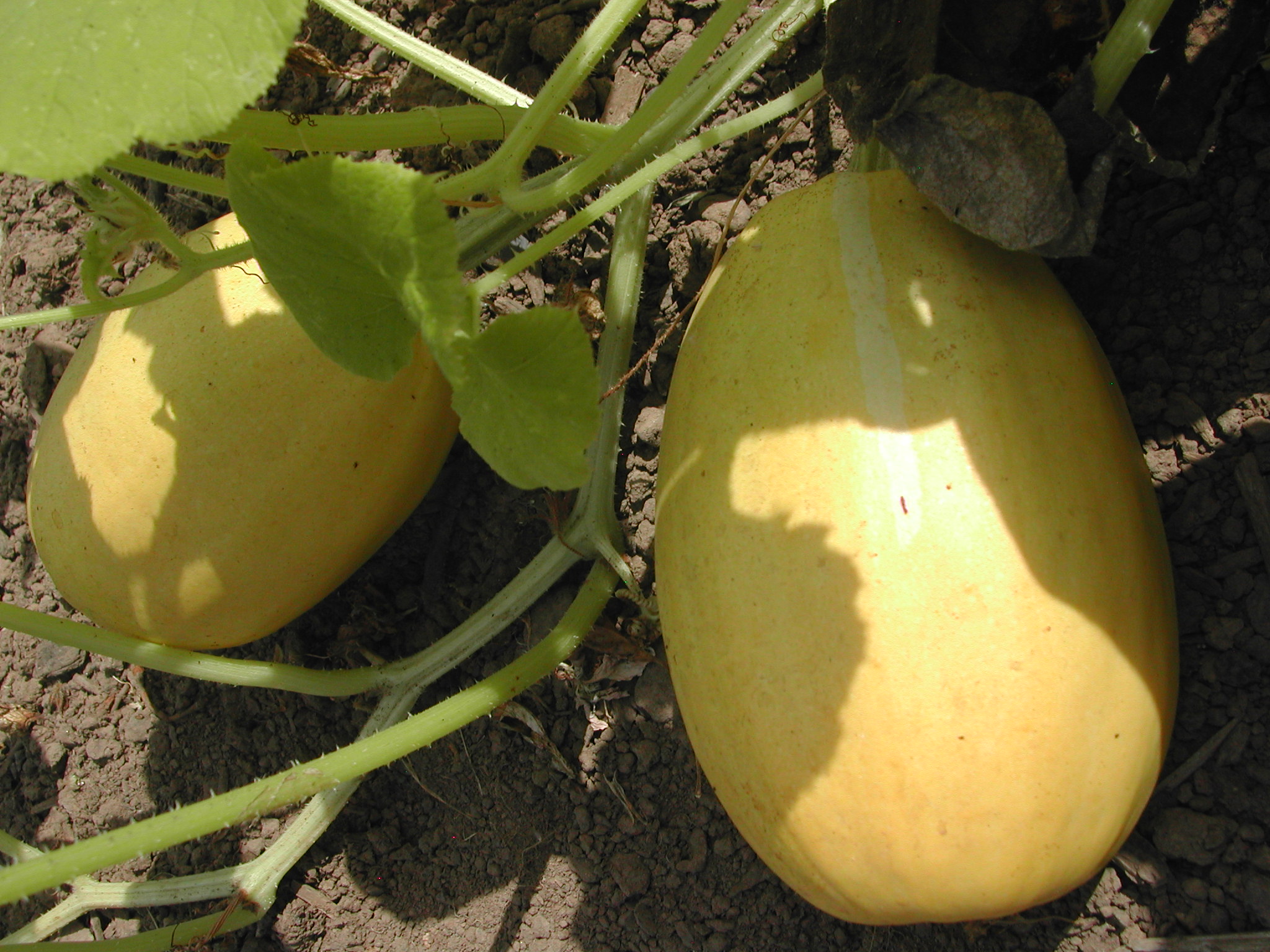
Lots of Spaghetti squash this year
Next up was a side dressing of fertilizer. With the results of the soil tests this year, I only needed to add nitrogen. I chose a mix of blood and feather meals. Since organic fertilizers release their nutrients slowly, I usually only add them once, before planting. This year I thought I would experiment with adding one half before planting and the second half in early summer as a side dressing. I won’t do that again. This was much later than I had originally planned to add the fertilizer (early July) and it was difficult to get it in around the plants with the sprawling vines. Though it seems to have worked fine for the tomatoes, peppers and eggplants, and it works in beds that get two crops per season, for full season crops, I don’t think this method is worth the time. If the plants need a boost mid-season, it may have to be with a foliar fertilizer.
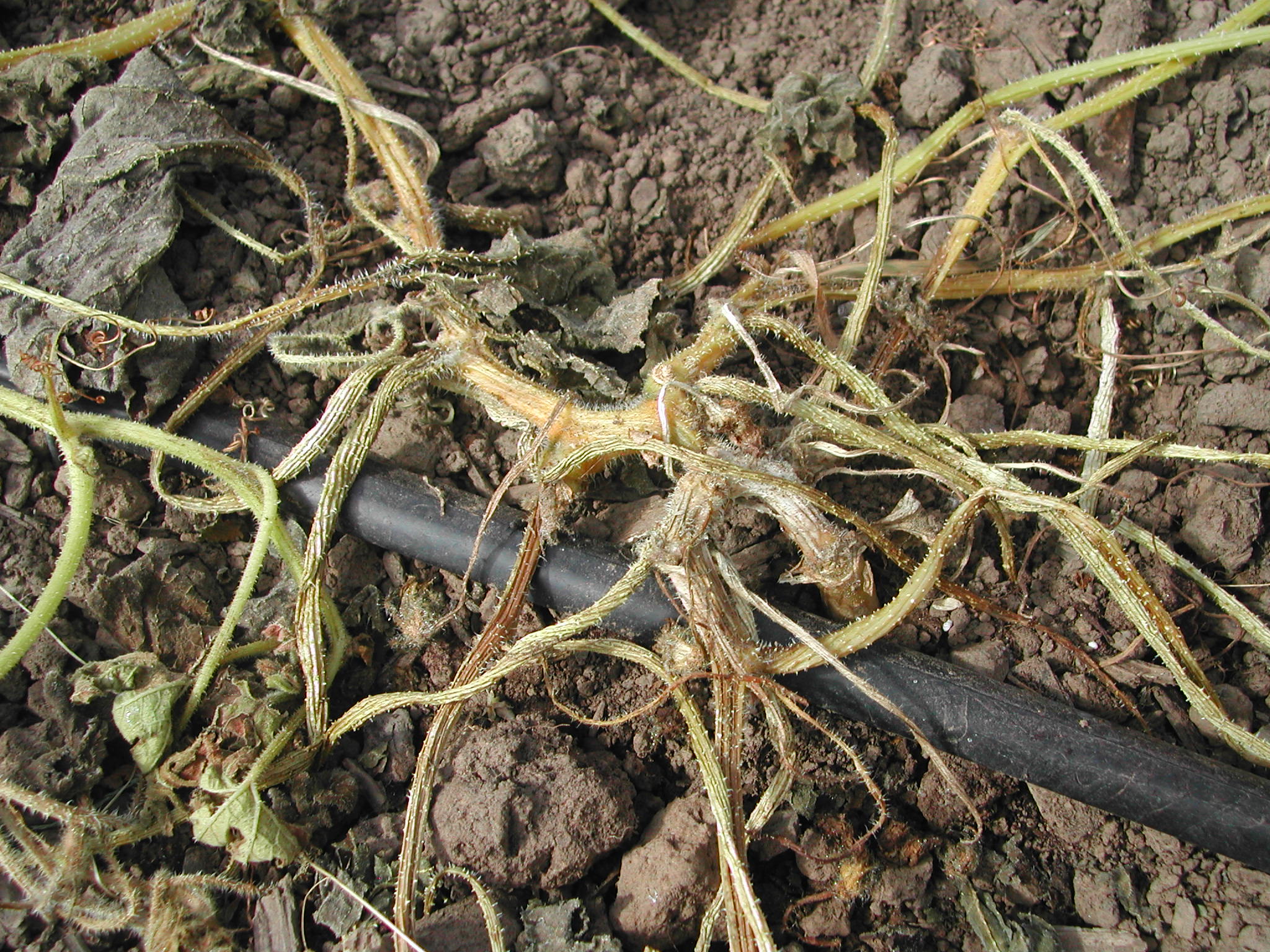
A victim of the moles and voles
Unfortunately, while weeding, I discovered a lot of tunneling through the beds, usually right underneath the base of the squash. Moles and voles. It did cause the demise of several vines, but the others have soldiered on and the squash are looking quite nice. The cucumbers have struggled, but I still have hope they will perk up. I planted more cucumbers in our hoop house, a variety that does well in cool temperatures and low light conditions, for fall. They are looking good and should begin producing fruit sometime in late September or early October.
I like this cucurbit family. It fills most of the production season, with summer squash in early summer, cucumbers later in summer and winter squash in the fall. I love seeing the incredible growth of the vines and the fruit can be so colorful and beautiful. Now that the squash and cucumbers have had their week of attention, it is time to move on. Next up: beans.

The cucurbit field when planted in late May

The cucurbit field today
Garlic

Chesnok Red, Inchellium Red, Killarney and Lorz Italian garlic
I started digging garlic this week. Most of it is out of the ground now, curing in the garage. The last bit that is left will be dug today or tomorrow; as soon as I can find a place for it to cure, because this year I have a lot of garlic. A whole lot of garlic.

Garlic curing in the garage
It is good that I have a lot of garlic. I have wanted to save my own garlic for seed for sometime now. Last year, I bit the bullet and bought a lot of seed garlic with this in mind. I bought four varieties from Uprising Seeds: Inchellium Red (a softneck Ark of Taste Heirloom variety, found on the Colville Indian Reservation in Inchellium, Washington), Lorz Italian (another softneck Ark of Taste Heirloom variety, brought by the Lorz family from Italy to Eastern Washington), Chesnok Red (a hardneck from Shevlisi in the Republic of Georgia) and Killarney (a hardneck, possibly selected from Spanish Roja). I bought quantities based on what I had purchased in the past from other companies, but ended up with much more than I needed. The garlic I received from Uprising was bigger and more beautiful than anything I had bought before. I couldn’t let it all go, so I planted an extra bed of garlic, I gave some away, and we ate what was left all winter and still didn’t finish it off. With that beautiful seed, I have grown some beautiful garlic. I will save the best to seed next year’s garlic crop.

Better get this last bed dug quick
Unfortunately, there was one downfall: I put off digging the garlic just a little bit longer than I should have. Two of the varieties are hardneck types; they are the ones that make garlic scapes (the flower stalk and blossom). I had so many beautiful scapes this year, I put off harvesting the garlic so I could keep harvesting scapes. We also had a little rain just about the time to harvest, so I put off digging because of that, too. What all this means is that the garlic will not have as many layers of wrapper leaves (the papery covering) around the heads. It may end up looking a little dirtier on the outside, since I don’t have as many layers I can peel away. Not the worst problem I can think of.
I often think about taking a side-by-side taste test with the different varieties of fruits and vegetables I grow. I think about it a lot with things like garlic, tomatoes and apples. Somehow, I never get around to doing it. I think this year will be the time for garlic (hopefully tomatoes, too). I’ll take four small heads, roast them and see what differences I can taste. I have heard it said that the hardneck varieties have better flavor, while the softneck varieties store longer. Maybe this year, I will find out if that is true.
Note: If you’d like to try a taste test yourself, let me know in your order. I’ll label each variety for you.
The Tomatoes Are Coming!
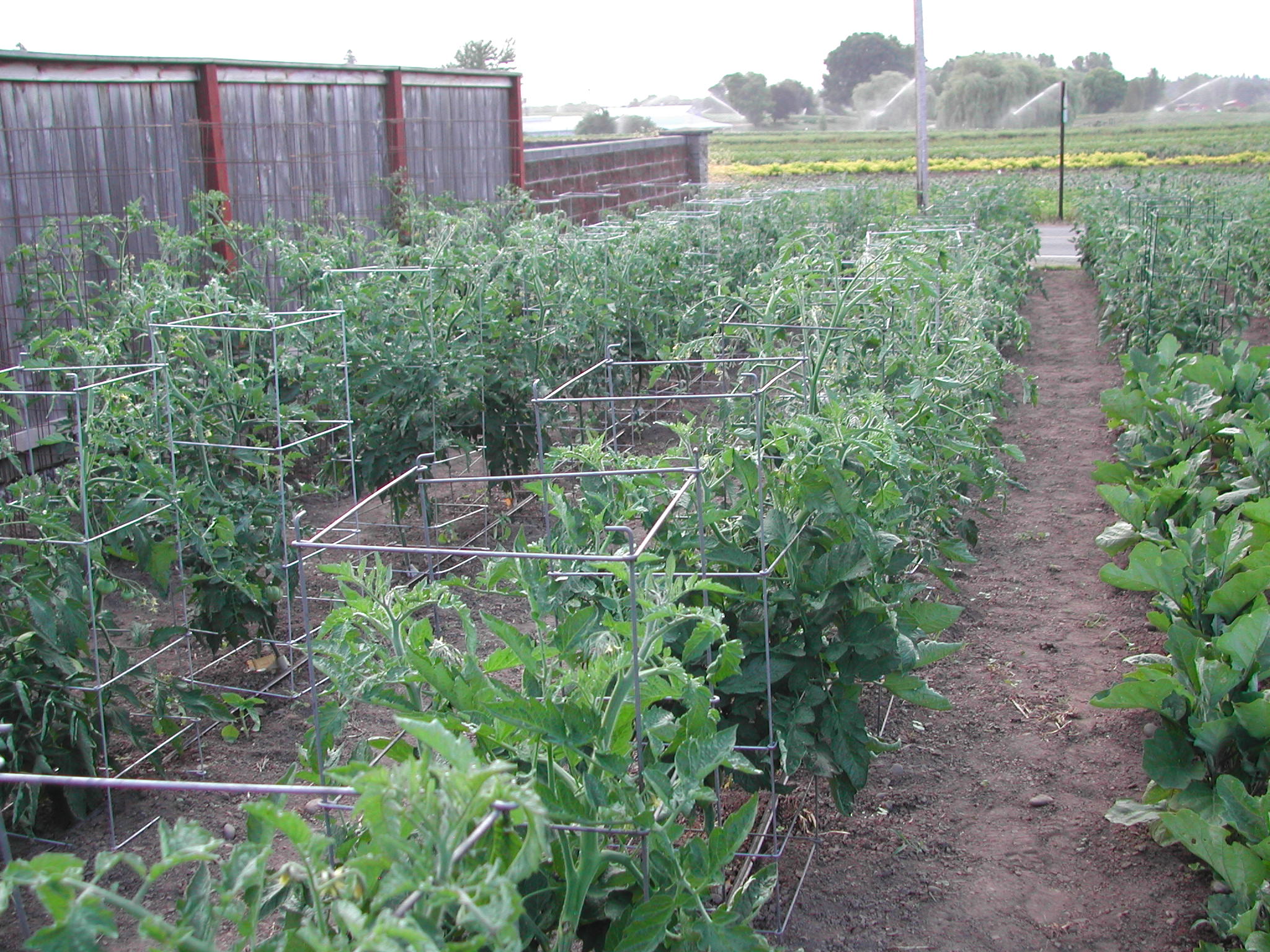
110 of the 128 tomato plants (18 are in the hoop houses)
I am serious about growing tomatoes this year, lots of tomatoes. I put in 128 plants, in 18 different varieties. I want some tomatoes and I am not taking any chances.
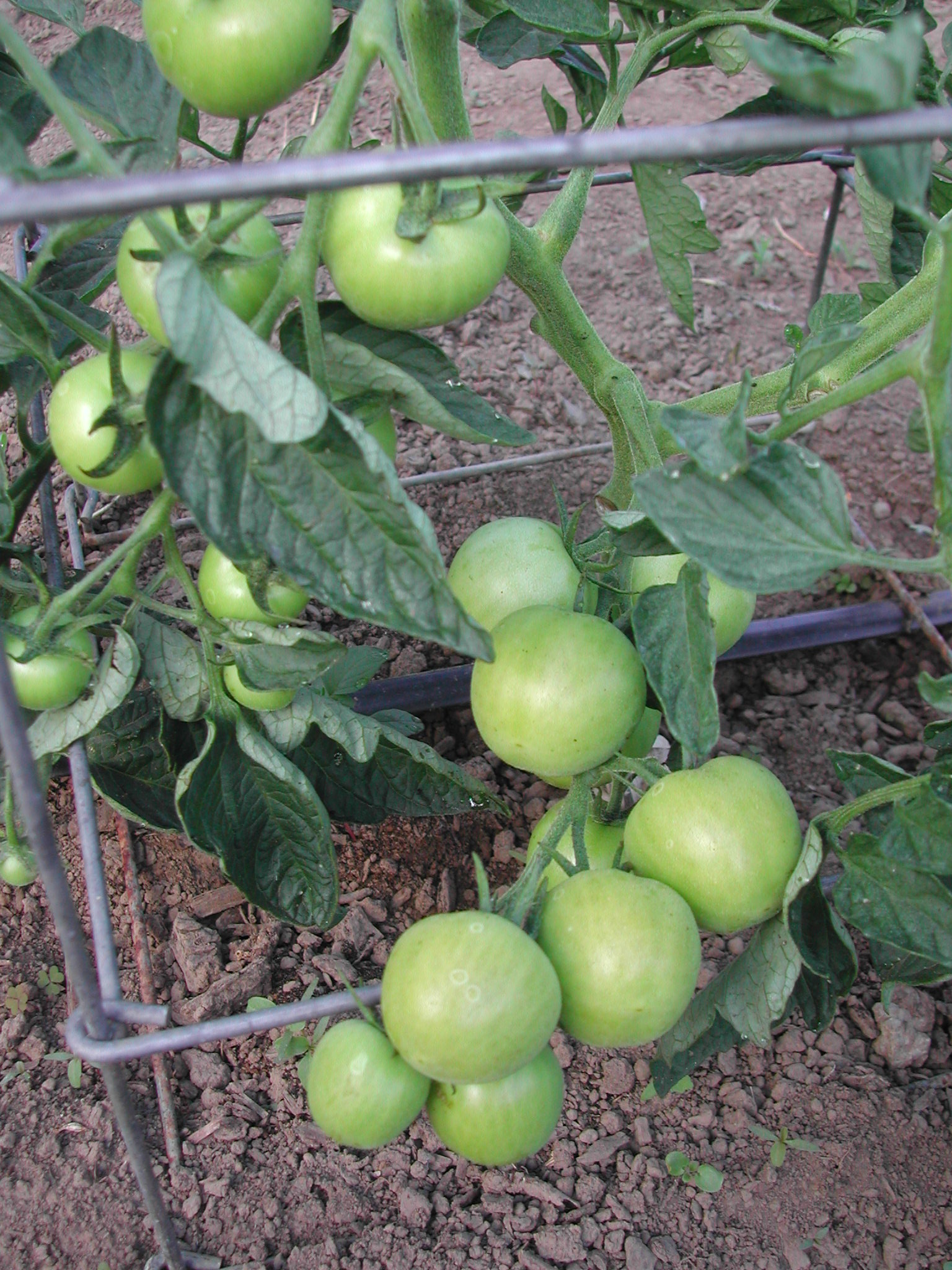
Lots of green Jaune Flammee tomatoes
Last weekend, Steven and I cleaned up the tomatoes: weeding, pruning, and a mid-season fertilizer boost (organic material: a mix of feather and blood meal). While we were working, I looked and looked for any sign of ripening tomatoes. Nothing. The plants looked great: strong, healthy and growing. I pruned them back quite a bit for good air circulation, to help prevent a repeat of last year’s blight. There were quite a few tomatoes forming, but all green. The ones that looked the closest to ripening first are a new variety for me this year, Jaune Flammee, though according to the catalog description, they take longer to mature than a couple other varieties I planted.
That seems to be true. On Tuesday, as I planted the second batch of basil out in the tomatoes, I spied the slightest bit of color on my reliably early stand-by: Stupice. I have been growing Stupice, a Czech heirloom tomato, for probably 10 years now, and it has always been the first tomato of the season. It will be again. I have two that I will pick this weekend, along with a couple little cucumbers for our first Greek salad. Another new-for-me variety this year, Morden Yellow, is supposed to mature in the same number of days as Stupice, but it doesn’t look that close yet. We’ll see how long it takes.

The first ripe Stupice tomato
Even with this dismal summer (it doesn’t look like we will hit 90 degrees once this July) I am holding out hope that we will have a nice, long season for tomatoes, well into October. Whichever tomatoes are ready first doesn’t really matter; the tomatoes are coming, and I am happy.
The Best Way Possible

The failed water tank
It was one of those days where something comes up to change my plans. I don’t like that much, but as days like that go, it went the best possible. I went down to the basement and noticed some water on the floor by the water storage tanks. Our water comes from a well and is stored in two 80 gallon tanks in our basement. I took a closer look: no condensation dripping down the outside of the tanks. No drips coming from the pipes going into the tanks and no drips coming from the pipes going out. Then I noticed a fine mist coming from the bottom of one tank. A tiny pin hole was letting water escape from the tank. The tank had rusted through. What should I do? Call Steven, of course. With a plan in place, I turned off the pump, called the company that originally installed the tanks, and started draining the water out of the tanks. The company could send someone out the next morning. That meant no water easily available for at least a day.

Part of our temporary supply of water
As I drained the tanks, I put the water in containers so we still had water to use, but it was not very convenient. I certainly realized Tuesday how frequently I use water. Getting a drink, flushing the toilet, washing my hands, let alone taking a shower, washing lettuce for a salad and watering the garden. The garden! Luckily, things did go as well as possible. First, the weather…would I ever be thankful for cool, somewhat moist weather in July? Yes. I didn’t need to water the garden, just the starts in containers. Whew. Second, it was not a delivery day, so I didn’t need to field wash vegetables. Double whew. Finally, when the tank people came on Wednesday, they said they could disconnect the tank with the hole, and leave the other one to use until they came back on Friday to replace the tanks. I would have water for field washing vegetables for Thursday’s deliveries. Triple whew. On top of all that, it was a very small hole, that leaked very, very slowly. There was no big flood of water to clean up or cause damage; relatively easy to take care of.

Starts that still needed water
The new water storage tanks should be arriving sometime this morning. We decided to replace the old tanks with two larger (119 gallon) fiberglass tanks, with air bladders. The larger size and air bladder should be better for the water pump, as it won’t start and stop so often while I irrigate. As for the fiberglass, well, it was available quickly and it won’t rust. Though I can’t say I am thankful this happened, I am very thankful for how it happened: the best way possible.
Ironic?

My version of Killer Kale Salad
Maybe Alanis Morissette should have written about vegetable farmers in her song. During the summer I have so much food in the garden, but so little time to cook with it. Isn’t it ironic, don’t you think? Talking with other vegetable farmers, I hear I am not the only one. During the winter, when it gets dark by 4:30 or 5:00, I come in and have plenty of time to make dinner. But, now, I am most often out until 7 or 7:30 and sometimes it is too hard to come in before dark. Then, I just want make something quick.
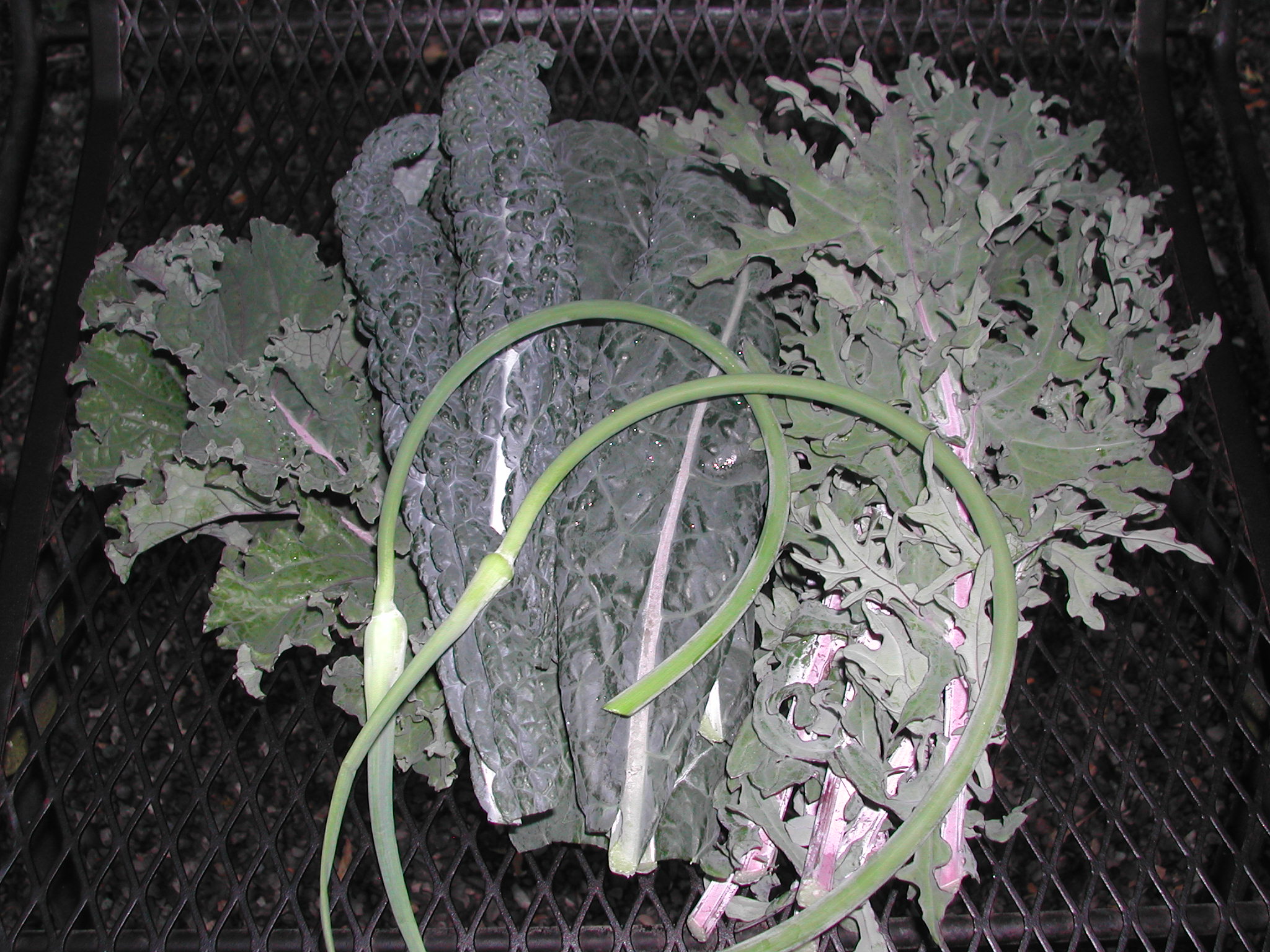
All three kales and garlic scapes
Salads are the answer. In the early summer, we eat a lot of lettuce salads. And we love them: light and refreshing. Later in the summer, we move into Greek salads. I can never get enough of tomatoes and cucumbers (and feta cheese). But, just recently I have discovered a new one: kale salad. I shouldn’t say I discovered it. Two customers gave me kale salad recipes within the span of a week a little while back.
The first one, from my friend (and customer), Anna, is linked here: Killer Kale Salad. I am a recipe follower type, but years of eating out of the garden is slowly leading me off that path. When I didn’t have all the ingredients listed in this recipe, I used what I had on hand. Here is my version of this salad:

The dressing
For the dressing, mince one clove of garlic, or right now, since I have garlic scapes, I use one or two of those, chopped. Add 3 T olive oil, 1/2 T white wine vinegar, 1/2 T lemon juice, a pinch of salt, 1/2 t mustard, and a dollop of honey (1T?). Wisk.
Add a handful of dried cranberries, grated parmesan cheese, and chopped hazelnuts (maybe 1/2 c of each). Mix again.
Remove the stems and finely slice one 8 oz. bunch of kale and toss with the dressing.
That’s it. I love this salad. I have taken it to a couple dinners, where I was asked for the recipe, and I have been making it for us at least once a week.

Dinner is ready
Here is the second kale salad recipe: Kale Waldorf Salad. I haven’t made this one yet, as it calls for apples and celery, which I don’t have in the garden right now. For this salad, I wouldn’t want to replace those ingredients with anything else. This will be one to try in the fall.
I am so glad to have more great (and quick) salads for dinner!
One quick final note: I saw somewhere the idea to grill fava beans. I can’t remember where I saw it, but it sounded great and I am planning to try it this weekend. Since the fava beans will be around for at least one more week, here is a link to a recipe for Grilled Fava Beans.
Lettuce Confessions

The fourth planting of lettuce will be ready very soon
I planned to have a continuous supply of lettuce almost all season long; from the first delivery through mid-October. During my winter planning, I figured out how often and how much I needed to plant at a time, determined by how long each planting would last, both in terms of maturity of the vegetable and how fast it would sell. Last year, the lettuce plan went pretty well, so I kept it pretty much the same, with changes in some varieties of lettuce. I also planned where each planting would go. That is the part of the plan I never quite finished. I found beds for the first few plantings and then I got distracted. I kept thinking I would get back to it, but never did.
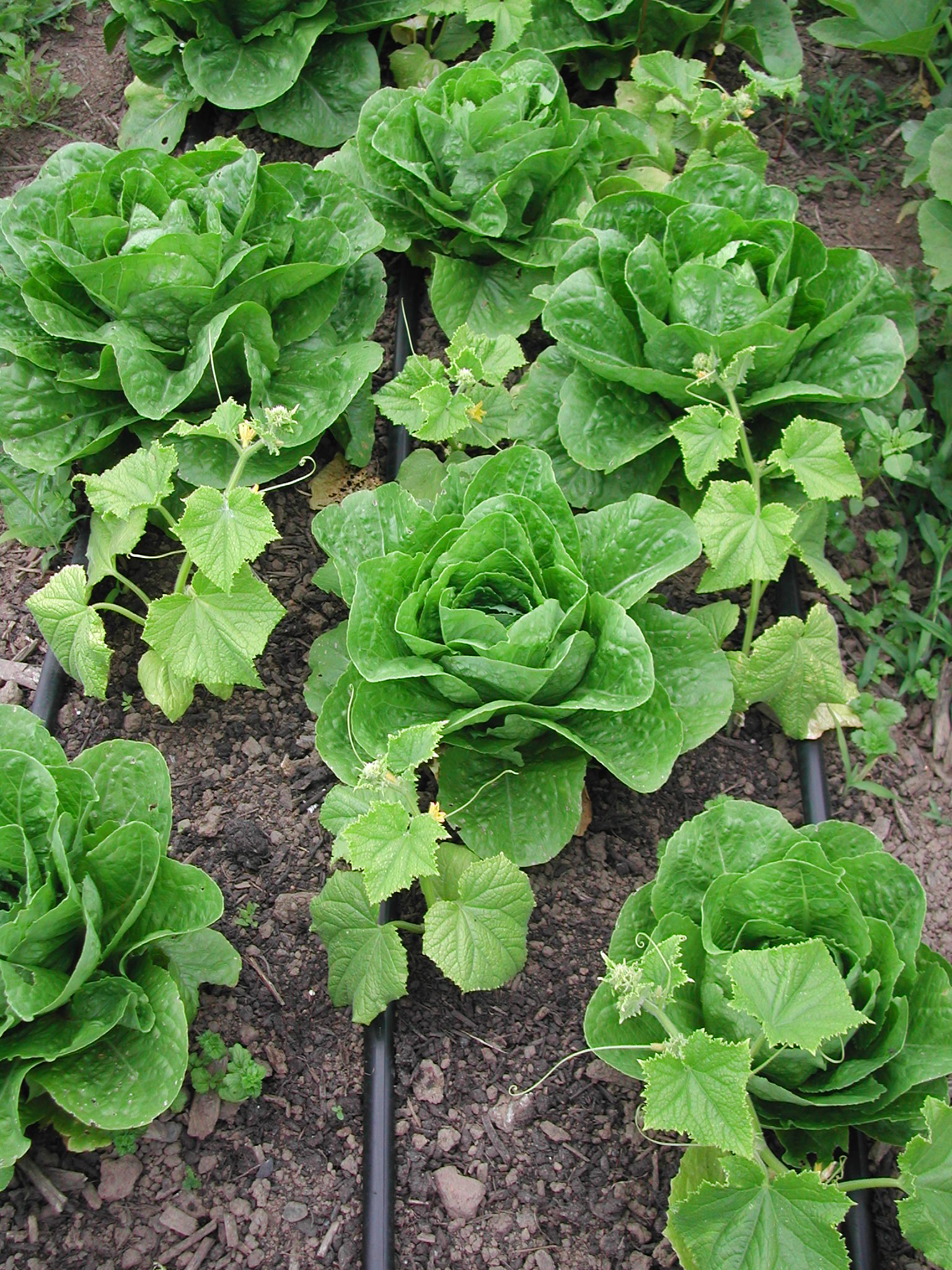
This lettuce is ready to harvest now, then the cucmbers can take over
For the first six plantings of lettuce, everything worked out fine. I squeezed lettuce into beds with other crops while they were small, like kale and cucumbers. I had some beds planned just for lettuce. Now I am scrambling a bit more. I think I found a bed for the seventh and eighth batches of lettuce, but only because my starts on those two batches didn’t do well and I won’t have as much to plant. (I think it may have been too hot in the hoop house where one batch was germinating. For the other, it may have been slugs that took down my little starts, as they do climb up the table where the trays sit.) Unfortunately, I also got behind in the seeding schedule and skipped the ninth batch. I planted out the sixth planting Wednesday and I seeded the tenth batch yesterday. There are only three more sets to go, so I should be able to seed those on schedule.
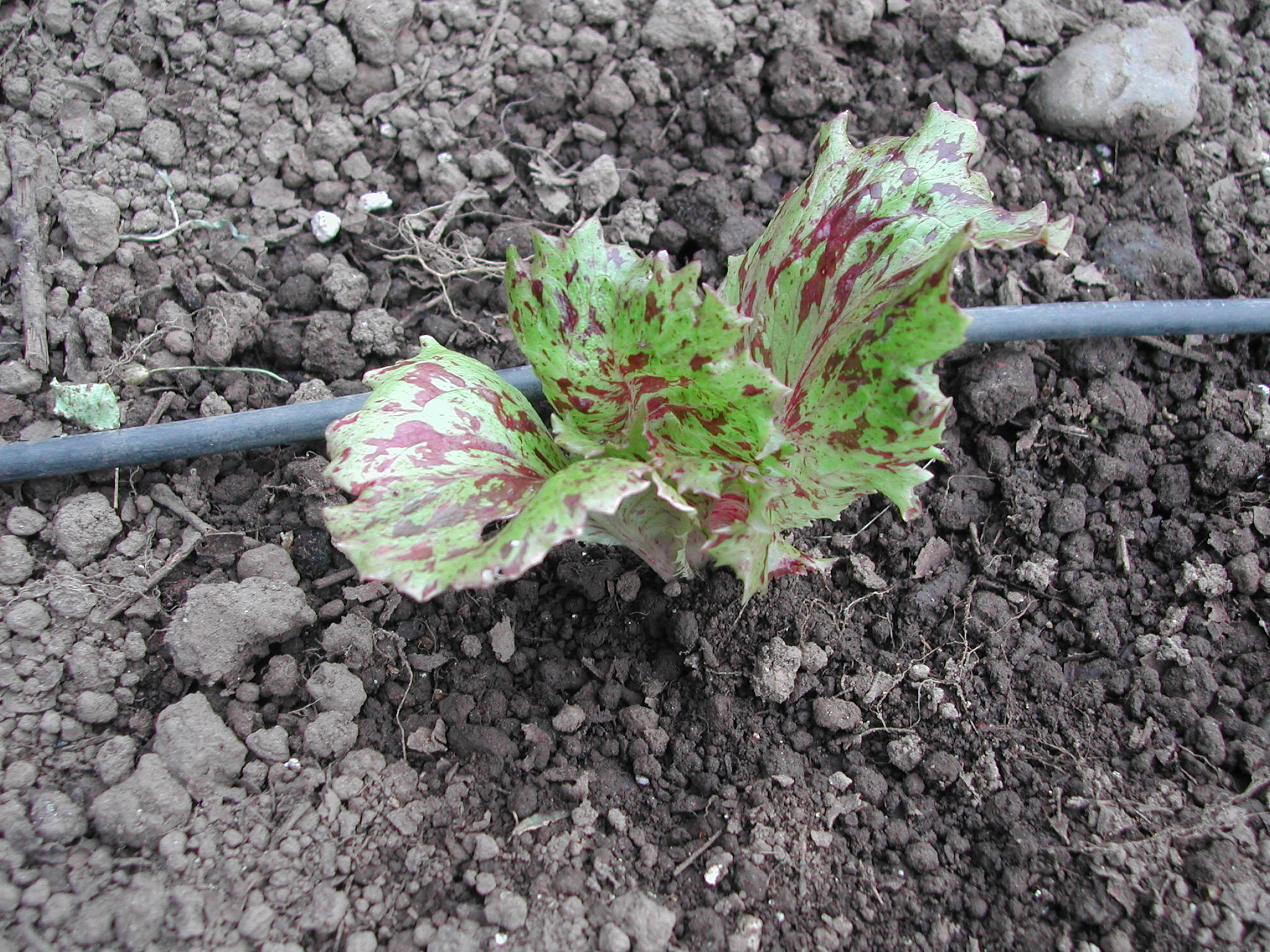
Jester, a new variety this year, planted out Wednesday
There may not be as much lettuce as planned around the end of August and the beginning of September. Good thing the tomatoes and cucumbers should be in full swing by then…a few weeks for Greek salads, before more lettuce is ready.


